Quick wins for a faster PC:
Fix the driver behind crashes, sound loss and screen glitchesFind Drivers →Clear out junk files and repair common Windows errorsFree Scan →Scan for outdated or missing drivers - takes under a minuteDriver Scan →The best calathea for your home depends on the foliage you want and the conditions you can provide. Choose Orbifolia, Medallion, Makoyana, or Zebrina for a large statement plant; Ornata, Beauty Star, White Star, or Vittata for stripes; Musaica or Network for fine mosaic patterning; and Rufibarba or Jungle Velvet for unusual texture. If flowers matter most, look at Crocata or Jungle Velvet.
This guide covers 41 plants sold under the calathea name, including species, cultivars, commercial selections, and familiar retail names. They are not 41 separate botanical species. Many plants marketed as calatheas are now classified in Goeppertia, while some closely related Ctenanthe and Stromanthe plants appear in the same retail section. Names can also vary between nurseries, so use the botanical label, leaf pattern, underside color, texture, and mature size together when identifying a plant.
As an Amazon Associate I earn from qualifying purchases.
Before you choose: why calathea names can be confusing
“Calathea” remains the most useful shopping term, but it is not always the current botanical genus name. For example, Calathea makoyana is commonly treated as Goeppertia makoyana, and the rattlesnake plant may be sold as either Calathea lancifolia or Goeppertia insignis. The Network plant is also commonly associated with Goeppertia kegeljanii.
Free tools Windows power users keep installed
One-click scans. No signup required.
That naming history explains why a nursery label, plant database, and online listing may use different names for what appears to be the same plant. The list below uses a practical format: common or trade name — current or commonly used botanical name — useful older retail name where relevant.
#1 Best Overall
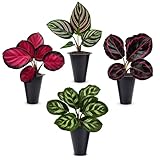
- 🌿 4 Unique Calathea Plants – Each Calathea Collection includes four different varieties from our rotating greenhouse selection: possible options include Orbifolia, Pinstripe, Peacock, Dottie, White Star, Purple Rose, and Rose Painted.
- 🌈 Eye-Catching Foliage – Enjoy bold leaf colors and patterns—vibrant greens, purples, silvers, and pinks—that make a statement in any room.
- 🕊️ Pet Safe Houseplants – All included Calatheas are non-toxic and safe for cats and dogs, making them the perfect addition to pet-friendly homes.
- 💧 Low Light, High Style – These tropical prayer plants thrive in indirect light and add lush color to low-light corners or bathrooms with humidity.
- 🎁 Gift-Ready & Grown in the USA – Carefully grown and shipped in plug pots, your Calathea Collection arrives healthy and ready to thrive. Makes a thoughtful gift for plant lovers or first-time plant parents.
Availability changes with season, geography, and supplier. Some of the final entries are commercial or collector names rather than consistently standardized botanical cultivars. Treat those names as buying clues, not as guaranteed species-level identifications.
Large, rounded statement calatheas
These are among the most dramatic choices for a living room, office, or other space with room for broad foliage. Their leaves make identification relatively easy, but large-leaved types can show damage prominently.
1. Calathea Orbifolia — Goeppertia orbifolia
Orbifolia has large, rounded leaves marked with broad silvery-green bands. It is a classic statement plant, but it needs physical space as well as steady moisture. Place it where its leaves will not be brushed against constantly, and keep it away from direct afternoon sun.
Outdated Drivers Are Slowing You Down
One free scan finds every outdated or missing driver and matches the right update for your exact hardware.Free scan · exact hardware matchWindows Errors? Fix Them Before They Spread
Repair common Windows errors and clear accumulated junk for a smoother, more stable PC - no reinstall needed.Free scan · no reinstall2. Calathea Makoyana — Goeppertia makoyana
Often called the peacock plant, Makoyana has oval leaves with dark green feathering above and purple undersides. Its patterned leaves are especially attractive in bright filtered light. Strong direct light can scorch the foliage, so a sheer curtain or a position away from the glass is safer than an unshaded sunny window.
3. Rattlesnake Calathea — Goeppertia insignis, often sold as Calathea lancifolia
This plant has narrow, wavy leaves with repeated dark oval markings and burgundy undersides. “Rattlesnake plant,” “Calathea lancifolia,” and “Calathea insignis” are all names a shopper may encounter. Compare the long, rippled leaf shape and dark markings rather than relying on the name alone.
4. Calathea Medallion — Goeppertia roseopicta ‘Medallion’
Medallion is one of the most familiar commercial selections. Its rounded leaves carry feathered light-green markings over darker green, usually with purple undersides. It suits anyone who wants the classic painted-leaf appearance without choosing a highly variegated form.
5. Calathea Dottie — Goeppertia roseopicta ‘Dottie’
Dottie is recognized by its dark foliage and vivid pink or magenta markings, which may outline the leaf and trace the central pattern. The contrast can be striking in a simple pot, but browned or damaged leaves are also conspicuous against the dark background.
The Tool Desk
Outbyte Driver Updater FREEScan for outdated or missing drivers - takes under a minuteDriver Scan →Outbyte PC Repair FREEClear out junk files and repair common Windows errorsFree Scan →6. Calathea Rosy — Goeppertia roseopicta ‘Rosy’
Rosy has pink-centered, rounded foliage and belongs to the broad roseopicta group. Retail descriptions sometimes overlap with other roseopicta selections, so check the actual plant and seller’s label if you need a specific cultivar rather than simply a pink-toned calathea.
7. Calathea Roseopicta ‘Purple Rose’
Purple Rose is a dark, purple-toned roseopicta selection found in current wholesale and nursery catalogs. It is a good option for a deeper foliage palette, although exact coloration can vary with light, plant maturity, and the particular supplier.
Striped, pinstripe, and banded varieties
These calatheas are defined by lines, bars, or repeated bands rather than broad rounded rosettes. Striping may become less vivid in low light, while direct sun can bleach or scorch the leaves.
8. Calathea White Fusion — Goeppertia lietzei ‘Fusion White’
White Fusion has green leaves marbled and streaked with white. Its high-contrast variegation makes it popular, but it also makes brown edges, scorch marks, and other damage particularly easy to see. Give it bright indirect or filtered light, not harsh direct sun, and keep moisture reasonably consistent.
What’s actually slowing this PC down?
Pick the symptom - the matching free tool is one click away.
9. Calathea White Star — Calathea majestica ‘White Star’
White Star has long, narrow leaves with white striping and pink accents, often paired with purple undersides. The name is sometimes confused with the more general retail name “Whitestar,” so look for the long striped leaves and the seller’s botanical or cultivar label.
10. Calathea Beauty Star — commonly associated with Calathea ornata
Beauty Star is usually sold as a pointed-leaf plant with fine, light striping. It is often confused with other pinstripe types, including ordinary Ornata. A photograph can help with a first comparison, but it may not establish the exact commercial selection.
11. Calathea Ornata — Goeppertia ornata, commonly sold as the pinstripe plant
Ornata has dark green, pointed leaves marked with pink or pale linear stripes. It is the plant most shoppers mean when they use the common name “pinstripe plant,” although that common name is also applied loosely to similar-looking selections.
12. Calathea Vittata — sold as Calathea vittata or under Goeppertia elliptica trade names
Vittata has narrow leaves covered with fine white striping. Botanical databases may treat Calathea vittata as a synonym of Goeppertia elliptica, while retailers may continue using Vittata. This is a useful example of why a familiar retail name can remain in circulation after botanical treatment changes.
Recommended Free Tools
13. Calathea Freddie — commonly associated with Goeppertia concinna
Freddie produces narrow, elongated leaves with repeated dark green markings over a lighter background. It has a lighter, more rhythmic pattern than many broad-leaved roseopicta types and is often sold as a compact-looking plant, though final size depends on growing conditions.
16. Calathea Zebrina — Goeppertia zebrina
Zebrina has large, velvety leaves with broad zebra-like bands. It is one of the most recognizable calatheas, but it is also space-demanding. Allow room for the leaves to spread and avoid placing the plant in a high-traffic spot where the soft foliage will be damaged.
Mosaic, painted, and finely patterned foliage
These plants reward close inspection. Their patterns may come from fine venation, feathering, or contrasting central and marginal markings rather than bold stripes.
14. Calathea Musaica — Goeppertia kegeljanii, commonly sold as Network
Musaica is known for fine, mosaic-like venation. Rather than looking painted with large bands, each leaf has a delicate network pattern. The name “Network” is often used in commerce for this plant.
15. Calathea Network — Goeppertia kegeljanii ‘Network’
Network is the commercial name for the mosaic-leaved form and is often treated as the same retail group as Musaica. It is listed separately here because shoppers may encounter either name. If you are comparing two listings, inspect the leaf’s fine lattice-like pattern before assuming they are different plants.
22. Calathea Misto — commonly associated with Goeppertia louisae ‘Misto’
Misto has medium-green leaves with lighter feathering spreading from the midrib. It provides a softer pattern than the high-contrast selections and is a useful choice when you want visual detail without strongly white or pink variegation.
Rank #2

- Air Purifying Rattlesnake Calathea: Perfect addition to your living room decor, office decor, or garden decor. This live Calathea Rattlesnake plant not only brings color but also acts as an air purifier.
25. Calathea Leopardina
Leopardina is a striped trade name associated with the Goeppertia concinna/leopardina complex. The name is useful when shopping, but it should not be treated as taxonomically unambiguous. Compare the repeated markings, narrow leaf shape, and botanical label supplied by the seller.
31. Calathea Picturata
Picturata is a painted-leaf type with contrasting central and marginal markings. It is often encountered under the broad calathea retail umbrella, and the exact appearance can differ between selections and listings. Buy from a seller that shows the actual plant if a particular pattern matters to you.
Textured, wavy, and velvety forms
Texture can be as important as color. These varieties include furry, soft, rippled, or strongly wavy foliage and often look different from the smooth, painted-leaf types.
17. Calathea Rufibarba — Goeppertia rufibarba
Rufibarba has long, wavy leaves with a soft or furry texture, which explains common names such as furry feather and velvet calathea. Its fine texture is best appreciated close up, and its elongated leaves give it a lighter silhouette than Orbifolia or Medallion.
18. Jungle Velvet Calathea — Goeppertia warszewiczii
Jungle Velvet has large, soft, patterned leaves. Unlike many calatheas, it can produce flowers indoors when conditions are favorable, although flowering should not be treated as guaranteed. Give it warmth, humidity, filtered light, and enough room for its foliage.
27. Calathea Bluegrass — associated with Goeppertia rufibarba
Bluegrass is a compact, textured trade form associated with Rufibarba. Because commercial names can vary, compare the plant’s soft, grass-like or wavy foliage and confirm how the nursery identifies it before paying a premium for a particular name.
29. Calathea Elgergrass
Elgergrass is a trade name for a textured, grass-like foliage form. It is primarily encountered in plant retail and specialty catalogs rather than as a consistently defined botanical species. Treat the name as a description of the plant being sold, not as proof of a formal taxonomic identity.
34. Calathea Wavestar
Wavestar is a commercial selection name used for a wavy-leaved plant. Leaf waviness, mature size, and pattern intensity can vary among sellers, so a current product photograph and a clear size description are more useful than the name alone.
Flowering, compact, and unusual commercial selections
This group includes plants chosen for flowers, compact growth, unusual patterns, or names used mainly by growers and retailers. Some are difficult to verify from a name alone.
19. Calathea Crocata — Goeppertia crocata
Crocata is valued for saffron-orange flowers as well as foliage. It is one of the calathea relatives grown specifically for its blooms, making it a better fit than most foliage-only types for someone who wants seasonal floral interest.
Do these 3 things before closing this tab:
1Scan for outdated or missing drivers - takes under a minute2Repair Windows errors before they cause bigger problems3Fix the driver behind crashes, sound loss and screen glitches20. Calathea Setosa — Goeppertia setosa
Setosa has tall, upright foliage with a silvery central appearance and purple-toned undersides in commonly sold forms. Its vertical habit can work well where floor space is narrower but there is still room for a tropical foliage plant.
21. Calathea Bella
Bella is a smaller commercial selection found in nursery catalogs. Its exact botanical treatment can vary by supplier, so confirm the plant’s expected mature size and the seller’s identification rather than assuming that every Bella listing represents the same clone.
23. Calathea Flamestar
Flamestar is a commercial selection with elongated, strongly patterned foliage. The name is encountered mainly in plant retail and is not as consistently documented in formal taxonomic references as names such as Goeppertia orbifolia or Goeppertia zebrina.
24. Calathea Maui Queen
Maui Queen is a trade selection listed among cultivated calathea offerings. Since the name can be difficult to verify independently, use the seller’s image and description alongside the name when comparing plants.
26. Calathea Insigne
Insigne is a retail name historically used for the rattlesnake-type plant and is related to the former Calathea insignis name. Check whether a listing is actually describing the rattlesnake plant before buying, because “Insigne” and “lancifolia” may be handled differently by different sellers.
28. Calathea Compactstar
Compactstar is sold in the calathea trade as a compact commercial plant. Specialist sources associate the name with Ctenanthe rather than a strict Calathea species, so inspect the botanical label if genus-level identity matters to you.
30. Calathea Magicstar
Magicstar is a commercial patterned-leaf selection listed by specialty plant retailers. It is best purchased from a seller showing the actual foliage, since the trade name by itself may not communicate the exact pattern or mature size.
32. Calathea Surprisestar
Surprisestar is a commercial selection name found in specialist calathea catalogs. Use it as a retail identifier and confirm the plant’s leaf pattern, size, and botanical description with the individual nursery.
33. Calathea Tropistar
Tropistar is another commercial selection sold under the calathea name. It may appeal to collectors comparing unusual patterned foliage, but supplier-level descriptions and photographs are especially important for this type of trade name.
35. Calathea Whitestar
Whitestar is a retail name sometimes used for white-striped plants and is sometimes confused with the more specific Calathea majestica ‘White Star’. Do not assume the two names are identical. Compare the leaf shape, striping, pink accents, undersides, and botanical label.
36. Calathea Silver Plate
Silver Plate is a silver-toned commercial type documented in nursery production listings. The name points to the foliage color, but exact pattern and plant identity should still be checked against the seller’s description.
Rank #3

- Give your ~prayer plant~ a boost that will promote growth, new shoots and an all-around stronger plant
- Specifically formulated for optimal performance on all varieties of calatheas
- Super, super concentrated - A little goes a LONG way
- Easy to use - Simply dilute into your weekly watering routine
- For younger plants (under a foot tall) use a half a teaspoon diluted into at least two cups of water. For mature plants (over a foot tall) use one teaspoon diluted into at least four cups of water.
37. Calathea Thai Beauty
Thai Beauty is a variegated commercial type documented in nursery production listings. Availability and appearance vary by supplier, so ask for a photograph of the actual plant if you are looking for a particular amount or placement of variegation.
Crashes, No Sound, or Screen Glitches?
Random freezes, missing sound and display glitches usually trace back to one bad driver. Find and replace yours safely.Free scan · under a minutePC Slower Than It Used to Be?
A free scan shows the junk files, broken settings and background clutter dragging Windows down - then fixes them in one click.Free scan · Windows 10 & 1138. Calathea Green Lipstick
Green Lipstick is a roseopicta-related retail name used for plants with contrasting green and darker or pink markings. It should be treated as a trade name unless the seller provides a reliable cultivar identification.
39. Calathea Cathedral Windows
Cathedral Windows is a collector and retail name for a strongly patterned, window-like foliage type. Because the name is not a consistently confirmed species-level identification, use it to find examples but rely on the actual leaf pattern and seller information to compare plants.
40. Calathea Yellow Fusion
Yellow Fusion is a variegated fusion-type trade name related to the White Fusion market category. It is less consistently available than White Fusion, and the amount of yellow or cream variegation may differ between plants and suppliers.
41. Calathea Angela
Angela is a commercial or collector name reported in plant trade and specialty collections. It is not consistently standardized across authoritative botanical references, so avoid assigning it a definite species identity without documentation from the seller.
Quick wins for a faster PC:
Fix the driver behind crashes, sound loss and screen glitchesFind Drivers →Repair Windows errors before they cause bigger problemsFix Now →Scan for outdated or missing drivers - takes under a minuteDriver Scan →How to choose among the 41 varieties
| If you want… | Start by comparing… | What to check before buying |
|---|---|---|
| A large focal plant | Orbifolia, Zebrina, Medallion, Makoyana, Setosa | Available floor space, leaf spread, and whether the plant has been exposed to direct sun |
| Pink or magenta markings | Dottie, Rosy, Purple Rose, Ornata, Green Lipstick | Whether the seller’s name identifies a specific cultivar or only a roseopicta-related trade type |
| White variegation | White Fusion, White Star, Whitestar, Thai Beauty, Yellow Fusion | The actual plant’s variegation, browned sections, and the precise label used by the seller |
| Fine, delicate patterning | Musaica, Network, Misto, Vittata, Freddie | Leaf venation or stripe detail, not just a stock photograph |
| Texture and movement | Rufibarba, Jungle Velvet, Bluegrass, Wavestar, Zebrina | Leaf texture, mature dimensions, and whether the plant will fit without being crowded |
| Flowers | Crocata or Jungle Velvet | Whether the plant is currently in bloom and whether the seller promises only current flowers or ongoing flowering |
| A smaller retail plant | Bella, Bluegrass, Compactstar | Whether “compact” describes the current nursery pot or the mature plant |
For a first purchase, compare plants by conditions rather than by a claim that one cultivar is universally easy. A healthy-looking plant with a clear label from a reputable seller is usually a better choice than a rare name whose identity, size, or shipping condition is uncertain. If you are ready to compare specimens, a calathea plant listing can be a useful starting point, but check shipping geography, current inventory, cultivar accuracy, and the seller’s live-arrival or replacement terms before ordering.
Independent reader supportYour contribution helps us test, update, and keep practical guides available for everyone.Care that works across most calathea types
Calatheas and their close prayer-plant relatives are tropical, clump-forming foliage plants. Their shared care pattern is straightforward: provide bright indirect or filtered light, warm and humid conditions, and growing media that stays evenly moist without remaining waterlogged.
Light: bright, indirect, and filtered
Place a calathea near bright light filtered through a sheer curtain or several feet from a strong sunny window. Low light may slow growth and reduce the intensity of leaf patterns. Direct sun can scorch foliage or fade its markings, particularly on thin, highly variegated, or pale-leaved selections.
If your home does not have a suitable bright-indirect location, an indoor plant grow light can provide supplemental light. It is not a reason to expose the plant to harsh direct sun, and it does not replace appropriate watering or humidity.
Do these 3 things before closing this tab:
1Fix the driver behind crashes, sound loss and screen glitches2Clear out junk files and repair common Windows errors3Scan for outdated or missing drivers - takes under a minuteWater: consistent moisture, not saturated soil
Keep the growing medium evenly moist during active growth, while allowing excess water to drain freely. Avoid alternating between severe dryness and constantly wet soil. Saturated media can create root problems, especially when light levels are low.
In winter or during other low-light periods, plants generally use water more slowly. Reduce watering as the pot and plant condition require rather than following the same calendar schedule used during brighter, more active growth. A plant moisture meter can help a beginner compare pots, but use its reading alongside pot weight, growing-medium condition, and the plant’s appearance; it is not a substitute for observation.
Humidity and temperature: stable conditions matter
Warm, humid, draft-free conditions are preferred. A kitchen or bathroom may work well if it also receives appropriate indirect light. Keep plants away from cold windows, heating vents, radiators, and air-conditioning drafts, all of which can damage foliage or make moisture management more difficult.
In a dry room, a plant humidifier may make it easier to maintain a more suitable environment. It is an optional tool, not a guarantee of success, and it should not be used to justify keeping the pot permanently wet.
Potting mix and drainage
Use a moisture-retentive but well-drained peat-free or indoor-potting substrate. The goal is a mix that holds enough moisture for tropical roots while allowing excess water to leave the container. Choose a calathea pot with drainage, and make sure the container has a functioning drainage hole rather than relying only on a decorative outer pot.
When repotting, move the plant into a larger container only when needed and avoid burying the clump deeper than it was growing. Repotting every few years is a reasonable general interval, but the plant’s root space, potting mix condition, and growth should determine the timing. A peat-free houseplant potting mix is an appropriate starting point for a moisture-retentive yet well-drained indoor mix.
Propagation
Division is the most dependable general propagation method for an established, clump-forming calathea. Divide a healthy plant when repotting, ensuring that each section has roots and active growth. Do not divide a severely stressed or recently damaged plant simply to create more plants; stabilize it first.
Brown edges, faded patterns, and other common problems
| Symptom | Checks to make first | Adjustment |
|---|---|---|
| Brown or crispy leaf edges | Dry indoor air, inconsistent watering, direct sun, drafts, and local tap-water quality | Move away from heat or cold drafts, improve environmental stability, keep moisture more even, and consider filtered or distilled water if tap water appears to be contributing |
| Faded or less vivid markings | Low light, excessive direct sun, and natural differences between cultivars | Provide brighter filtered light without exposing leaves to harsh direct sun |
| Yellowing with persistently wet soil | Poor drainage, saturated media, and slow water use during low light | Check the drainage hole and potting mix; do not continue watering on a fixed schedule while the medium remains wet |
| Leaf damage after moving the plant | Cold glass, heating or cooling vents, transport stress, and a sudden change in light | Give the plant a stable, draft-free location and allow new growth to show how it is responding |
Brown edges do not identify one single cause. Dry air, uneven watering, direct sun, drafts, and water quality can overlap. Correct the environmental problem gradually rather than cutting off every damaged leaf at once. Remove a leaf only when it is substantially damaged or declining; a partially damaged leaf can still contribute to the plant.
Buying and identification checklist
- Read the full label. Look for both the trade name and botanical name, if supplied. “Calathea,” “Goeppertia,” “Ctenanthe,” and “Stromanthe” may appear together in the same plant department.
- Compare leaf shape. Rounded Orbifolia and Medallion look different from narrow Vittata, Freddie, or Rattlesnake types.
- Check the upper and lower surfaces. Purple or burgundy undersides help distinguish several popular forms.
- Study the pattern. Look for broad bands, fine pinstripes, mosaic venation, feathering, marbling, or marginal markings.
- Inspect texture. Rufibarba and Jungle Velvet have a notably soft or furry appearance, while other varieties are smoother.
- Ask about mature size. A small nursery pot does not prove that a variety will remain compact.
- Prefer an actual-plant photograph for rare names. This is especially useful for Dottie, Rosy, White Star, Whitestar, Thai Beauty, Yellow Fusion, and commercial selections such as Flamestar or Angela.
- Check shipping and condition terms. Live-plant condition, cultivar accuracy, shipping geography, and inventory can vary by retailer and season.
A photograph is helpful but cannot always identify a cultivar conclusively, particularly among closely related roseopicta, ornata, and majestica groups. When a precise identity matters, buy from a seller that provides a botanical label and a clear explanation of the plant being offered.
Pet-safety caution
Do not make one blanket pet-safety claim for all 41 names. The list includes plants sold under changing botanical names, overlapping trade names, and closely related genera. Retail descriptions that call one individual cultivar pet-friendly should not automatically be generalized to every plant sold as a calathea. If a pet may chew the plant, verify the exact taxon with a reliable veterinary or poison-control source before bringing it home.
Optional equipment: what helps and what does not
Most calatheas do not require a collection of specialized equipment. The priorities are suitable filtered light, stable moisture, a draining container, warmth, and humidity. Equipment is useful when it solves a known limitation:
- Use a small-room plant humidifier when indoor air is persistently dry and the plant is otherwise in an appropriate location.
- Use an indoor plant grow light when the home lacks bright indirect light, while keeping the plant protected from direct sun.
- Use an indoor plant moisture meter as one input when learning how quickly a particular pot dries.
- Use a container with drainage and a suitable peat-free mix when the existing pot stays saturated.
None of these tools compensates for a cold draft, poor drainage, an unsuitable light location, or a watering routine based only on the calendar. If shopping links appear on this page, they are intended as optional solutions to those specific problems rather than universal requirements.
Recommended Free Tools
Frequently Asked Questions
Are Calathea and Goeppertia the same plant?
Not exactly as names, but many plants sold as calatheas are now classified in Goeppertia. Calathea remains a useful consumer and retail umbrella term, so check the botanical name on the individual label.
Are Musaica and Calathea Network different varieties?
They are often treated as the same retail group. Musaica is commonly associated with Goeppertia kegeljanii, while Network is the commercial name for the mosaic-leaved form, Goeppertia kegeljanii ‘Network’.
Which calathea is easiest to grow?
There is no reliable universal winner. A plant that matches your home’s light, humidity, temperature, and watering habits is a better choice than one advertised as easy. Start with a healthy, clearly labeled plant and stable conditions.
Why are my calathea’s leaf edges turning brown?
Check dry air, inconsistent moisture, direct sun, cold or hot drafts, and local tap-water quality. More than one factor may be involved, so inspect the growing medium and location before changing the watering routine.
What’s actually slowing this PC down?
Pick the symptom - the matching free tool is one click away.
Can all 41 calathea varieties be considered safe for pets?
No blanket claim should be made for this entire list. Names overlap, botanical classifications change, and some entries are trade names. Verify the exact plant with a reliable veterinary or poison-control source before purchase if pet exposure is possible.
The Bottom Line
There are 41 attractive choices here, but the most important distinction is not rarity or price: it is whether the plant matches your indoor conditions. Pick the leaf shape and pattern you like, confirm the seller’s identification, then provide bright filtered light, evenly moist but well-drained media, warmth, humidity, and protection from drafts. For uncertain commercial names, trust the actual plant and its label more than the marketing name.
Quick Recap
Product prices and availability are accurate as of the date/time indicated and are subject to change. Any price and availability information displayed on Amazon at the time of purchase will apply.

