PC Slower Than It Used to Be?
A free scan shows the junk files, broken settings and background clutter dragging Windows down - then fixes them in one click.Free scan · Windows 10 & 11Crashes, No Sound, or Screen Glitches?
Random freezes, missing sound and display glitches usually trace back to one bad driver. Find and replace yours safely.Free scan · under a minuteThe easiest houseplant is the one that matches your light and watering habits. For most first-time plant owners, the best starting points are pothos, snake plant, ZZ plant, spider plant, and heartleaf philodendron. They tolerate a wider range of ordinary indoor conditions than many fashionable plants and usually recover from an occasional mistake.
Choose from this list by matching the plant to your room rather than treating the 25 plants as a universal ranking. A plant that thrives in a sunny window may fail in a dim apartment, while a drought-tolerant plant can still die if it is placed in low light and watered frequently.
As an Amazon Associate I earn from qualifying purchases.
Quick guide: which beginner plant fits your home?
Start with the problem you are trying to solve. If you forget to water, choose a snake plant or ZZ plant. If you have a dim room, consider a cast-iron plant, ZZ plant, or solid-green Chinese evergreen. If you want a fast-growing hanging plant, pothos is the most reliable first choice. If pets share your home, begin with the verified non-toxic options and confirm the exact scientific name before buying.
Free tools Windows power users keep installed
One-click scans. No signup required.
| Plant | Best light | Watering style | Good for missed waterings? | Pet note | Main caution |
|---|---|---|---|---|---|
| Snake plant Dracaena trifasciata |
Low to bright indirect | Let mix dry thoroughly | Excellent | Toxic to cats and dogs | Overwatering |
| ZZ plant Zamioculcas zamiifolia |
Low to bright indirect | Let soil dry completely | Excellent | Toxic to cats and dogs | Wet soil around rhizomes |
| Pothos Epipremnum aureum |
Medium to bright indirect | Dry somewhat between waterings | Very good | Toxic to pets | Variegation fades in low light |
| Heartleaf philodendron Philodendron hederaceum |
Low to medium | Keep lightly moist; allow some drying | Good | Toxic to pets | Saturated soil |
| Spider plant Chlorophytum comosum |
Medium indirect | Water as surface begins to dry | Good | Verified non-toxic to cats and dogs | Brown tips from water salts |
| Cast-iron plant Aspidistra elatior |
Low | Regularly in growth; less in winter | Good | Verified non-toxic to cats and dogs | Very slow growth |
| Chinese evergreen Aglaonema spp. |
Low to medium diffuse | Moderately moist, never soggy | Moderate | Toxic to pets | Colorful cultivars need more light |
| Parlor palm Chamaedorea elegans |
Low to bright indirect | Dry slightly between waterings | Moderate | Not hazardous in cited NC State reference | Spider mites and overwatering |
| Corn plant Dracaena fragrans |
Medium filtered | Dry somewhat between waterings | Good | Toxic to cats and dogs | Brown tips and eventual size |
| Rubber plant Ficus elastica |
Bright indirect to partial shade | Regularly, but never wet | Moderate | Problematic sap; verify for pets | Large size and drafts |
| Baby rubber plant Peperomia obtusifolia |
Bright indirect | Let soil dry between waterings | Good | Verify exact species | Both wet soil and prolonged dryness |
| Hoya Hoya carnosa |
Bright indirect | Fast-draining mix; dry between waterings | Good | Verify exact species | Flowering is slower than foliage growth |
| Jade plant Crassula ovata |
Bright/direct | Water only when dry | Excellent | Toxic to cats and dogs | Needs strong light |
| Aloe vera Aloe vera |
Bright/direct | Dry completely | Excellent | Toxic to cats and dogs | Low light plus frequent water |
| Ponytail palm Beaucarnea recurvata |
Sunny to very bright | Dry between deep waterings | Excellent | Verify exact species | Can become a large floor plant |
| Holiday cactus Schlumbergera spp. |
Bright indirect | Nearly dry, but not desert-dry | Moderate | Verify exact species | Reblooming requires dark nights |
| Kalanchoe Kalanchoe blossfeldiana |
Bright | Dry completely between waterings | Excellent | Toxic to cats, dogs, and children | Reblooming needs a dark period |
| Tradescantia zebrina | Bright filtered | Moist but well-drained; some drying | Good | Can irritate cats, dogs, and children | Becomes leggy quickly |
| Lucky bamboo Dracaena sanderiana |
Bright indirect | Moist soil or clean water culture | Moderate | Toxic to pets | Water culture still needs cleaning |
| Money tree Pachira aquatica |
Bright indirect | Moderately moist, well-drained | Moderate | Verified non-toxic to cats and dogs | Standing water and eventual size |
| Monstera Monstera deliciosa |
Moderate to bright indirect | Dry top quarter to third of soil | Good when young | Problematic/toxic; verify database | Needs space and support |
| Peace lily Spathiphyllum spp. |
Low to medium indirect | Moderately moist | Moderate | Toxic to pets | Repeated wilting causes damage |
| Prayer plant Maranta leuconeura |
Bright indirect | Evenly moist, well-drained | Not for chronic forgetfulness | Verified non-toxic in cited ASPCA listing | Dry air, drafts, and drought |
| Guzmania bromeliad Guzmania spp. |
Bright filtered to shade | Airy mix plus central water tank | Moderate | Verify exact species | Special watering method |
| Haworthia | Bright indirect to gentle sun | Gritty mix; dry between waterings | Excellent | Verify exact species | Low light and wet roots |
For reference, approximate indoor light levels are often described as about 75 foot-candles for low light, 150 for medium, 300 for high, and roughly 1,500 for direct light. Most people will make a better placement decision from window direction, distance, obstructions, and plant response than from a light meter alone. See the University of Illinois indoor-light guide.
#1 Best Overall

- 🍀HAND‑PICKED : A favorite among gardening lovers. Discover our carefully curated succulent seeds Kit, ideal for both seasoned gardening enthusiasts and new hobbyists. Loved as a wonderful entry point into home gardening, it also makes a considerate gift for Father's Day, birthdays, holidays.
- 🍀ALL‑IN‑ONE KIT: Jump right into growing with our complete cactus and succulent starter set, packed with every essential you need in one convenient bundle—no extra supplies to buy separately. Inside you’ll find 4 growing pots, 4 plant labels, 4 compressed soil pellets, an assorted mix of cactus and succulent seeds and simple step‑by‑step planting guides.
- 🍀Easy‑to‑Grow for Beginners & Hobby Gardeners: Low‑maintenance succulent and cactus seeds varieties with simple planting requirements. Comes with clear growing guidance for light, watering and soil needs, perfect for new gardeners, home decor and DIY planting projects.
- 🍀Ideal for Indoor Decor, DIY Gifts & Educational Plant Projects:Grow unique succulent and cactus plants to decorate windowsills, desks, balconies and terrariums. Great as thoughtful DIY gifts for plant enthusiasts, and fun educational material for kids to learn about plant growth.
- 🍀Reliable for Household Planting Use: This Succulent & Cactus seed kit is intended solely for ornamental home planting purposes. Packaged neatly for long‑term storage, no harmful additives, complying with daily household gardening standards for safe use.
How to choose an easy-care houseplant
1. Assess the light before you buy
- Find the nearest window and note its direction.
- Check whether buildings, trees, blinds, or curtains block the light.
- Estimate how far the plant will sit from the glass.
- Match the plant’s preferred light to that exact location.
- Watch for pale, sparse, or stretched growth, which usually means insufficient light.
- Watch for bleached or crispy patches, which can indicate harsh direct sun or an abrupt move into stronger light.
A north-facing window or a dim corner may suit cast-iron plant, ZZ plant, snake plant, or a solid-green Chinese evergreen. An east-facing window or bright room is useful for many foliage plants. Sunny south- or west-facing windows are better for jade, aloe, ponytail palm, kalanchoe, and Haworthia, although direct afternoon sun may require a sheer curtain and gradual acclimation.
Low light also changes watering. A plant in a dim room uses water more slowly, so watering on the same schedule as a plant in bright light can leave the roots wet for too long. The University of Minnesota explains the symptoms of insufficient indoor light and why plants still need light for photosynthesis.
2. Match the plant to your watering habits
Do not use a universal “every seven days” schedule. Watering depends on species, light, temperature, humidity, container size, potting mix, drainage, and plant size. The University of Illinois recommends checking the plant and growing conditions rather than relying on a calendar.
What’s actually slowing this PC down?
Pick the symptom - the matching free tool is one click away.
- For most potted plants, push a finger about 2 inches into the mix.
- If the plant’s care profile calls for drying and the mix is dry at that depth, water.
- Pour slowly and thoroughly until water drains from the bottom.
- Empty the saucer or decorative cachepot so the pot does not sit in standing water.
- Check more often during bright, warm growth and less often in winter or low light.
Succulents, snake plants, ZZ plants, and other rhizome or water-storing plants need a longer dry period. Peace lilies, prayer plants, and bromeliads need more consistent moisture or a specialized watering routine.
3. Consider pets, space, and the look you want
For a desk, choose peperomia, Haworthia, a small ZZ plant, kalanchoe, or a small snake plant. For a hanging basket, choose pothos, heartleaf philodendron, hoya, spider plant, Tradescantia, or holiday cactus. For a tall floor plant, consider corn plant, rubber plant, money tree, or monstera—but remember that a plant sold as a small tabletop specimen may eventually need substantial floor space.
Pet owners should use the plant’s scientific name and check the ASPCA toxic and non-toxic plant database. Common names are unreliable: “rubber plant,” “prayer plant,” and even “bamboo” can refer to several unrelated plants.
Best beginner plants for low-light rooms
These plants tolerate relatively dim conditions, but none should be placed in a windowless room indefinitely. Expect slower growth, less pronounced variegation, and fewer flowers as light decreases.
Snake plant — Dracaena trifasciata
Why beginners like it: It tolerates dry soil, missed waterings, and a wide range from low to bright indirect light. Nursery labels may still call it Sansevieria trifasciata; Dracaena trifasciata is the current name used here.
Care: Use a fast-draining indoor or succulent-style mix in a pot with drainage. Let the mix dry thoroughly before watering. The most common failure is treating it like a thirsty tropical plant and watering too frequently. It is toxic to cats and dogs according to the ASPCA snake-plant listing. See also Penn State’s snake-plant care guidance.
ZZ plant — Zamioculcas zamiifolia
Why beginners like it: Underground rhizomes store water, making this one of the best choices for forgetful waterers and low-light locations.
Care: Let the soil dry completely before watering and reduce watering during winter. The rhizomes tolerate drought, not prolonged wetness; soggy soil can cause rot. It is toxic to cats and dogs. The NC State Plant Toolbox profile provides the plant’s light and care information.
Quick wins for a faster PC:
Scan for outdated or missing drivers - takes under a minuteDriver Scan →Repair Windows errors before they cause bigger problemsFix Now →Fix the driver behind crashes, sound loss and screen glitchesFind Drivers →Cast-iron plant — Aspidistra elatior
Why beginners like it: It handles low light, low humidity, occasional dryness, and neglect better than many foliage plants.
Care: Water regularly during active growth, but reduce watering in winter and do not leave the pot wet. It grows slowly, so choose it if durability matters more than rapid new leaves. The NC State profile and ASPCA listing identify it as non-toxic to cats and dogs.
Chinese evergreen — Aglaonema spp.
Why beginners like it: It tolerates low to medium diffuse light and offers many leaf colors and patterns.
Care: Keep the mix moderately moist but never soggy, allowing more drying between waterings in winter. Solid-green forms generally cope with less light than pink, red, or silver variegated cultivars, which need brighter conditions to retain their color. Chinese evergreen is toxic to pets; see the NC State care profile and ASPCA’s common-houseplant warning.
Recommended Free Tools
Pothos — Epipremnum aureum
Why beginners like it: Pothos grows quickly, trails attractively, tolerates lower light, and is easy to propagate from stem cuttings rooted in water.
Care: Medium to bright indirect light produces better growth, though the plant can survive in lower light. Let the potting mix dry somewhat between waterings, prune long vines when needed, and move variegated cultivars closer to brighter indirect light if their markings fade. Pothos contains insoluble calcium oxalates and is toxic if chewed; see NC State’s pothos profile and ASPCA guidance.
Heartleaf philodendron — Philodendron hederaceum
Why beginners like it: This adaptable trailing plant tolerates low to medium light, ordinary dry indoor air, and occasional watering mistakes. It can trail from a shelf or climb a support.
Care: Keep the mix lightly moist while allowing some drying between waterings. Do not leave it saturated. Heartleaf philodendron is toxic to pets; the NC State plant reference and ASPCA philodendron listing provide further details.
The Tool Desk
Outbyte PC Repair FREERepair Windows errors before they cause bigger problemsFix Now →Outbyte Driver Updater FREEFix the driver behind crashes, sound loss and screen glitchesFind Drivers →Parlor palm — Chamaedorea elegans
Why beginners like it: It gives a room a small tropical-palm appearance while tolerating low light better than many palms.
Care: Bright indirect light is best, but avoid harsh sun, cold drafts, and overwatering. Let the soil dry slightly between waterings. It grows slowly and may attract spider mites or mealybugs. NC State describes it as not hazardous for pets in its parlor-palm reference.
Rank #2
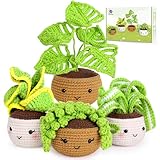
- All-In-One Crochet Starter Kit: CROCHETTA beginner crochet kit includes everything you need to start: 11 different colored yarns, ample stuffing, 1 yarn needles, 8 safety eyes, 5 stitch markers, 2 ergonomic crochet hooks, 1 pair of scissors, 1 Hot Melt Glue, Iron Wires, 1 crochet 4 Plants pattern, and a beginner's basic crochet manual.
- Extra 40% of Yarn in Every Color : We've gone the extra mile by providing an additional 40% of yarn in every color, so beginners can experiment and correct any mistakes they may make without worrying about running out of yarn.
- Step-By-Step Video Tutorials : CROCHETTA easy-to-follow video tutorials are tailored for complete beginners, guiding them from start to finish. With clear instructions and demonstrations, even those who have never crocheted before can dive into their first project.
- Unlimited Help and Support : We offer unlimited help and support through email and text. If you have any questions or run into any problems, don't hesitate to contact us. With our guidance and your independent learning, even beginners can quickly develop new skills and abilities.
- Great Gift Crochet Set : Packaged in a gift box, our crochet kit makes the perfect present for anyone who loves to crochet or wants to learn a new skill. Suitable for all ages, it's a great gift for Mom, Women, Daugther, Birthdays, Mother's Day, Valentine's Day, Thanksgiving, Christmas, or any occasion.
Peace lily — Spathiphyllum spp.
Why beginners like it: It tolerates low to medium indirect light and often droops visibly when thirsty, giving a new plant owner an obvious warning.
Care: Keep the soil moderately moist and water before repeated severe wilting. A peace lily is not a good choice for chronic forgetfulness because repeated drought and wilting damage it. It is toxic to pets; see the Oregon State Extension houseplant guide and ASPCA guidance.
Best plants for bright rooms and sunny windows
Succulents and drought-tolerant plants are easy only when they receive enough light and grow in fast-draining soil. A dim room is not a good place for aloe or jade if the owner is likely to respond to weak growth by watering more often.
Jade plant — Crassula ovata
Why beginners like it: Thick leaves store water, and the plant can live for years with a simple routine.
Care: Give it bright light, preferably a sunny window, and use very well-drained soil. Water only after the soil dries. In inadequate light it becomes weak and stretched; in wet soil it is prone to root rot. Jade is toxic to cats and dogs according to NC State and ASPCA.
Aloe vera — Aloe vera
Why beginners like it: Aloe tolerates dry soil and has a distinctive architectural form.
Do these 3 things before closing this tab:
1Clear out junk files and repair common Windows errors2Scan for outdated or missing drivers - takes under a minute3Repair Windows errors before they cause bigger problemsCare: Place it in a bright window, use cactus or succulent mix, and choose a pot with drainage holes. Let the soil dry completely before watering. The classic mistake is putting aloe in a dim room and compensating with frequent watering. Aloe is toxic to cats and dogs; ASPCA distinguishes the plant material from the inner gel in its aloe listing.
Ponytail palm — Beaucarnea recurvata
Why beginners like it: Its swollen trunk stores water, so it tolerates dry conditions and missed waterings.
Care: Give it a sunny or very bright window. Let the potting mix dry between deep waterings and reduce watering in winter. It is not a true palm and may eventually become a substantial floor plant. See the NC State Plant Toolbox profile before choosing one for a small desk.
Haworthia — Haworthia and related genera
Why beginners like it: This compact succulent suits desks, shelves, and small apartments and tolerates dry soil.
Care: Use a gritty, fast-draining mix and let it dry between waterings. Bright indirect light or gentle sun is ideal. Too little light produces weak growth, while wet roots cause rot. Confirm the exact species and pet classification before placing it within reach of an animal.
Florist kalanchoe — Kalanchoe blossfeldiana
Why beginners like it: It combines succulent-like watering needs with colorful flowers and compact growth.
Care: Give it bright light, use succulent mix, and water thoroughly only after the soil dries. Keeping it alive is easier than making it rebloom: reblooming requires bright light and a controlled long-dark period in fall. Kalanchoe is toxic to children, dogs, and cats according to the NC State profile and ASPCA.
Holiday cactus — Schlumbergera spp.
Why beginners like it: Unlike a desert cactus, it prefers somewhat more moisture and produces attractive flowers in a home with bright indirect light.
Care: Water when the soil is nearly dry, but do not let it remain bone-dry for long periods. Reliable bud formation requires bright light, cool nights, and at least 13 hours of uninterrupted darkness during the bud-setting period. Do not assume that maintaining foliage automatically guarantees flowers. See NC State’s holiday-cactus guidance.
Wax plant or hoya — Hoya carnosa and related species
Why beginners like it: Hoya has thick foliage, handles some drying, and works well in a hanging basket or on a trellis.
Care: Provide bright indirect light, a loose fast-draining mix, and drying between waterings. Foliage growth may be easy while flowering is slow and unpredictable. Do not remove old flower spurs because they can produce later blooms. Check the exact species for pet status; care information is available from NC State’s hoya profile.
Best trailing, hanging, and fast-growing plants
Spider plant — Chlorophytum comosum
Why beginners like it: Spider plants tolerate shade and some dry soil, grow plantlets on long stems, and are easy to propagate.
Care: Use medium indirect light and water when the mix begins to dry. Brown tips can result from fluoride or chlorine in tap water, inconsistent watering, dry air, salt buildup, or pests; brown tips do not automatically mean the plant needs more water. ASPCA lists spider plant as non-toxic to cats and dogs; see the NC State care reference and ASPCA listing.
Zebra inch plant or wandering dude — Tradescantia zebrina
Why beginners like it: It grows quickly, trails readily, and shows stronger color in bright filtered light.
Care: Keep the mix moist but well-drained, allowing some drying. Prune hard when stems become long and sparse. In dim rooms it can become untidy quickly. Sap may irritate skin, and NC State flags it as a problem for cats, dogs, and children; consult the NC State reference.
Rank #3

- ✓ COMPLETE STARTER PACK: Everything needed for a home grown bonsai tree kit setup; includes premium seeds, nutrient-rich soil discs, planters, and specialized pruning tools
- ✓ 5 UNIQUE TREE VARIETIES: Cultivate an indoor bonsai tree kit featuring high-germination Blue Jacaranda, Wisteria, and Norway Spruce seeds selected for robust indoor growth
- ✓ MADE FOR BEGINNERS: A foolproof DIY bonsai tree kit for beginners containing clear, step-by-step instructions to ensure high success for first-time gardeners
- ✓ DESK & HOME DECOR: Grow your own beautiful mini bonsai tree kit to add a touch of natural elegance, mindfulness, and calm to any indoor office workspace or windowsill
- ✓ UNIQUE GARDENING GIFT: The perfect seasonal bonsai tree kit gift for adults, garden enthusiasts, and plant lovers looking for a rewarding indoor DIY project
Holiday cactus as a hanging plant
Holiday cactus also works well in a hanging basket because its segmented stems arch outward as they mature. Keep the same bright-indirect-light and nearly-dry watering routine described above. Its flowering schedule is controlled more by light duration and temperature than by fertilizer alone.
Recommended Free Tools
Best compact plants for desks and small apartments
Baby rubber plant — Peperomia obtusifolia
Why beginners like it: It is compact, has thick leaves, and is less thirsty than many tropical foliage plants.
Care: Bright indirect light is best, although solid-green forms tolerate lower light. Let the soil dry between waterings, but do not leave it bone-dry for extended periods or keep it wet. Thick leaves do not make peperomia a desert succulent. Use a draining indoor mix and a pot with drainage. See NC State’s baby rubber plant profile. Verify the exact species before assuming it is safe around pets.
Small ZZ plant
A young ZZ plant is one of the best low-maintenance desk choices: it grows slowly, tolerates low light, and can go a long time between waterings. Keep it in a small draining pot rather than over-potting it, and remember that its toxicity classification applies even when the plant is small.
Small snake plant
Compact snake-plant cultivars fit shelves and desks and need little intervention. Keep the potting mix dry for longer than you would for a peace lily, and place it where it receives some natural or supplemental light. Do not use a sealed decorative container as the growing pot.
Prayer plant — Maranta leuconeura
Why beginners like it: It is compact, visually distinctive, and pet-compatible in the cited ASPCA listing.
Care: Give it bright indirect light and evenly moist, well-drained soil. Reduce watering in winter, but do not allow repeated severe drought. Prayer plant is a conditional beginner choice: it is less forgiving of dry air, cold drafts, inconsistent moisture, and poor water quality than pothos or snake plant. See NC State’s prayer-plant profile and the ASPCA listing.
Other adaptable beginner choices
Corn plant or dracaena — Dracaena fragrans
Why beginners like it: It is a manageable way to add height and vertical foliage and tolerates medium filtered light.
Care: Let the mix dry somewhat before watering. Brown tips may result from dry air, salts, irregular watering, or pests. It is slow-growing, but it can become a tall floor plant. Dracaena is toxic to cats and dogs; see NC State and ASPCA.
The Tool Desk
Outbyte Driver Updater FREEScan for outdated or missing drivers - takes under a minuteDriver Scan →Outbyte PC Repair FREERepair Windows errors before they cause bigger problemsFix Now →Rubber plant — Ficus elastica
Why beginners like it: Its large, glossy leaves provide a strong focal point in bright indirect light or partial shade.
Care: Water regularly but never keep the soil wet. It becomes large and heavy, dislikes drafts and frequent relocation, and releases irritating milky sap when damaged. NC State classifies it as poisonous; read the plant profile and keep it away from pets and children unless its safety is confirmed.
Lucky bamboo — Dracaena sanderiana
Why beginners like it: It tolerates bright indirect light and can be grown in moist soil or in water, making it useful for small spaces.
Care: In water culture, use clean, chlorine-free water, change the water weekly, and clean the container. Water culture does not eliminate maintenance or prevent rot. Lucky bamboo is not bamboo botanically; it is Dracaena sanderiana and is toxic to pets. See NC State’s reference.
Outdated Drivers Are Slowing You Down
One free scan finds every outdated or missing driver and matches the right update for your exact hardware.Free scan · exact hardware matchPC Slower Than It Used to Be?
A free scan shows the junk files, broken settings and background clutter dragging Windows down - then fixes them in one click.Free scan · Windows 10 & 11Money tree — Pachira aquatica
Why beginners like it: It tolerates bright indirect light and is commonly sold as a braided, compact-looking plant.
Care: Use well-drained soil that remains moderately moist, but never leave the pot standing in water. Braided plants need more space as they mature. ASPCA lists money tree as non-toxic to cats and dogs, although any plant material can still cause digestive upset; see NC State and ASPCA.
Swiss cheese plant or monstera — Monstera deliciosa
Why beginners like it: Young monstera plants are adaptable and grow strongly in moderate to bright indirect light.
Care: Allow the top quarter to one-third of the soil to dry, then water thoroughly. Provide a stake or moss pole as it climbs. It is easy when young but eventually becomes a large plant that needs space and support; variegated forms need more light. It is not actually a philodendron, despite the old common name “split-leaf philodendron,” and NC State classifies it as poisonous. See NC State’s monstera profile.
Free tools Windows power users keep installed
One-click scans. No signup required.
Guzmania bromeliad — Guzmania spp.
Why beginners like it: It tolerates bright filtered light to shade and brings colorful tropical form to a small room.
Care: Use an airy bark-based mix. Keep the central tank filled with water and replace that water periodically rather than treating it exactly like an ordinary potted plant. After flowering, the mother plant declines naturally while producing offsets that can be separated or left to grow. See NC State’s Guzmania guidance. Confirm the exact species for pet safety.
Independent reader supportYour contribution helps us test, update, and keep practical guides available for everyone.Basic care that keeps beginner plants alive
Use drainage, the right pot, and the right mix
- Use an inner pot with drainage holes, even if it sits inside a decorative cachepot.
- Do not place gravel in the bottom of a sealed pot as a substitute for drainage. Use a container that drains.
- Move a plant up only about 1–2 inches in pot diameter when repotting. An oversized pot holds excess wet soil around a small root ball.
- Use quality indoor potting mix for most foliage plants; use cactus or succulent mix, often with extra perlite or grit, for aloe, jade, kalanchoe, ponytail palm, and Haworthia.
- Choose an airier, bark-containing mix for hoyas and bromeliads.
- Never use garden soil straight from outdoors in a houseplant container because it drains poorly and may bring pests or disease organisms.
See the University of Illinois guide to getting started with houseplants and its guidance on container drainage.
Water deeply, then let the plant drain
When the soil has reached the appropriate dry level for that plant, water slowly until some water exits the drainage holes. Empty the saucer. Do not keep adding small amounts on a fixed schedule, and do not assume a wilted plant always needs water: wilting in wet soil can indicate damaged roots.
Rank #4

- TIPS FOR BETTER GERMINATION: (1) Dust a thin layer of soil on and keep warm and breathable. (2) The germination period could be 2-8 weeks, please be patient. (3) Detailed manual booklet helps you grow bonsai trees in a more scientific way.
- PLASTIC BONSAI POTS: 5 self-watering pots are made of premium plastic, sturdy and not easy to fade. The mesh with small holes designed at the bottom can drain away water but prevent soil from falling. Each is 6.3"L x 4.7"W x 2" in dimension, and great ideal for germination and small plants growing. But when it grows to 2-3 inch, please transplant the plant out for more space and nutrition.
- COCONUT COIR SOIL BLEND: Our bonsai soil contains coconut coir, which is good to germination and can promote the growth of plants. It is compressed into soil discs (1.5" in thickness, each soil disc weighs 2oz) for easy package and can expand into 10 times as large as what it was after absorbing the water. 4 soil discs are sufficient enough for the beginning of the plant growing.
- DECENT DIY GIFT: There is a complete growing kit (5 plastic pots, 4 soil discs, 5 plant markers, 1 bonsai pruner, 1 water bottle and 1 manual booklet) for a beginner to start planting. With a beautiful box, the bonsai tree kit is an ideal gift presenting to your parents or friends as birthdays, anniversaries and holidays gift.
Fertilize lightly
Most houseplants need fertilizer while actively growing, not continuously throughout the year. The University of Illinois recommends approximately every 1–3 months between March and September, depending on the plant and product. Never exceed the product label’s concentration. Low-light plants generally need less fertilizer than vigorously growing plants in bright light. Avoid fertilizing a newly purchased or stressed plant until it has acclimated.
Do not depend on misting
Many beginner plants grow well in ordinary household humidity. Misting provides only temporary moisture and can leave foliage wet long enough to encourage disease. Better measures include keeping plants away from heating vents and cold drafts, grouping compatible plants, or using a humidifier when a genuinely humidity-sensitive collection requires it.
Inspect and quarantine new plants
- Before purchase, look beneath leaves, along stems, around leaf joints, and at the soil surface for insects, webbing, cottony clusters, scale, or fungus gnats.
- Check that the plant is not sitting in stagnant water and that the root ball does not smell sour or remain swampy.
- Choose a plant with firm stems and broadly healthy foliage rather than one with widespread yellowing, mushy tissue, or heavy pest damage.
- Keep the new plant separate from existing plants for approximately 2–3 weeks.
- Inspect it weekly before moving it into the collection.
The University of Illinois quarantine and purchasing guidance can help prevent bringing pests home with an otherwise attractive plant.
Pet-compatible alternatives
The verified pet-compatible choices in this guide are spider plant, cast-iron plant, parlor palm, money tree, and prayer plant, based on the cited ASPCA or NC State references. “Non-toxic” does not mean edible or incapable of causing stomach upset, so pets should not be encouraged to chew any plant.
What’s actually slowing this PC down?
Pick the symptom - the matching free tool is one click away.
Snake plant, pothos, philodendron, peace lily, Chinese evergreen, dracaena, aloe, kalanchoe, ZZ plant, and jade are toxic or potentially problematic for pets according to the cited references. Tradescantia can irritate cats, dogs, and children. For every other plant, verify the exact species in the ASPCA database rather than relying on a retailer’s common-name label. If a pet has chewed a plant, contact a veterinarian or animal poison-control service promptly.
Why an easy-care plant may be struggling
Yellow leaves
Yellowing can come from overwatering, underwatering, inadequate light, a sudden environmental change, pests, or normal aging. It does not prove that the plant needs more water.
- Check soil moisture several inches down.
- Confirm that the container drains and that the saucer is not holding water.
- If the soil stays wet for a long time, inspect the roots for damage and consider fresh, draining mix.
- Inspect leaf undersides, stems, and soil for pests.
- Review recent changes in light, temperature, location, and watering.
- Remove only severely damaged leaves; do not strip healthy foliage to solve an unidentified problem.
See the University of Illinois troubleshooting guide.
Brown tips or edges
Inconsistent watering, dry air, cold drafts, fertilizer-salt buildup, pests, and fluoride-sensitive plants such as spider plant can all contribute. Check the soil, water quality, drainage, and location before increasing watering.
Wilting even though the soil is wet
This often indicates root damage or poor drainage rather than thirst. Move the pot out of standing water. If the plant continues to decline, inspect the roots and repot into fresh, draining mix after removing rotten material.
Leggy, stretched, or sparse growth
Insufficient light is the most likely cause. Move the plant closer to a suitable window or add supplemental lighting. Increase light gradually; a plant adapted to shade can scorch if moved abruptly into strong sun. The University of Minnesota’s indoor-plant guidance covers acclimation and light-related stretching.
Fungus gnats
Fungus gnats are commonly associated with continuously wet potting soil. Let the soil dry to the correct level for the plant, use yellow sticky traps to monitor adult insects, and consider a soil treatment containing Bacillus thuringiensis subspecies israelensis for larvae where appropriate. Do not let a succulent dry out beyond what its care requires simply to treat gnats. See University of Minnesota indoor-plant pest guidance.
Mealybugs, scale, and spider mites
- Mealybugs: White, cottony clusters, often in leaf axils.
- Scale: Fixed bumps attached to stems or leaves.
- Spider mites: Fine webbing and stippled or bronzed foliage, especially in hot, dry conditions.
Isolate the plant first. Rinse foliage, wipe leaves, remove small infestations manually, and prune heavily affected portions. Use only products labeled for indoor plants and follow the label exactly. The Penn State pest overview and University of Minnesota guidance describe practical control options.
Quick wins for a faster PC:
Scan for outdated or missing drivers - takes under a minuteDriver Scan →Clear out junk files and repair common Windows errorsFree Scan →Fix the driver behind crashes, sound loss and screen glitchesFind Drivers →Plants beginners may want to postpone
These plants are not impossible, but they are less forgiving than the choices above in an ordinary first-time setup:
- Boston fern: Usually needs more consistent moisture and humidity.
- Calathea and many Goeppertia: Often react poorly to dry air, inconsistent watering, and unsuitable water quality.
- Fiddle-leaf fig: Large, less forgiving, and prone to leaf drop after environmental changes.
- Gardenia: Requires high light and has more demanding flowering expectations.
- Orchids: Manageable with the right watering and root method, but less tolerant of basic root and moisture mistakes.
- English ivy: Can struggle indoors with low humidity and spider mites.
- Croton: Needs strong light to retain its color and can react poorly to environmental changes.
They are worth growing when their conditions can be supplied, but they should not be sold as universally easy.
Do houseplants clean indoor air?
Do not buy a plant as a substitute for ventilation, source control, or a suitable air purifier. The frequently repeated air-cleaning claim comes largely from controlled experiments. A 2020 review found that ordinary homes would require approximately 10–1,000 plants per square meter, depending on conditions, to match the air exchange provided by normal ventilation for volatile-organic-compound removal. The peer-reviewed analysis is available through PubMed. Choose these plants for their appearance and care characteristics, not as a replacement for fresh-air exchange or filtration.
A note about names and taxonomy
Nursery labels do not always use current or precise names. Snake plant is now commonly treated as Dracaena trifasciata, although many stores still use Sansevieria trifasciata. Lucky bamboo is Dracaena sanderiana, not bamboo. Monstera deliciosa is sometimes called split-leaf philodendron but is not a philodendron. “Prayer plant” can refer to Maranta or Goeppertia, and “rubber plant” can describe unrelated plants. Use the scientific name when checking care or toxicity, especially in a home with pets.
Frequently Asked Questions
What is the single best houseplant for a beginner?
For a general-purpose first plant, choose pothos if you want fast trailing growth, snake plant if you often forget to water, or ZZ plant if you want a slow-growing plant for low light. The best choice still depends on the room’s light and whether you have pets.
How often should a beginner water houseplants?
There is no reliable universal calendar. Check the potting mix about 2 inches down and water when it has reached the appropriate dry level for that species. Water thoroughly until some drains from the bottom, then empty the saucer.
Which beginner houseplants are safest around cats and dogs?
The verified non-toxic choices in this guide are spider plant, cast-iron plant, parlor palm, money tree, and prayer plant. Confirm the exact scientific name in the ASPCA toxic and non-toxic plant database before buying.
Can an easy-care plant live in a room with no windows?
Not indefinitely without supplemental lighting. Low-light plants tolerate less light and grow more slowly, but complete darkness prevents photosynthesis and eventually causes decline.
The Bottom Line
For the highest chance of success, place a pothos, snake plant, ZZ plant, spider plant, or heartleaf philodendron in a location with suitable light, keep it in a draining pot, and check the soil before watering. If you have pets, choose a verified non-toxic species and confirm its scientific name. Matching the plant to the room is more important than following a fixed care calendar.
Quick Recap
Product prices and availability are accurate as of the date/time indicated and are subject to change. Any price and availability information displayed on Amazon at the time of purchase will apply.

