Quick wins for a faster PC:
Clear out junk files and repair common Windows errorsFree Scan →Fix the driver behind crashes, sound loss and screen glitchesFind Drivers →Repair Windows errors before they cause bigger problemsFix Now →What kitchen items were popular in the 1970s? Slow cookers, fondue sets and new countertop appliances were among the decade’s memorable fixtures, alongside bold colors and changing materials. “Everyone had” is a nostalgic hook, not a documented ownership statistic: museum collections show recognizable examples and design cues, not what every household owned.
Appliances and tools that changed kitchen routines
1. The Rival Crock-Pot
Rival introduced the Crock-Pot in 1971. Its removable glass or ceramic crock and low-temperature cooking made it possible to leave a meal cooking unattended. The Smithsonian says it quickly gained popularity during the decade, associating the appeal with more women working outside the home; that history does not establish that every family owned one. Smithsonian National Museum of American History
As an Amazon Associate I earn from qualifying purchases.
2. The microwave oven
A Smithsonian collection record documents a microwave oven dated 1976, manufactured by Matsushita Electric Industrial Co. for JCPenney. As microwave cooking entered home kitchens, food companies and cookware makers adapted packaged foods and cookware for the technology. The dated example marks a transition, not proof that microwaves were already standard in households. Smithsonian National Museum of American History
Do these 3 things before closing this tab:
1Scan for outdated or missing drivers - takes under a minute2Clear out junk files and repair common Windows errors3Fix the driver behind crashes, sound loss and screen glitches3. The electric can opener
A Dazey electric can opener dated to around 1970 is another documented countertop tool. Its place in the decade’s kitchen story is practical rather than glamorous: it brought powered food preparation to the counter. Smithsonian National Museum of American History
#1 Best Overall

- 3 Piece Set includes: 1 x 24 fl oz Small Canister, 1 x 38 fl oz Medium Canister, 1 x 72 fl oz Large Canister
- Embossed pattern on canister and lid
- Ceramic lids with silicone gaskets
- Perfect for storing your countertop staples like flour, sugar, coffee or tea
4. The trash compactor
A trash compactor featured in the Ebony Test Kitchen, a purpose-built kitchen in Chicago. The museum presents it as one of the space’s modern amenities; this is evidence of a high-profile designed kitchen, not a measure of typical household equipment. National Museum of African American History and Culture
5. The stovetop grill
The Ebony Test Kitchen also included a stovetop grill, an example of how designers and editors showcased contemporary cooking amenities. It belongs in a look at the era’s aspirations and kitchen design, rather than a claim about what most homes contained. National Museum of African American History and Culture
6. The refrigerator with an ice-and-water dispenser
An ice-and-water dispenser was among the features in the Ebony Test Kitchen’s refrigerator. Its presence in this prominent 1972 space makes it a vivid period detail, but the museum account does not establish how widely the feature had spread. National Museum of African American History and Culture
The Tool Desk
Outbyte Driver Updater FREEFix the driver behind crashes, sound loss and screen glitchesFind Drivers →Outbyte PC Repair FREEClear out junk files and repair common Windows errorsFree Scan →Cookware and appliances made for entertaining
7. The fondue pot
Fondue parties became a craze, and the Smithsonian documents a Scandinavian Danko fondue pot used by a New Jersey family at parties and gatherings. A Boston kitchenware shop sold party-sized pots alongside forks, plates and books, showing how fondue was packaged as an occasion, not merely a cooking method. Smithsonian National Museum of American History
Rank #2

- PERFECT SIZE KITCHEN CANISTER SET OF 4 - Large enough for kitchen use and much bigger than other options on the market, this set of 4 unique square iron countertop containers arrange neatly together. The mouth of each jar is large enough to fit a measuring cup, spoon or hand. Jar heights: 9.25", 6.7", 5.6", 5.5". Volumes: 6.5, 3, 1.75, 1.25 quarts.
- CUSTOMIZABLE CHALKBOARD LABELS & MARKER PEN - These 4 kitchen jars come with an optional set of 8 reusable oval black labels and a wipeable white marker pen. You can customize your kitchen food decor!
- AIRTIGHT LIDS KEEP CONTENTS SEALED, FRESH & MOISTURE FREE - The rubber-lined bamboo lids keep dry food protected and delicious, perfect for use as flour and sugar canisters, coffee canisters for countertop, baking canister set, decorative jars for kitchen, countertop storage containers, cookie jar, dog treat container and MORE!
- EASY OPEN LIDS WITH STURDY COMFORTABLE HANDLES - With smooth metal handles, these rustic kitchen canisters set of 4 are easy to open with no spill.
- DECORATIVE & FUNCTIONAL - Designed for display with a sleek matte sage green powder coated finish and contrasting bamboo lids, these decorative kitchen jars match any decor from farmhouse to modern. Made of iron, these green kitchen accessories are light and not breakable, but sturdy and designed to last, as well as being easy to hand wash.
8. Fondue forks
Long forks were part of the fondue-party kit, sold with pots and plates. They are a small but recognizable reminder that the 1970s kitchen could double as a social space built around shared food. Smithsonian National Museum of American History
9. The stovetop crepe pan
Nordic Ware made a Teflon-coated stovetop crepe pan around 1970 and packaged recipes with it to appeal to interest in crepes. The object captures two period interests at once: specialty cookware for a particular dish and the growing use of nonstick coatings. Smithsonian National Museum of American History
10. Nonstick bakeware
Nordic Ware also applied Teflon to bakeware, including its signature Bundt cake pan. The Smithsonian documents this development, but it does not establish that a particular brand or nonstick pan was found in every kitchen. Smithsonian National Museum of American History
Recommended Free Tools
What a 1970s kitchen looked like
11. Vivid wallpaper
The Ebony Test Kitchen, built in 1972 inside the Johnson Publishing Company building in Chicago, had vivid orange, purple and avocado-green wallpaper. It offers a striking documented example of the decade’s expressive interiors, not a representative survey of American kitchens. National Museum of African American History and Culture
Rank #3
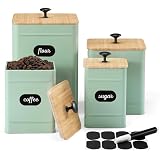
- Chalkboard Labels & Marker Pen: These four kitchen canisters come with a set of eight oval black chalkboard labels and a white marker pen, allowing you to easily personalize and organize your kitchen storage.
- Airtight Sealing Lid: Each kitchen canister is equipped with a tightly sealing wooden lid, ensuring that your flour, sugar, coffee, and tea remain fresh and protected from moisture and dust. For optimal use of the kitchen canisters, we recommend storing packaged food items. If you plan to store unpackaged items, please ensure the canisters are thoroughly cleaned beforehand. Rest assured, the canisters are made of good material for food storage.
- Multifunctional: The set includes four kitchen canisters in varying heights of 8.7", 6.3", 5.7", and 5.5", providing versatile storage options for different pantry essentials such as flour, sugar, coffee, tea, pasta, snacks, and cookies.
- Durable & Easy to Clean: Crafted from alloy steel materials, these kitchen canisters are built to last, securely storing your pantry essentials. They are designed for easy cleaning, making maintenance a breeze with just a quick wipe or rinse.
- Modern Farmhouse Style: A warm sage green tone gives your kitchen the perfect mix of rustic charm and modern design, making this set a thoughtful holiday gift for family and friends.
12. Avocado green
Avocado green is one of the clearest color cues in the Ebony Test Kitchen’s wallpaper. The museum’s description supports it as a vivid feature of that designed space; it should not be mistaken for a universal household color scheme. National Museum of African American History and Culture
13. Orange and purple accents
Orange and purple joined avocado green in the test kitchen’s wallpaper, showing how a kitchen could use bold color as part of its overall design rather than treating it as a neutral backdrop. National Museum of African American History and Culture
14. Colorful cabinetry
The Ebony Test Kitchen included colorful cabinetry as well as vivid wallpaper. Its 26-by-13-foot, all-electric space was designed within the Johnson Publishing Company building, making it a documented example of a prominent editorial kitchen rather than a template for every home. National Museum of African American History and Culture
15. Brown cabinet doors
IKEA Museum’s illustrated 1973 kitchen has brown cabinet doors alongside a white cooker and dishwasher. It provides a more restrained visual reference than the Ebony Test Kitchen’s bright palette, underscoring that period interiors were not all alike. IKEA Museum
Rank #4

- STORES SNACKS, CANDY, AND DRY INGREDIENTS: For all of your loose dry foods that need sturdy storage, use this sturdy set of four canisters to help provide storage. Place coffee beans, rice, flour, sugar, cereal, and candies inside for easy access
- MADE FROM QUALITY GLASS AND METAL WITH SEE-THROUGH WINDOWS: Each kitchen storage container is crafted from quality glass and a metal finish, with an illuminating finish that adds a bold modern touch to your kitchen. At the fronts of all four of them are clear windows for easily viewing your items. All the canisters are also equipped with twist-off lids that secure your contents
- PLACE ANYWHERE FOR A RETRO LOOK: These canisters are able to be placed anywhere in your household from a table to the countertop to help provide a stylishly retro look. They can also be stored more discreetly in your pantry or cabinet
- STORES OTHER ITEMS: Along with food, these pantry organization and storage canisters also provide storage for other items as well. Place pens, pins, clips, hair accessories, and even small jewelry inside for simple storage
- FOUR DIFFERENT SIZES FOR ALL YOUR FOOD STORAGE NEEDS: Four canisters are included, which vary in different sizes, and whether you are storing a lot or little, you will always have the right canister to accompany you. The capacities for these containers are 2 1/2 cups, 4 cups, 5.5 cups, and 7.5 cups
16. White cookers and dishwashers
The same IKEA Museum catalogue image shows a white cooker and dishwasher. The pairing with brown cabinet doors is a useful period-style reference, but a catalogue image documents a design offering, not the prevalence of that exact combination in homes. IKEA Museum
Independent reader supportYour contribution helps us test, update, and keep practical guides available for everyone.Materials and design cues across the decade
17. Plastic surfaces and objects
IKEA Museum describes early-1970s products as often using plastic, with inspiration from Italian design and American popular culture. This broad design account helps explain the decade’s modern, manufactured look, but it does not identify one specific plastic kitchen object as universal. IKEA Museum
18. Lacquered particleboard
Lacquered particleboard was another material used in early-decade IKEA products. It belongs to a wider furniture and interiors trend, rather than a verified claim about a standard kitchen cabinet in every home. IKEA Museum
19. Rustic pine
IKEA Museum describes a shift toward rustic pine as the 1973 oil crisis sharpened environmental concerns. That history points to a change in design emphasis, not a uniform makeover in kitchens across the decade. IKEA Museum
Best Value

- 5 CANISTERS, 5 LIDS INCLUDED: This 10-piece tall canister set combines vintage-inspired style with everyday food storage. Store pantry staples like flour, sugar, coffee, snacks, and baking ingredients while keeping your kitchen organized
- BPA-FREE MATERIALS & DISHWASHER-SAFE: Holds up after repeated use. Wash beforehand. Do not use in the freezer or microwave. Do not use sharp or metal utensils on the containers
- SEAL IT, STACK IT, STORE IT: The canisters nest neatly inside one another when empty to maximize cabinet and pantry space. Keep countertops organized while enjoying convenient access to frequently used ingredients
- SECURE LID PRESS-SEAL: Simply press the center of the iconic sunburst lid to see the signature seal in action. The secure seal helps keep food fresh and prevent spills while storing pantry items
- HELPING SIMPLIFY PEOPLE'S LIVES: Trusted for more than 75 years, our innovative products, built to last, eliminate the need for disposable containers. We combine styling with modern durability to keep food fresh and reduce waste
20. A wine rack
A wine rack appeared in the Ebony Test Kitchen, alongside display and storage cabinets. It is one of the room’s documented design details and suggests how storage could also be part of a kitchen’s presentation. National Museum of African American History and Culture
21. Display and storage cabinets
The Ebony Test Kitchen included display and storage cabinets as part of its designed interior. Together with the room’s appliances, cabinetry and wallpaper, they show how a kitchen could be planned as a cohesive work and display space. The museum describes the test kitchen as a prominent example; it does not establish a national household pattern. National Museum of African American History and Culture
Why the Ebony Test Kitchen matters
The Ebony Test Kitchen brings several of these details together in one documented place. Built in 1972, the 26-by-13-foot all-electric room combined colorful cabinetry, vivid wallpaper, a wine rack, display and storage cabinets, and modern amenities including a stovetop grill, trash compactor, and refrigerator with an ice-and-water dispenser. It was part of the Johnson Publishing Company building in Chicago—not a statistical portrait of an average home. NMAAHC Director Kevin Young called it “a living, breathing testament to the power of Black excellence and innovation in the culinary world.” National Museum of African American History and Culture
Free tools Windows power users keep installed
One-click scans. No signup required.
Quick Recap
Product prices and availability are accurate as of the date/time indicated and are subject to change. Any price and availability information displayed on Amazon at the time of purchase will apply.

