Quick wins for a faster PC:
Scan for outdated or missing drivers - takes under a minuteDriver Scan →Clear out junk files and repair common Windows errorsFree Scan →The best small backyard landscape is planned around how you want to use it—not a collection of features squeezed into every open spot. Start by mapping sun, shade, access, utilities, slope, and wet or dry areas, then choose a few ideas that fit your priorities, site, and maintenance time.
How to plan a small backyard landscape
Before buying plants or materials, make a simple site plan. A practical inventory helps you avoid blocking a route, planting something too large, or choosing a feature that conflicts with drainage. The University of Maryland Extension’s landscape-planning guidance and the University of Delaware’s sustainable landscape guide both emphasize understanding the site and its intended uses.
As an Amazon Associate I earn from qualifying purchases.
- Map what is already there. Sketch the house, existing trees, patio or deck, fences, structures, access points, and areas you need to keep clear. Mark utilities and check local utility-location requirements before any digging.
- Note site conditions. Record where the yard gets sun and shade, where water collects or drains quickly, and whether the ground slopes. Add wind exposure if you know it.
- Choose your priorities. Decide whether the space should mainly support dining, relaxing, play, food growing, privacy, ornamental planting, drainage, or easier upkeep. Separate must-haves from nice-to-haves.
- Draw spaces and routes. Add a seating area, planting zone, or play area, then show how people will walk between them. Keep circulation clear instead of filling every remaining corner.
- Plan planting by mature size. Draw plant circles at their expected mature spread. Place larger structure first, then fit smaller plants around it, using regional advice to choose species suited to your climate and conditions.
- Repeat a few choices. Reusing a small palette of plants, paving, or colors can help distinct areas feel connected. Delaware Extension recommends grouping plants and using repetition to create unity.
If the whole project feels like too much at once, build it in phases: finish one priority area, see how it works in daily use, and then decide what to add next. The EPA WaterSense landscaping tips also recommend planning for purpose, local climate, water needs, and maintenance.
Free tools Windows power users keep installed
One-click scans. No signup required.
20 small backyard landscaping ideas
Use these as adaptable directions rather than a fixed makeover plan. Choose ideas that serve your intended activities and suit the yard’s light, soil, drainage, and available space.
#1 Best Overall

- HEAT-RESPONSIVE FLEXIBILITY: Direct sunlight and warm temperatures can temporarily soften the PE edging, making it easier to shape around curves. As the edging cools after the sun is gone, it returns to its usual firmness. This temporary change is normal and helps with installation.
- 100 FT KIT WITH 150 SPIKES: Includes two 50 ft rolls of 2 in high black landscape edging for 100 ft total coverage, plus 150 flexible 5.9 in nylon spikes. Use more spikes around tight curves, corners and transitions for a cleaner, more secure border.
- NO-DIG INSTALLATION: Lay out the border, shape it to your design and drive the included spikes through the pre-made tabs—no trench required. For easier shaping, let the rolls warm in the sun first. In hard or dry soil, water the ground before installation and use a rubber mallet.
- FLEXIBLE, CUT-TO-FIT DESIGN: Create straight lines, sweeping curves or circular borders around flower beds, lawns, tree rings, mulch areas and walkways. Cut each roll to the length needed, then add extra stakes at curves and connection points to help maintain the layout.
- BEST FOR PREPARED OR SOFT GROUND: Designed for lawn and garden layouts in soil that accepts the included spikes. Remove stones and avoid forcing spikes into roots, concrete or very hard ground. Temporary softness in hot sun is expected; once cooled, the edging returns to its normal rigidity.
Make room for everyday use
- Create a small dining patio near the house. A spot close to the kitchen can make meals outside more convenient. Plan seating and a clear route before choosing the patio’s size and material.
- Set up a lounge or reading corner. A compact chair-and-table arrangement can give a quiet corner a clear purpose without requiring a large entertaining area.
- Give the yard a simple path. A defined route can connect the door, seating, and garden areas while making movement through the space more straightforward.
- Use gravel or mulch for a path where suitable. These can be alternatives to a paved route, but select a surface that works for drainage, accessibility, and how the path will be used.
- Keep a flexible patch open. If children or pets need room to move, reserve a usable area instead of dividing the entire yard into beds and hard surfaces.
Grow plants without using much ground area
- Add a narrow raised bed for herbs or kitchen crops. Put it where the selected crops will receive suitable light, and leave enough access to tend and harvest it. A sunny site is typically the practical starting point for many food crops, but check crop-specific guidance for your region.
- Group coordinated containers. Pots let you arrange herbs or flowers in a small area and adjust their placement. Grouping containers gives the display a more intentional look than scattering individual pots around.
- Consider a self-watering container. It may help if you want support with watering routines, but it does not eliminate care. Container needs vary with plant choice, pot volume, sunlight, and weather.
- Install a trellis for a suitable climber. A trellis or other vertical support can make use of height where ground area is limited. Choose a plant for the local conditions and provide support appropriate to its growth.
- Train a climber along a fence or wall. This can add greenery to a boundary, provided the plant, support, and wall or fence are suited to the arrangement. Allow room for access and maintenance.
- Use a vertical garden system for a small display. Wall-mounted or freestanding systems can trade floor area for structure, but they need reliable water and nutrient distribution, ongoing care, and protection against moisture damage where they meet a wall.
The University of Florida IFAS guide to gardening with limited space discusses containers, trellises, and vertical systems. The Royal Horticultural Society’s small-space planting guidance also covers climbers, pots, hanging baskets, and tiered displays. Containers and hanging baskets may need regular watering and feeding.
Shape planting for privacy and visual unity
- Choose a compact focal plant. Place a site-suitable plant where it can be seen from a seat or window without blocking circulation. Check its mature size before planting.
- Layer plants by mature height and spread. Where space allows, combine a tree or taller shrub with medium and low plants. Do not rely on a young plant’s current size when planning its location.
- Repeat a small group of plants. Repeating a few suitable plants can create a more unified composition than using many unrelated specimens. Grouping also makes planting areas easier to read.
- Use dense planting to define a sitting area. A suitable planting group can provide a sense of enclosure or privacy. Its final height, spread, and light requirements should fit the space and local conditions.
- Connect beds with groundcover. A groundcover can link separate planting areas where its light and soil needs match the site. Leave room for the chosen plant to spread without overrunning paths or other plants.
- Mix seasonal interest with dependable structure. Combine evergreen forms with plants that offer flowers, foliage, or texture at different times of year. Select plants for your region rather than assuming a particular combination will thrive everywhere.
Plant choice depends on climate, sun, soil, moisture, and mature spread. Virginia Cooperative Extension advises matching plants to site conditions and notes that newly planted landscapes need attention while plants establish. Its 2026 page, citing Narango et al. (2017), says wildlife benefits are greatest when at least 70% of landscape plants are native; it also notes that incorporating a few native plants can help. That figure is a research summary about wildlife benefits, not a requirement for an individual yard. For regional species recommendations, consult your local extension service or regional plant lists. See Virginia Cooperative Extension’s guidance on incorporating native plants.
Rank #2

- 𝐅𝐥𝐞𝐱𝐢𝐛𝐥𝐞 & 𝐄𝐚𝐬𝐲 𝐭𝐨 𝐈𝐧𝐬𝐭𝐚𝐥𝐥: Each panel measures 40" (L) × 5" (H), including 3" underground stakes for strong anchoring, leaving 2" visible above ground for a clean, low-profile border. The hammer-in design makes installation fast and effortless—perfect for creating neat, professional-looking edges without digging.
- 𝐃𝐮𝐫𝐚𝐛𝐥𝐞 𝐆𝐚𝐥𝐯𝐚𝐧𝐢𝐳𝐞𝐝 𝐒𝐭𝐞𝐞𝐥 𝐂𝐨𝐧𝐬𝐭𝐫𝐮𝐜𝐭𝐢𝐨𝐧: Made from high-quality galvanized steel, this 33ft landscape edging (10-pack) is built to withstand outdoor conditions, providing long-lasting durability and rust resistance for your garden, yard, or flower beds.
- 𝐒𝐞𝐜𝐮𝐫𝐞 & 𝐒𝐭𝐚𝐛𝐥𝐞 𝐃𝐞𝐬𝐢𝐠𝐧: Comes with 11 stakes, ensuring strong anchoring in soil and stability against shifting over time. Ideal for maintaining defined garden edges and pathways.
- 𝐒𝐥𝐞𝐞𝐤 𝐁𝐥𝐚𝐜𝐤 𝐅𝐢𝐧𝐢𝐬𝐡 𝐟𝐨𝐫 𝐌𝐨𝐝𝐞𝐫𝐧 𝐀𝐩𝐩𝐞𝐚𝐥: The powder-coated black steel adds a stylish, modern touch to your outdoor landscaping while blending seamlessly with various garden styles.
- 𝐕𝐞𝐫𝐬𝐚𝐭𝐢𝐥𝐞 𝐆𝐚𝐫𝐝𝐞𝐧 𝐁𝐨𝐫𝐝𝐞𝐫 𝐒𝐨𝐥𝐮𝐭𝐢𝐨𝐧: Perfect for creating crisp, clean separations between lawns, flower beds, pathways, and patios. Easily cut or bend to fit curves, corners, and custom garden designs.
Work with water and the site
- Consider a rain garden where runoff collects. It may suit a wet spot or runoff route, but its location and design need to fit the site and local guidance. Do not use one as a default feature for every backyard.
- Consider permeable gravel or paving. A permeable surface may help support infiltration while providing a path or patio, where the soil, drainage, and access needs make it appropriate. Plan water flow as part of the surface design.
- Mulch planting beds. Appropriate mulch can help retain soil moisture and suppress weeds. Choose and apply it with the plants and site in mind, and avoid covering areas or plant parts that should remain exposed.
The EPA WaterSense guide discusses mulch, water-smart planting, rain gardens, and permeable surfaces; Delaware Extension also addresses stormwater in landscape design. A design that manages water well in one yard may not be suitable in another, so account for slope, soil, and where runoff goes.
How to choose the right ideas for your yard
Use the plan to compare options by what they demand as well as what they provide. A patio creates a place to sit or dine but uses ground area; containers are flexible but need watering attention; vertical planting saves floor space at the expense of structure and upkeep. A path improves circulation, while its surface needs to make sense for drainage and access.
Rank #3

- Landscape Edging Kit: Each set includes 1 or 2 rolls of high-strength plastic garden edging and a generous number of spiral stakes (6 inches long)—everything you need to create a neat and durable garden boundary.
- Strong yet flexible design: Made of durable plastic, the border garden edging securely holds mulch, gravel, or soil while remaining flexible enough to form smooth curves, circles, or custom shapes around trees, flower beds, and paths.
- Quick no-dig installation: Simply lay the landscape edging border along the desired boundary line and then secure the fencing with the included spiral stakes every 2-3 holes. No digging or special tools required—create a professional look in minutes.
- Easy to cut and customize: The lawn edging can be easily trimmed with scissors or a utility knife, allowing the garden border to fit any space. Its sturdy and durable construction securely holds the stakes and staples in place when adjusting the length or joining sections.
- Versatile and reliable: This plastic landscape edging border is ideal for defining flower beds, tree rings, walkways, lawns, and garden boundaries. Extra-long nails and sturdy materials ensure your landscape remains neat and organized in all weather conditions and usage scenarios.
- For dining or relaxing: prioritize a usable seating area and an unobstructed route to it.
- For food growing: identify a suitably sunny spot and choose crops for its conditions before sizing a bed or selecting containers.
- For privacy: check mature plant dimensions and preserve access for care; choose planting that fits the site rather than simply filling the boundary.
- For limited ground area: compare containers, trellises, or vertical systems, accounting for watering, support, and wall protection.
- For water concerns: observe where water flows or stands before considering mulch, permeable surfaces, or a rain garden.
- For lower upkeep: be realistic about establishment care and the ongoing needs of living walls, baskets, containers, and fast-growing plants.
There is no universal installation-cost ranking for these ideas. The practical choice depends on the site, materials, labor, plant selection, and how much maintenance you can take on.
Quick Recap
Best Value

- ABOUT THE EDGING:Built from 1.1mm galvanized steel , Each set includes 6 steel edges, measuring 40 inches (length) x 6 inches (width), With 2.5" sharp saw teeth, (Note:Please wear gloves during installation). It can also be easily hammered back down; You can easily pull the edging up and reshape it to match a new shape.
- GALVANIZED STEEL MATERIAL: These landscape edgings are made of solid galvanized steel with powder coating to create a special matte texture, the surface is wear-resistant, corrosion-resistant,providing enough support for plants.
- EASY TO INSTALL: The 40 inch long, 6 inch wide steel garden landscape edging, 6 pieces total 20 feet in length.The steel buckle design allows for quick and easy installation and removal, ensuring a tight connection between sections to avoid loosening. No special tools or expertise required, making it perfect for DIY enthusiasts and professionals alike.If the soil is hard, you can dig holes for installation.
- FLEXIBLE & BENDABLE:This steel garden edging features good toughness and can be bent at will to adapt to the curve of your garden so that you are no need to cut them.
- VERSATILE USAGE: Suitable for outdoor gardens, patios, sidewalks, etc., our edging prevents weeds from intruding and spread of weeds, keeping landscapes neat and clear.
Rank #4
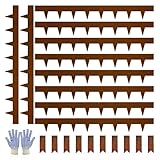
- [MATERIALS AND SIZE]: Landscape Edging made of high-quality corten steel, pre-rusted surface for all-weather use and maintenance-free durability.; Landscape Edging 4.5" H X 40" L, 33FT in total length.
- [FLEXIBLE LANDSCAPE EDGING]: Steel landscape edging is flexible and bendable, and can be easily bent and molded to any shape angle you need.
- [EASY TO INSTALL]: steel landscape edging can be easily inserted into the soil, use clips fix the edging, making the edging seamlessly linked, increasing the stability of the landscape edging, and making the landscape edging more aesthetically pleasing.
- [MULTIPLE USE]: Steel landscape edging is suitable for gardens, patios, paths, planting, farmland, forestry and any other place where you need to separate areas, it effectively prevents grass roots and weeds from spreading and maintains a neat landscape.
- [LANDSCAPE EDGING SERVICE]: we are at your service 24/7, if you have any questions about landscape edging, please feel free to contact us, we will provide you with a solution to your satisfaction within 24 hours!
Common small-yard mistakes to avoid
- Choosing plants by appearance alone. A plant that is attractive at the garden center may not suit the yard’s light, soil, moisture, climate, or mature-space limits.
- Planting too many individual specimens. Scattering a large variety can make a compact area feel visually busy. Repeating and grouping a smaller selection can produce a clearer design.
- Ignoring mature spread. Crowded planting can obstruct paths and create extra pruning or replacement work. Use mature dimensions in the plan.
- Assuming vertical means maintenance-free. Living walls, containers, and hanging baskets still need water and care; wall systems also require moisture protection and suitable support.
- Adding hard surfaces without considering runoff. Think through where water will go and whether a surface suits the site’s drainage and access needs.
- Starting every project area at once. Phasing lets you learn how a feature works before committing space and effort to the next one.
Product prices and availability are accurate as of the date/time indicated and are subject to change. Any price and availability information displayed on Amazon at the time of purchase will apply.

