Do these 3 things before closing this tab:
1Fix the driver behind crashes, sound loss and screen glitches2Repair Windows errors before they cause bigger problems3Scan for outdated or missing drivers - takes under a minuteThe best home appliances in 2025 are not necessarily the most expensive or the most connected. They are the ones that match your home’s electrical service, plumbing, ventilation, space, maintenance ability, and daily routines. For most households, the strongest choices are ENERGY STAR-certified appliances, heat-pump technology where installation conditions allow it, induction cooking, practical sensors, and controls that remain useful without a cloud connection.
That leads to a practical short list: choose an ENERGY STAR refrigerator without a dispenser if you do not need one, a dishwasher with a soil sensor and adjustable racks, a front-load washer paired with a heat-pump dryer, a heat-pump water heater, induction cooking, a compatible smart thermostat, and correctly sized room air conditioning or dehumidification. Scrutinize unnecessary refrigerator plumbing, novelty smart features, appliances with unclear software support, reachable range controls without effective lockout, unvented gas cooking, recalled appliances, and dehumidifiers selected from outdated capacity labels.

As an Amazon Associate I earn from qualifying purchases.
“Avoid” is conditional throughout this guide. A dispenser, gas range, or connected appliance may be reasonable for one household and a poor trade-off for another. The right purchase is the one that works safely and efficiently in the house you actually have.
Quick wins for a faster PC:
Clear out junk files and repair common Windows errorsFree Scan →Scan for outdated or missing drivers - takes under a minuteDriver Scan →Repair Windows errors before they cause bigger problemsFix Now →Best appliances and features at a glance
| No. | Best choice or feature | Why it makes sense | Important qualification |
|---|---|---|---|
| 1 | ENERGY STAR refrigerator without a dispenser | Simpler configuration, more usable space, and fewer dispenser components to maintain | Only skip the dispenser if the convenience is not important to your household |
| 2 | ENERGY STAR dishwasher with soil sensor and adjustable racks | Lower resource use plus more useful loading and cycle control | Annual savings are program estimates; loading habits still matter |
| 3 | ENERGY STAR front-load washer | Extracts more water during the final spin, reducing dryer work | Requires suitable door clearance and regular gasket and drum care |
| 4 | Heat-pump clothes dryer | Uses at least 28% less energy than standard dryers and needs no exterior vent | Cycles and condensate handling differ from conventional dryers |
| 5 | Moisture-sensor drying | Stops or reduces drying when clothing is dry | Sensor performance depends on load size, fabric mix, and cycle selection |
| 6 | ENERGY STAR heat-pump water heater | Can substantially reduce energy use compared with electric resistance heating | Needs suitable space, electrical service, drainage, and correct installation |
| 7 | Induction cooktop or range | Direct cookware heating, fast response, easy cleanup, and no combustion at the cooktop | Requires magnetic cookware and a suitable circuit |
| 8 | Heat-pump-compatible smart thermostat | Can reduce heating and cooling waste when schedules match occupancy | Heat-pump controls must be configured correctly; ordinary setback logic is not universal |
| 9 | ENERGY STAR room air conditioner | A practical alternative to replacing an entire HVAC system | Choose the right capacity and seal the installation opening |
| 10 | ENERGY STAR dehumidifier with humidistat and drainage option | Uses less energy while controlling moisture with less bucket emptying | Compare current ratings and room suitability, not old pint numbers alone |
| 11–18 | Features and buying habits to scrutinize | Unnecessary plumbing, novelty connectivity, poor security support, unsafe controls, unvented gas, recalls, incorrect sizing, and rebate-driven purchases can create avoidable costs | Evaluate the specific model and your installation conditions |
Use the ENERGY STAR Product Finder as a first filter for current certified models. It is a useful database, not a universal ranking: installation requirements, service quality, noise, repairability, and local pricing still determine whether a particular appliance is a good buy.
#1 Best Overall

- ✅【Durable Silicone & Multipurpose】Our silicone cable ties are made of high-quality, flexible material that is elastic, wear-resistant, and easy to clean. Reusable and versatile, it is ideal not only for organizing cables but also for sealing bags and securing items at home, in the office, or while traveling.
- ✅【Adjustable & Secure Hold】These reusable cable organizers feature an elastic, stretchable design that easily bundles cables of various sizes. Its secure locking mechanism keeps cords firmly in place, ensuring organized and accessible wiring without slipping or loosening.
- ✅【Versatile Use】This multipurpose cord management is ideal for organizing charging cables, headphones, TV and computer wires, as well as various electronics and kitchen devices. It can also be used to bundle food bags, curtains, umbrellas, and other daily items for neat storage. Perfect for decluttering your desk, home, or travel bag.
- ✅【Compact & Anti-Loss】These wire organizers for cords are compact and lightweight, making it easy to carry in bags for travel, school, or daily use. The round hole on the top can be securely attached to cables to prevent loss, and also enables hanging up bundled items to save more space.
- ✅【10 Packs & Multi-Color】Each set includes 10 elastic wire managements in multiple colors (black, white, gray, pink, green) for easy wire identification. Simplify cable management at home, while traveling, or in the office with these vibrant and functional ties.
The 10 best appliance choices and features
1. An ENERGY STAR refrigerator without a dispenser when convenience is not essential
An ENERGY STAR refrigerator is a sensible efficiency baseline, but a water-and-ice dispenser is not automatically an upgrade. If your household rarely uses it, a simpler refrigerator can preserve storage space and eliminate plumbing, valves, filters, sensors, and ice-making components that need maintenance.
Consumer Reports member-survey data covering 2014–2024 found trouble making ice in 19% of surveyed refrigerators and water or ice problems in 16% of models with a dispenser. Those figures describe survey results, not the failure rate of every refrigerator. They do, however, show why a dispenser should be purchased for a real convenience need rather than because it is standard on a premium model.
If you do want one, check the location of the water connection, the cost and availability of replacement filters, access for service, and whether the dispenser reduces the usable door or freezer space. A dispenser model can be the right choice; it simply carries a more complicated maintenance trade-off.
2. An ENERGY STAR dishwasher with a soil sensor and adjustable racks
Look for a certified dishwasher with a soil sensor and racks that can be repositioned for tall glasses, pans, and irregular cookware. These features affect every load: the sensor helps select an appropriate cycle, while adjustable racks reduce hand-washing caused by poor loading flexibility. They are generally more useful than decorative connectivity.
EPA estimated that 2025 ENERGY STAR Most Efficient dishwashers could save about 80 kWh of electricity and nearly 680 gallons of water per year compared with the federal minimum, under the program’s assumptions. Your actual result depends on cycle selection, load frequency, water-heating costs, and whether the appliance replaces hand washing.
Before ordering, measure the opening, confirm the water and electrical connections, identify where the drain hose will connect, and verify that the door will clear nearby cabinets. A highly efficient dishwasher that cannot be installed correctly is not an efficient purchase.
3. An ENERGY STAR front-load clothes washer
Front-load washers generally remove more water during the final spin than conventional top-load designs. Less water left in the clothing means less work for the dryer, which can reduce total laundry energy use. ENERGY STAR recommends pairing an efficient washer with a heat-pump dryer when the household is replacing both machines.
The trade-offs are practical rather than theoretical. Confirm that the door has room to open, that the floor can control vibration, and that the machine can be leveled accurately. Leave the door or detergent drawer open as appropriate after a cycle, clean the gasket and dispenser, and follow the manufacturer’s mold-prevention instructions. A front loader is a poor fit if the household will not perform that maintenance or strongly prefers the loading height and ergonomics of a top loader.
4. A heat-pump clothes dryer
ENERGY STAR-certified heat-pump dryers use at least 28% less energy than standard dryers, according to ENERGY STAR, and dry at lower temperatures. Because they do not exhaust heated indoor air outdoors, they do not require a conventional exterior vent. That can simplify installation in apartments, interior laundry rooms, and remodels where vent routing would be expensive or impossible.
Heat-pump drying feels different from high-heat conventional drying. Cycles may take longer, and the machine collects moisture in a tank unless it is connected to a suitable drain. Check whether the model supports a drain connection, where the hose must route, and whether the installation kit is included or sold separately. Lower operating temperatures can be gentler on fabrics, but users still need to select the right cycle and avoid overloading the drum.
5. Moisture-sensor drying
A moisture sensor is one of the most useful dryer features because it addresses a direct source of waste: continuing to heat clothes after they are already dry. Sensor-controlled cycles can stop or reduce drying time instead of running for the full duration of a timed cycle. ENERGY STAR says certified dryers include moisture sensors.
Windows Errors? Fix Them Before They Spread
Repair common Windows errors and clear accumulated junk for a smoother, more stable PC - no reinstall needed.Free scan · no reinstallOutdated Drivers Are Slowing You Down
One free scan finds every outdated or missing driver and matches the right update for your exact hardware.Free scan · exact hardware matchFor the best result, separate heavy towels from lightweight garments, do not overfill the drum, and use a sensor cycle rather than a timed cycle when appropriate. A sensor cannot compensate for a blocked lint path, restricted airflow, an incorrectly vented conventional dryer, or a load that contains fabrics with very different drying times.
6. An ENERGY STAR heat-pump water heater
A heat-pump water heater is one of the most consequential efficiency upgrades available to a home that currently uses electric resistance water heating. It moves heat from the surrounding air into the water rather than creating all of the heat directly with resistance elements. DOE research indicates that typical heat-pump water heaters can save roughly 60% of annual energy compared with electric resistance models, although the real result depends on climate, electricity rates, hot-water demand, installation, and how often backup resistance heating operates.
A DOE/FEMP life-cycle analysis found that an ENERGY STAR residential heat-pump water heater can remain cost-effective over its life even with a substantial initial price premium. That does not mean every installation will pay back quickly. The unit needs adequate clearance and air volume, may produce fan noise and cooler exhaust air, requires condensate management, and must be matched to household demand. Verify the electrical circuit and any local code requirements before purchase.
Installation quality matters. Confirm the location, drain route, water connections, seismic or anchoring requirements where applicable, service clearances, and whether the existing wiring can support the selected model. Do not treat the efficiency label as a substitute for sizing and installation planning.
The Tool Desk
Outbyte Driver Updater FREEScan for outdated or missing drivers - takes under a minuteDriver Scan →Outbyte PC Repair FREEClear out junk files and repair common Windows errorsFree Scan →7. An induction cooktop or range
Induction is a strong choice for a kitchen remodel when fast response, easy cleanup, indoor-air-quality risk reduction, or elimination of combustion is important. The cooktop creates a magnetic field that heats compatible cookware directly. DOE says induction appliances can be up to 10% more efficient than conventional smooth-top electric ranges.
Induction is not plug-and-play in every kitchen. Test existing pans with a magnet: if the magnet sticks firmly to the cooking surface, the pan may work, but the cooktop manual remains the final authority. Flat bases and sizes that match the cooking zones matter for performance. If your current pans are incompatible, compare an induction cookware set only after checking magnetic compatibility, pan dimensions, weight, and the manufacturer’s requirements. One set will not necessarily fit every cooktop.
Also verify the required circuit, countertop opening, ventilation arrangement, and control layout. Induction avoids combustion emissions at the point of use, but it still requires normal kitchen ventilation for heat, steam, and cooking particles.
8. A smart thermostat with heat-pump-compatible controls
A smart or programmable thermostat can reduce heating and cooling waste when the schedule reflects when the home is occupied. DOE cites potential heating-and-cooling savings of as much as 10% from scheduled setbacks, but that figure is an upper potential rather than a guarantee.
What’s actually slowing this PC down?
Pick the symptom - the matching free tool is one click away.
Heat pumps require particular care. Traditional setback logic has not generally been recommended for some heat-pump systems because an aggressive recovery can call for expensive auxiliary resistance heat. Choose a thermostat that explicitly supports your heat-pump type, number of stages, auxiliary or emergency heat, and any manufacturer-specific controls. Have the installer verify the wiring and configure the equipment rather than assuming a generic thermostat will work.
Smart features can also support time-of-use operation and home energy management. They are worth paying for when remote alerts, occupancy scheduling, or energy integration solves a real problem—not merely because the thermostat has an app.
9. An ENERGY STAR room air conditioner
An ENERGY STAR room air conditioner is often the right scale of solution for an apartment, addition, workshop, bedroom, or home where replacing the whole HVAC system is unnecessary. Start with the official product category and compare standardized certification information rather than relying on a large cooling number or vague marketing language.
Rank #3

- Works On All Machines - Use Respective Tablets On Household Dishwashers, Laundry Machines, Disposal Units. Compatible With Bosch, Frigidaire, Lg, Samsung, Whirlpool, Kitchenaid, Kenmore, Moen, Insinkerator, He, And More
- Odor Eliminator - Active Tablets Combat Smells And All Sorts Of Normal Buildup In Your Washing Machine Dishwasher, And Sink Disposer. New 72 Pack Bundle Includes 24 X 3 Of Each Appliance Pod
- Deep Descaling Formula - Make your appliances shine. Removes hardwater, lime, scale, Grime, grease, stain and more with a simple cleaning agent. Removes gunk spot, cleans out basket, filter, and freshens drain odors year round
- Monthly Maintenance Solution - Keep your Laundry and Kitchen Appliances fresh with ACTIVE cleaning supplies. Use based on package instructions with a self cleaning or regular cycle to restore your machines
- Bulk 72 Count Kit - You're set for a year. That's our Best Value Promise - Compare to leading products with less tabs or pods
Capacity is critical. An oversized unit may cool the air quickly without removing enough moisture, while an undersized unit may run constantly and still fail to reach the set temperature. Measure the room, consider sun exposure and insulation, and follow the manufacturer’s sizing guidance. Seal gaps around the installation panel so conditioned air does not escape and outdoor air does not leak in.
10. An ENERGY STAR dehumidifier with a humidistat and continuous-drain option
ENERGY STAR-certified dehumidifiers use about 20% less energy than comparable conventional models, according to EPA. A built-in humidistat helps the unit maintain a target rather than running continuously, and a gravity-drain or pump-compatible design can eliminate repeated bucket emptying.
EPA generally identifies 30% to 50% relative humidity as a suitable indoor range. Excess moisture can encourage mold growth, but over-drying a room is also wasteful and uncomfortable. Select capacity based on room size and dampness, not simply the largest advertised pint number.
If the appliance will run unattended, plan the drainage before purchase. A compatible dehumidifier drain hose may work where the outlet is lower than the unit, while a dehumidifier condensate pump may be necessary when the drain is higher. A digital hygrometer can independently show whether the room is actually staying within the intended humidity range. Confirm fitting size, hose routing, pump lift, outlet protection, and the manufacturer’s installation instructions.
Eight appliance choices and features to avoid or scrutinize
11. Built-in ice makers and external water dispensers you do not genuinely need
These features add convenience, but they also add plumbing, filters, valves, sensors, moving parts, and potential leak points. They can consume door and freezer space and create recurring filter costs. The Consumer Reports survey figures above are a reason to consider the trade-off, not proof that every dispenser refrigerator is unreliable.
Choose the feature when frequent chilled-water or ice access is genuinely valuable. Otherwise, a simpler refrigerator may be easier to maintain and service. If you buy a dispenser model, record the filter type, replacement interval, shutoff location, and warranty terms.
12. Always-connected smart appliances purchased only for novelty
Connected appliances can provide useful alerts, remote diagnostics, scheduling, and time-of-use energy management. They also introduce an account, home-network dependence, firmware updates, privacy settings, and the possibility that a manufacturer will discontinue cloud support.
Prefer a model that performs essential functions locally when the internet or app is unavailable. Before buying, determine whether remote operation is optional, whether the appliance can be used without an account, and whether alerts are genuinely useful. A smart washing machine that tells you a cycle finished may be worthwhile; a refrigerator that cannot operate normally without a cloud service is a much greater dependency.
13. Smart appliances with no stated update policy or unclear data practices
Do not treat a connectivity logo as a security feature. Look for a stated security-support period, regular firmware updates, two-factor authentication, clear privacy terms, account deletion instructions, and a way to disable unused remote-management functions. The FTC’s guidance on securing connected devices emphasizes authentication, updates, and careful management of internet-connected products.
The FTC warns that insecure connected devices can expose information or provide a pathway into other devices on the home network. If the manufacturer does not explain how the appliance will be supported, what data it collects, or what happens when the service ends, choose a simpler appliance or require satisfactory answers before purchase.
14. Front-mounted range knobs without effective lockout or child and pet protection
This is not a blanket condemnation of every front-control range. It is a specific safety concern. On February 6, 2025, the CPSC recalled approximately 500,000 LG electric ranges after accidental contact with front knobs was linked to at least 28 fires and reported injuries.
Rank #4

- Complete Baking Bundle: This easy to bake bundle includes everything you need to get started — an oven, pizza mix, cookie mix, spatula, whisk, baking pan, pink apron, and the oven for a complete baking experience out of the box. You get real, edible cookie and pizza mixes!
- Perfect Gift for Baking Enthusiasts: A beautifully packaged baking bundle that inspires creativity and delicious fun — ideal for anyone who enjoys home projects and fresh-baked treats.
Before buying a range, check whether the controls can be locked reliably and whether children or pets can reach them. Confirm that the model has the required manufacturer-approved anti-tip bracket, but remember that an anti-tip bracket prevents the range from tipping; it does not necessarily prevent a knob from being turned. Use both protections where appropriate, and check the exact model and serial number in the CPSC recalls database.
15. Unvented gas cooking where indoor-air-quality risk is unacceptable
Gas stoves are not automatically unsafe in every home, but combustion adds nitrogen dioxide and other pollutants indoors. EPA identifies gas stoves as an indoor source of nitrogen dioxide and reports that indoor levels in homes with gas stoves often exceed outdoor levels. The concern deserves particular attention in households with asthma, respiratory sensitivity, or young children.
Free tools Windows power users keep installed
One-click scans. No signup required.
If you use gas cooking, operate an exhaust hood that vents outdoors—not merely a recirculating hood—when cooking, and maintain combustion appliances correctly. Induction or conventional electric cooking avoids combustion emissions at the point of use. The sensible decision depends on ventilation, appliance condition, household health needs, and whether replacing the range fits the project budget.
16. Old or recalled appliances kept in service because they still work
Age alone does not prove that an appliance is dangerous, but fire, burn, electrical, and entrapment hazards remain common recall categories. A working appliance can still have a defective control, heating component, cord, door latch, or safety switch.
Check the model and serial number in the CPSC database before purchasing a used appliance and again after installation. Do not rely only on brand reputation or a seller’s statement that no problems have occurred. The later expansion of a Frigidaire-brand minifridge recall in 2026 is a reminder that recall information can change after an appliance has been on the market; keep records and recheck older units.
If a recall exists, follow the manufacturer or CPSC remedy. Do not improvise a repair, bypass a safety switch, or continue operating a product that the recall notice says to stop using.
Recommended Free Tools
17. Undersized or oversized dehumidifiers chosen from old pint ratings alone
Dehumidifier labels require careful comparison. DOE changed testing conditions and the efficiency metric, so capacity numbers on post-2020 products are not directly comparable with older labels. A large number of pints on an old label does not necessarily mean that unit outperforms a newer model.
EPA recommends sizing according to room size and dampness. A basement with persistent seepage, a mildly humid bedroom, and a whole-home moisture problem are different applications. An oversized portable unit may cycle inefficiently or cost more than needed, while an undersized model may run continuously without controlling humidity. Whole-home systems should be properly sized and professionally installed; also investigate the source of moisture rather than treating a leak or drainage problem as an appliance problem.
18. Appliances purchased solely because of a rebate or a smart label
Rebates can materially improve the economics of an efficient appliance, but eligibility may depend on location, income, certification, product subtype, installation, and program dates. Before paying, use the official ENERGY STAR rebate finder and confirm the rules with the local utility or program administrator. Save the model number, invoice, proof of installation, and any required contractor documentation.
A rebate does not make an unsuitable size, incompatible electrical service, poor installation, weak local service network, or expensive maintenance plan a good purchase. Compare the net installed cost and expected operating cost—not the rebate headline alone. The same caution applies to an appliance marketed as “smart”: connectivity is valuable only when it solves a specific household problem.
Best Value
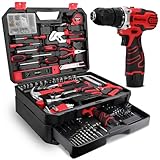
- Upgrade & Durable Toolbox: The Upgrade toolbox is a multi-functional solution that combines aesthetics and practicality. It features a storage compartment with a separate sliding drawer, offering greater capacity than standard toolboxes. This design allows for organized storage of various tool types, making it easier and quicker to find the tools you need
- Fully Functional & Highly Practical: The 276 Pcs tool set meets Daily Work Needs, easily handling tasks such as furniture repairs, appliance installations, and simple renovations. It includes a variety of common tools, such as screwdrivers, wrenches, pliers, hammers, Needle-Nose Pliers, Saw, drill, They provide convenience and efficiency for our daily lives
- 12V Cordless Drill: 276 Pcs home tool kits includes a 1.5 Ah Cordless Lithium-ion Drill with a 3/8" (10 mm) max keyless chuck, two-speed control and a maximum speed of 1500 RPM. Weighing in at just 1.76 LB, it's incredibly lightweight, it's your ideal companion for tackling various DIY projects
- High-Quality Materials: The tools are crafted from premium materials with a heat-treated chrome finish, ensuring durability and reliability for long-lasting use. The handles are made from TPR material, providing a comfortable grip
- Ideal Gift Choice: The upgraded 276-piece tool set meets the needs of daily home repairs and small projects. This comprehensive and practical hand tool kit makes a thoughtful and useful gift for Father’s Day, Christmas, or any occasion, perfect for fathers and friends alike
How to choose the right appliance for a construction or remodel project
1. Start with physical and utility constraints
- Measure the opening: Record width, height, depth, hinge clearance, door swing, handle projection, and the path from delivery entrance to final location.
- Check electrical service: Confirm voltage, circuit requirements, outlet position, breaker capacity, and whether a dedicated circuit is required. Induction ranges, heat-pump water heaters, dryers, and other major appliances can have different electrical requirements.
- Plan water and drainage: Identify shutoff valves, water pressure, drain height, hose routing, condensate drainage, and whether a pump is required.
- Plan ventilation: Gas cooking needs effective outdoor exhaust. Conventional dryers need a properly routed exterior vent; heat-pump dryers do not use that type of vent but still need the specified clearances and condensate arrangement.
- Allow service access: Do not box an appliance into a location where filters, pumps, drain pans, connections, or control boards cannot be reached.
- Account for noise and heat: Heat-pump water heaters and dehumidifiers move air and may produce fan noise or cooler exhaust air. Confirm that the location is acceptable for the household.
2. Compare total ownership cost
Compare the purchase price with installation, electrical or plumbing work, filters, hoses, detergent or cleaning supplies, condensate pumps, service access, warranty coverage, and expected energy and water use. A lower-priced appliance that needs a circuit upgrade or difficult vent modification may cost more at the point of installation than a better-matched model.
For refrigerators with dispensers, price replacement filters and check their availability. For dryers, check whether drain or stacking accessories are included. For washers and ranges, verify that installation parts match the exact model rather than assuming a generic kit will fit.
3. Treat certification as a filter, not a final verdict
ENERGY STAR certification gives shoppers a standardized starting point across refrigerators, dishwashers, washers and dryers, room air conditioners, dehumidifiers, heat pumps, and other categories. The 2025 Most Efficient program highlighted especially efficient products in several of these categories. It does not tell you whether a unit fits the opening, has acceptable noise, is easy to repair locally, or can be installed without expensive changes.
Use the official product data to compare annual energy use and certification status, then read the installation manual before ordering. For heat-pump water heaters and dehumidifiers, installation conditions can have as much influence on the result as the label.
Crashes, No Sound, or Screen Glitches?
Random freezes, missing sound and display glitches usually trace back to one bad driver. Find and replace yours safely.Free scan · under a minuteWindows Errors? Fix Them Before They Spread
Repair common Windows errors and clear accumulated junk for a smoother, more stable PC - no reinstall needed.Free scan · no reinstall4. Verify safety before installation
- Search the exact model and serial number in the CPSC recall database.
- Install the manufacturer-approved anti-tip bracket on a range where required.
- Do not defeat door latches, thermal cutoffs, child locks, pressure relief devices, or other safety controls.
- Use qualified electrical, gas, HVAC, or plumbing professionals where the work exceeds your local code permissions or experience.
- Confirm that a gas cooking hood vents outdoors and that combustion appliances are maintained correctly.
- Keep installation manuals, receipts, serial numbers, and photographs of connections for future service or recall work.
For installation, accessories such as washing machine replacement hoses, a model-specific dryer drain kit, or a manufacturer-approved range anti-tip bracket can be useful, but check the appliance manual, connection size, length, material, and local code before ordering. These accessories are not universal.
5. Make connectivity optional where possible
For any appliance with Wi-Fi or an app, ask five questions: Does basic operation continue without internet? How long will security updates be provided? Is an account required? What data is collected and shared? What happens if the cloud service is discontinued? Use a unique password, enable two-factor authentication when available, install updates, and disable remote features you do not use.
6. Check incentives before purchase—not after
Rebates are especially worth investigating for heat-pump water heaters, efficient HVAC equipment, induction projects, and some heat-pump dryers. Eligibility varies by location and program, and a qualifying product may still require approved installation or documentation. Confirm the incentive in writing before the purchase if the rebate is part of your budget.
Which appliance upgrade fits which household?
| Household or project | Most logical starting point | What to verify first |
|---|---|---|
| Laundry-room replacement | Front-load washer plus heat-pump dryer | Door clearance, floor stability, drain route, dryer condensate handling, and electrical service |
| Kitchen remodel | Induction range or cooktop | Magnetic cookware, circuit capacity, ventilation, countertop opening, and child controls |
| Electric-resistance water-heater replacement | ENERGY STAR heat-pump water heater | Space, noise, condensate drain, household demand, circuit, and local rebates |
| Damp basement | Correctly sized ENERGY STAR dehumidifier | Moisture source, current rating method, drainage, pump lift, and humidity measurement |
| Apartment or room addition | ENERGY STAR room air conditioner | Room size, window or wall opening, sealing, electrical outlet, and noise tolerance |
| Home with children or pets | Appliances with effective lockouts and secured ranges | Reachable controls, anti-tip hardware, door locks, and exact recall status |
| Privacy- or reliability-conscious household | Efficient appliances with local controls | Offline operation, update policy, account requirement, and data practices |
Final pre-purchase checklist
- Write down the opening dimensions and delivery path.
- Confirm circuit, voltage, gas, water, drain, vent, and clearance requirements from the installation manual.
- Check the exact model and serial number for recalls and verify the manufacturer’s warranty and service network.
- Compare annual energy use, water use, maintenance, consumables, and installed cost.
- For connected appliances, confirm offline operation, security updates, privacy controls, and account requirements.
- For heat-pump equipment and whole-home dehumidification, confirm sizing and installation with a qualified professional.
- Verify rebate eligibility before purchase and retain all required documentation.
- After installation, test drainage, door and control locks, anti-tip hardware, ventilation, and normal operation before the installer leaves.
If the project involves hardwired equipment, gas, refrigerant, new circuits, water-heater plumbing, or whole-home moisture control, use a licensed appliance installer or the appropriately licensed trade rather than treating installation as an afterthought. Correct sizing and installation affect performance, safety, and sometimes warranty coverage.
Frequently Asked Questions
Are ENERGY STAR appliances always the best choice?
ENERGY STAR certification is an excellent first filter because it provides standardized efficiency criteria, but it is not a complete product ranking. Confirm the appliance’s dimensions, installation requirements, noise, service availability, maintenance, and total installed cost before buying.
Is a heat-pump dryer worth choosing if it costs more?
It can be, particularly where energy costs are significant or an exterior dryer vent is difficult to install. ENERGY STAR says certified heat-pump dryers use at least 28% less energy than standard dryers. Compare the purchase premium, cycle times, condensate drainage, electrical requirements, and local service before deciding.
Can any cookware be used on an induction cooktop?
No. A magnet should stick firmly to the cookware’s cooking surface, and the pan should have a suitable flat base and size. Always confirm compatibility with the cooktop manual; some stainless-steel, aluminum, copper, glass, and ceramic pans may not work unless they have a magnetic base.
What humidity should a home dehumidifier maintain?
EPA generally identifies 30% to 50% relative humidity as a suitable indoor range. The appropriate setting depends on the building and climate, but a humidistat and an independent hygrometer are useful for avoiding both excessive moisture and unnecessary over-drying.
Recommended Free Tools
How should I check whether an appliance has been recalled?
Search the exact brand, model number, and serial number in the CPSC recalls database before buying, particularly for used appliances. Check again after installation because recall notices and expansions can be issued after a product has been on the market.
The Bottom Line
For most 2025 appliance purchases, prioritize fit, installation quality, serviceability, and measurable efficiency over extra screens or cloud features. The strongest category choices are ENERGY STAR-certified appliances, heat-pump laundry and water heating where the site supports them, induction cooking, practical moisture sensors, and correctly sized cooling or dehumidification. Skip unnecessary complexity, verify connected-device support, check recalls by model and serial number, and confirm rebates only after you know the appliance is suitable for your home.
Quick Recap
Product prices and availability are accurate as of the date/time indicated and are subject to change. Any price and availability information displayed on Amazon at the time of purchase will apply.

