Basement stairs are often dark, noisy, visually disconnected from the finished room, and surrounded by wasted wedge-shaped space. The right update can address those problems at once: make the flight easier to use, give it a deliberate design, and turn the area beneath it into useful storage or living space.
Basement stairs can do more than connect floors. With the right combination of traction, lighting, finishes, railing details, and under-stair storage, they can become one of the most useful and intentional parts of a basement remodel. The best project depends on whether you need a quick cosmetic refresh, better nighttime visibility, organized storage, or a larger built-in feature.
As an Amazon Associate I earn from qualifying purchases.
Choose the right basement stair project
| Project type | Good options | What to watch |
|---|---|---|
| Lowest-disruption refresh | stair runner, painted risers, framed art, refreshed handrail finish, battery-powered LED lights | Do not create a loose rug, slippery tread, glare, or an obstruction on the stairs |
| Moderate DIY project | Under-stair shelves, cabinets, pull-out bins, trim updates, riser repainting | Inspect for wiring, plumbing, ductwork, moisture, and utility access before fastening or enclosing anything |
| Professional or permit-sensitive work | New wiring, major railing reconstruction, stair geometry changes, enclosed rooms, and alterations affecting egress | Verify locally adopted building and electrical requirements before work begins |
1. Install a stair runner
A purpose-made stair runner is one of the quickest ways to add pattern and warmth to plain or unfinished basement stairs. It can also soften footfall noise and improve traction when it is correctly sized and securely installed.
Quick wins for a faster PC:
Repair Windows errors before they cause bigger problemsFix Now →Scan for outdated or missing drivers - takes under a minuteDriver Scan →Choose a runner intended for stairs rather than placing an ordinary loose rug over the flight. The runner needs a secure installation system appropriate for the stair construction, with the edges and transitions kept flat. Select a durable, easy-to-clean material if the basement receives muddy shoes, pets, or frequent traffic. A subtle pattern can hide everyday dirt, while a bold pattern can connect the stairs to a finished basement’s furnishings.
#1 Best Overall

- NON-SLIP STAIR RUG: Multi-purpose Stair mats to use the TPE Non-Skid backing on dry floor, helping it to stay in place on your floor, it won't slip or scuff floors. Low profile design so doors won't get stuck.Perfect for homes with pets (dogs or cats) or kids.
- HOW TO USED Stair Treads for Step - Just clean, peel, and stick! If you need to reposition or remove,it won't leave any residue,always keeping your floors intact.And it won't remove or slip when meeting water.
- STAIR TREADS MAT SIZE:28"x9"x0.4",material:made of 100% polyester
- STAIR MAT NO -SLIP: Non Slip Strips can be washed repeatedly 30 times without affecting the slip resistance. Fit for restaurants,family rooms, corridors,game rooms and children's bedrooms
- CUSTOMER SERVICE: Our brand is always pursuing customer satisfaction as the top of priority. We are glad to receive more suggestions from our customers, if the mats have problems, we will process any request from customer with 24 hours, and replacement will be paid by us for any quality issues
Before installation, check every tread and riser. A runner should not be used to conceal loose boards, damaged nosings, inconsistent step dimensions, or moisture problems.
Product idea: A stair runner can be a practical first upgrade when you want improved visual continuity, less noise, and a more finished walking surface without rebuilding the staircase.
2. Paint the risers a contrasting color
Keep the treads durable and easy to clean, then use the risers to introduce contrast. White risers create a traditional, brighter appearance; a dark color gives the staircase a more contemporary look; and a sequence of colors can suit a family room, playroom, or creative basement.
Outdated Drivers Are Slowing You Down
One free scan finds every outdated or missing driver and matches the right update for your exact hardware.Free scan · exact hardware matchPC Slower Than It Used to Be?
A free scan shows the junk files, broken settings and background clutter dragging Windows down - then fixes them in one click.Free scan · Windows 10 & 11Use a coating compatible with the riser material and allow it to cure fully before regular traffic. Test the color under the actual basement lighting, since a dark stairwell can make saturated paint look heavier than it did on a sample card. If the treads are wood, protect them from paint drips and avoid coating the walking surface with a finish that becomes slick.
3. Refinish wood treads
Sound wood treads can often be sanded and stained to add warmth and make an older stairway look deliberately finished. A clear or tinted protective finish can complement wood flooring, cabinetry, or a nearby handrail.
Do not treat refinishing as merely cosmetic. Inspect for cracks, movement, deep wear, loose fasteners, and damaged nosings. A tread that is structurally compromised may need replacement rather than sanding. Also choose a finish with appropriate slip resistance and follow the manufacturer’s preparation and curing instructions. A glossy surface is not automatically a better surface for stairs.
4. Add motion-activated stair lighting
Basement stairs are frequently used at night, when a switch may be at the wrong end of the flight or a ceiling fixture may cast shadows. Motion-activated LED strips, compact step lights, or low-profile path lights can provide light as someone approaches.
What’s actually slowing this PC down?
Pick the symptom - the matching free tool is one click away.
Battery-powered units are useful for a low-disruption update, particularly where adding wiring would require opening finished walls. Position lights so they illuminate the walking surface without shining directly into the user’s eyes. Conceal or protect cables, keep batteries accessible for replacement, and test the sensor from both directions.
Hardwired fixtures can provide a cleaner permanent installation, but new wiring may require an electrician and may be subject to local electrical requirements. A motion sensor does not by itself make a stairway code-compliant, and decorative LED strips should not be allowed to reduce visibility through glare or uneven illumination.
Rank #2

- ❤Comfortable & Noise Reducing - 15-Piece Stair Treads Carpet is made of polyester, High-density wool blends on the stair cover surface make you feel soft and comfortable on bare feet. Proper thickness can reduce the noise generated when going up and down the stairs, and provide you with a quiet and relaxing environment. They are an excellent choice for anti-slip protection.No crease, no curl, no fading.
- ❤Washable & Reusable - Step treads are durable and stain-resistant. Dust, paper scraps, and pet hair can be cleaned with a vacuum cleaner. Also, Carpet stair treads are hand wash or machine wash. If you’d like to wash stair covers for carpeted stairs, wash in cold with mild detergent and then replace the carpet for stairs after natural drying and will feel and look like new!
- ❤Easy Install and Removal: Clean and dry your floor first; remove the backing plastic cover; simply place stair carpet treads non-slip on your staircase and press indoor carpet stair treads; If you want to relocate or remove it without leaving any residue, Just peel and stick to stairs.
- ❤Widely Using: Non-slip stairs runner to all smooth surfaces for the best traction and the perfect texture to make sure you and your surrounding are safe at all times! you can stick these Stair Treads for Wooden Steps, tile, metal, and glass stairs, Enjoy all-around protection and ultimate comfort in your home.
- ❤Fully Refund: Carpet Protectors for Stairs is dedicated to providing you with comfortable and non-slip stairway treads rugs, if for some reason you're not happy and love with our anti-slip for stairs, all you need to do is contact our service support team for replace a new carpet treads for wood stairs or refund. No-questions-asked, No-hassle Refund!
Product idea: Motion-activated stair lights are especially useful when the basement has no convenient switch, but distinguish battery products from hardwired installations before choosing a solution.
5. Layer wall and ceiling lighting
A single harsh ceiling fixture is rarely the best lighting plan for a basement stairwell. Combine general basement lighting with one or more additional sources, such as a wall sconce, recessed fixture, stairwell light, or nearby task light.
Do these 3 things before closing this tab:
1Clear out junk files and repair common Windows errors2Fix the driver behind crashes, sound loss and screen glitches3Repair Windows errors before they cause bigger problemsLayered lighting reduces dark corners and helps the stair flight feel connected to both floors. Place fixtures so the handrail, tread edges, and top and bottom landings remain visible. Select damp-rated products where the basement environment requires them, and plan any new wiring with a qualified electrician when the work exceeds your experience or local rules require professional involvement.
6. Upgrade the handrail
A new handrail can improve both safety and appearance when the existing rail is uncomfortable, loose, damaged, or visually dated. Wood, metal, and mixed-material rails can all work; the important practical qualities are a comfortable grasp, secure attachment, uninterrupted use along the flight, and adequate clearance from the wall.
Do not choose a rail only by color or style. Handrail placement, height, continuity, projection, wall clearance, and the conditions that trigger a handrail are governed by locally adopted building requirements. In the 2024 International Residential Code, residential stairways generally require a handrail on at least one side of a flight with four or more risers, but the locally adopted code controls the project.
7. Use a modern metal railing or cable detail
Metal balusters, a slim steel rail, or a cable-style detail can give basement stairs a contemporary appearance while keeping the sightline visually light. Black metal works well with light walls and wood treads; stainless or brushed finishes can suit a modern utility or entertainment space.
Confirm the design before ordering components. Balusters, guards, cable spacing, openings, attachment points, and landings may all be subject to local requirements. A visually minimal railing is not acceptable if it creates a fall hazard or openings that are too large. Cable systems also require correct tension and durable structural attachment.
8. Coordinate the railing with the room
If the stair structure is sound, a coordinated finish may deliver more impact than a complete replacement. Paint or stain the handrail, balusters, and newel posts to relate them to nearby trim, flooring, doors, cabinetry, or furniture.
For example, a stained handrail can echo wood shelving while painted balusters disappear against the wall. Alternatively, a dark rail can become a deliberate accent in an otherwise light basement. This is a relatively low-disruption change, but do not paint over loose joints or use a slippery coating on the grasping surface.
9. Create a gallery wall beside the stairs
A blank stair wall is a natural place for framed family photographs, artwork, maps, or a collection of small objects. Arrange the display around the slope of the stairs or use a consistent frame finish to make a varied collection look organized.
Use secure mounting hardware suited to the wall and frame weight. Keep frames out of the required stair and landing clearance, away from the handrail’s usable space, and positioned so they cannot be struck by people carrying items up or down the stairs. In a narrow stairwell, a few carefully spaced pieces are safer and more effective than a crowded arrangement.
Rank #3

- 【STAIR TREADS NON SLIP】Our durable stair treads provide secure footing, the non-slip surface provides traction and prevents slips and falls, and the self-adhesive back ensures the stair treads for wooden steps stay securely in place, even when children or pets pass over them.
- 【EASY INSTALLATION】Easily set up our peel and stick stair treads with a hassle-free process. Simply peel off the backing and apply these slip-resistant stair runner to your stairs, allowing for a quick and easy installation in minutes.
- 【RESIDUE-FREE REMOVAL】If you want to replace or remove these stair carpet treads, the stair mat can be peel off cleanly without damaging your stairs or leaving any sticky remnants.
- 【UNIQUE 3D DESIGN】These carpet stair treads are woven in varying heights to present 3D effect, enhanced the overall aesthetics of your stairs. The soft staircase step treads also provides cushioning and reduces noise levels.
- 【DURABLE MATERIAL】 Constructed from wear-resistant and durable materials, our stair treads are built to withstand prolonged use without wearing out quickly, saving you replacement costs in the long run.
10. Build closed cabinets under the stairs
The wedge-shaped space beneath stairs is often ideal for closed cabinets. Doors can hide tools, seasonal decorations, cleaning supplies, sports gear, or basement equipment while giving the room a more finished appearance.
Use shallow sections where the low end of the stair makes deep storage impractical, and reserve taller sections for items that need vertical clearance. Before building, inspect for electrical cables, plumbing, ductwork, structural members, moisture, and required access panels. Do not enclose equipment or utility shutoffs that need service access, and do not reduce required circulation or egress.
Moisture-resistant cabinet materials and a durable finish are sensible choices in a basement, but they do not correct bulk water intrusion or persistent humidity. Address the moisture source first.
11. Add pull-out drawers or bins
Deep, low storage is difficult to use when everything is stacked at the back of a cavity. Pull-out drawers, rolling bins, and labeled containers make the space more accessible and are particularly useful for holiday decorations, sports equipment, household supplies, and children’s items.
Divide the storage by height and weight. Use full-extension hardware where appropriate, keep heavy items low, and leave enough room to open drawers without blocking the stair route. If a built-in system is not justified, modular containers can provide most of the benefit with less construction.
Product idea: Under-stair storage bins and labeled baskets are a low-disruption way to organize the cavity before committing to custom drawers or cabinetry.
12. Install open shelving
Shelves that follow the stair slope can turn an awkward recess into a display and storage feature. Use them for books, baskets, framed photographs, records, games, or decorative objects. A continuous shelf line can emphasize the architecture, while individual cubbies make it easier to sort different categories.
The Tool Desk
Outbyte PC Repair FREEClear out junk files and repair common Windows errorsFree Scan →Outbyte Driver Updater FREEScan for outdated or missing drivers - takes under a minuteDriver Scan →Open shelving is best where the basement is reasonably dry and the contents will not become a hazard near the stairs. Anchor shelves securely, avoid projecting into circulation, and use baskets or doors for items that should not be exposed. Concealed or low-voltage LED strip lighting can make the shelving a feature rather than a dark recess, provided the installation is safe and serviceable.
13. Turn the space into a hidden mudroom
When the basement stairs are near an entry route, the under-stair area can become a compact drop zone. A bench, hooks, cubbies, baskets, mirror, and boot tray can keep coats, bags, shoes, and wet gear from spreading through the basement.
Use a bench sized to the available headroom and provide enough clearance for someone to sit without entering the stair path. Choose moisture-resistant finishes where wet footwear is likely, and use a tray that can be removed for cleaning. Hooks should be securely anchored and placed where hanging items will not interfere with circulation or the handrail.
14. Create a basement pantry
An under-stair pantry can be especially useful when the stairs are near the kitchen, dining area, bar, or entertainment space. Shelves, drawers, pull-outs, or a closed door can hold canned goods, serving pieces, small appliances, and entertaining supplies.
Plan the pantry around the available height: taller shelves belong near the high end, while low sections can hold drawers or bottles. Keep food storage dry, clean, and away from leaks or condensation. Preserve access to utilities, do not block required circulation or egress, and confirm that a new door or partition will not interfere with the stairs or landing.
Rank #4

- 【Real material, Superior quality】 The surface of this non-slip stair treads mat is made of polyester material, which is soft and wear-resistant. It is durable and does not easily pull and pile up. The proper thickness not only ensures that you can step comfortably on our stair step rugs, but also helps keep your feet out of the cold stairs. Reduce the noise of going up and down the stairs, giving your family a quiet and relaxing environment.
- 【Strong adsorption, Good anti-skid effect】 These stair treads for wooden steps are made of TPR self-adhesive technology, so you won't feel the strong stickiness when you touch them, but they do have excellent anti-slip properties. Our stair treads carpet are applied to any indoor smooth surface stairs which are made of wood, marble, tiles, and glass. Our quality stair runners for wooden steps help your kids and dogs get up and down the stairs easily without the fear of slipping and falling.
- 【Easy to remove and wash, Repeated use】 If you need to reposition it or remove it, it will not leave any residue, protecting your original staircase from damage. When the stair rug get dirty, simply vacuum to clean up pet hair or kids spilling food and drinks. Or throw carpet stair treads in the washing machine. After washing them in water, it is recommended to dry them in the shade, not in the dryer or in the sun.
- 【Easy installation, Free cutting】 These non slip stair steps carpets for wooden stairs can be installed quickly in 5 minutes without the use of additional double-sided tape, glue, or carpet tacks. Installation steps: 1. Clean the stairs. 2. Peel off the film on the back. 3. Place on the stairs and press to complete the installation. You can also easily cut it with scissors to match your corners or special step size. Because our rug of stairs made of high-stability creasing technology, you don't have to worry about delamination.
- 【Fast response, Excellent service】These stair treads non slip are the perfect combination of elegance and function. Our edging stair treads measure 8" X 30", suitable for most indoor stairs. In addition, our collection includes neutral colors in grey, dark grey, black, beige and brown, which easily match your home decor and your styles . If you have any questions or concerns, please don't hesitate to contact us. Our customer service team will respond to you quickly within 24 hours.
15. Add a compact home office
A suitably sized under-stair recess can accommodate a small desk, wall-mounted fold-down work surface, shelving, and task light. This works best as an occasional workstation rather than an assumed full-time office in a cramped or low-ceilinged space.
Measure the usable headroom where the chair and desk will actually be located. Check ventilation, temperature, moisture, outlet placement, glare, and the ability to exit comfortably. A fold-down surface can preserve floor area, while wall-mounted storage keeps the work zone clear. Any new receptacles or wiring should be planned with an electrician where required.
16. Design a reading nook
A built-in bench with hidden storage, cushions, a lamp, and nearby shelves can make the under-stair area feel intentional and inviting. It is a good choice when the recess is tall enough to sit in comfortably, dry, ventilated, and away from the main traffic path.
Recommended Free Tools
Use washable upholstery and choose lighting that can be switched without reaching into an awkward corner. Keep cushions, books, and blankets from obstructing the stairs. If the space is too low for sitting, use the idea as a display or low-storage zone instead of forcing a bench into it.
17. Make a pet suite
The under-stair area can house a built-in pet bed, crate, feeding-supply cabinet, or toy storage. A custom opening can make the feature blend into the room, while a removable bed and washable surfaces make cleaning easier.
Prioritize ventilation, accessibility, and visibility. Avoid exposed wiring, sharp hardware, toxic finishes, loose insulation, and doors that could trap an animal. Do not use a small enclosed cavity as a permanent pet room unless it provides appropriate air movement and the animal can enter and leave safely.
Independent reader supportYour contribution helps us test, update, and keep practical guides available for everyone.18. Create a hobby, wine, or display zone
The largest under-stair areas can support a more specialized feature: a compact bar, wine storage, tool pegboard, craft station, collectible display, or media-equipment cabinet. Custom pull-outs are useful when the space is deep but difficult to reach, while pegboard and adjustable shelving can adapt as hobbies change.
Free tools Windows power users keep installed
One-click scans. No signup required.
Keep temperature and moisture in mind. A basement that is damp or subject to flooding is a poor location for valuable collections, paper goods, electronics, or wine storage without suitable environmental control. Before cutting into walls or building a fixed installation, locate structural members, wiring, plumbing, ductwork, cleanouts, and shutoffs. If the project adds plumbing, electrical circuits, ventilation, or a partition, get the appropriate professional and local-code guidance first.
Basement stair safety and code considerations
Decorative improvements should never compromise the stairway’s basic geometry or safe use. The 2024 International Residential Code includes provisions for stair width, headroom, handrails, illumination, guards, and specialized stair types. As a general reference, residential stairways generally require at least 36 inches of clear width above the permitted handrail height and below required headroom, with at least 6 feet 8 inches of headroom. The code also generally requires a handrail on at least one side of a flight with four or more risers and requires stairway illumination.
These are model-code provisions, not a substitute for the building code adopted in your location. Requirements can vary by jurisdiction and project scope. Bulkhead stairways, alternating-tread devices, and ship’s ladders have special provisions and should not be treated as ordinary stair replacements.
Best Value
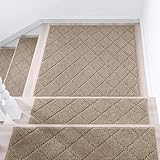
- NON-SLIP STAIR RUG: Multi-purpose Stair mats to use the TPE Non-Skid backing on dry floor, helping it to stay in place on your floor, it won't slip or scuff floors. Low profile design so doors won't get stuck.Perfect for homes with pets (dogs or cats) or kids
- HOW TO USED Stair Treads for Step - Just clean, peel, and stick! If you need to reposition or remove,it won't leave any residue,always keeping your floors intact.And it won't remove or slip when meeting water.
- STAIR TREADS MAT SIZE:30"x30"x0.4",material:made of 100% polyester
- STAIR MAT NO -SLIP: Non Slip Strips can be washed repeatedly 30 times without affecting the slip resistance. Fit for restaurants,family rooms, corridors,game rooms and children's bedrooms
- CUSTOMER SERVICE: Our brand is always pursuing customer satisfaction as the top of priority. We are glad to receive more suggestions from our customers, if the stair landing mats have problems, we will process any request from customer with 24 hours, and replacement will be paid by us for any quality issues
- A runner does not automatically make a stair safe. It must be correctly fitted and secured.
- LED strips do not automatically satisfy stairway illumination requirements.
- A ship’s ladder or alternating-tread device is not an easy code workaround.
- A new railing must satisfy local rules for handrails, guards, openings, height, continuity, and attachment.
- Enclosing under-stair space must not remove required access, headroom, circulation, or egress.
- New electrical work, structural changes, plumbing, and major partitions may require permits or qualified trades.
Measure and inspect before choosing an idea
Do this inspection before ordering a runner, designing cabinets, or closing the under-stair cavity:
- Measure stair width. Record the clear width at the treads and note the handrail’s position and projection.
- Check risers and treads. Look for inconsistent dimensions, loose boards, damaged nosings, movement, and slippery finishes.
- Measure headroom. Check the entire flight and the areas where a person will stand, sit, work, or reach into storage.
- Measure both landings. Note doors, light switches, low ceilings, and furniture that could restrict movement.
- Inspect the handrail. Test its rigidity, grasp comfort, continuity, wall clearance, and attachment points.
- Map lighting. Identify existing switches, dark spots, sensor locations, and whether new wiring is needed.
- Inspect beneath the stairs. Use an access opening or other non-destructive method where possible to locate wiring, plumbing, ductwork, structural members, and utility shutoffs.
- Check moisture. Look for damp smells, staining, condensation, mold, or water entry before adding cabinets, upholstery, paper goods, or electronics.
- Protect circulation and egress. Confirm that furnishings, storage doors, drawers, displays, and partitions will not narrow the route or obstruct an exit.
- Verify local requirements. Contact the building department or a qualified professional before changing stair geometry, adding permanent wiring, reconstructing a railing, or enclosing the space.
How to combine the ideas without overbuilding
For a simple refresh, pair a secure runner with painted risers, a coordinated handrail finish, and battery-powered stair lights. For a storage-focused basement, use closed cabinets at the tall end, pull-out bins at the low end, and a small open-shelf section for frequently used items. For a modern finished basement, combine wood treads, a slim metal railing, layered lighting, and restrained artwork.
The most successful design usually leaves the stairs visually calm and keeps the functional feature under the stairs organized. Start with safe walking conditions and lighting, then add finishes and storage that support how the basement is actually used.
Frequently Asked Questions
What is the best way to improve basement stairs?
The safest first upgrades are improved lighting, a secure stair runner when appropriate, and a properly installed handrail. Inspect tread condition and verify local requirements before changing finishes or railing components.
Are stair runners a good idea for basement stairs?
Yes, if the runner is purpose-made for stairs, correctly sized, and securely installed. A loose rug or poorly fitted runner can create a trip hazard and does not correct damaged treads or inconsistent stair geometry.
What’s actually slowing this PC down?
Pick the symptom - the matching free tool is one click away.
What can you do with the space under basement stairs?
Good options include cabinets, pull-out drawers, rolling bins, open shelving, a mudroom drop zone, pantry storage, a compact office, reading nook, pet suite, hobby station, or display area. The choice depends on headroom, moisture, access, and nearby utilities.
Do I need permission or a permit to finish under-stair space?
It may be possible, but check for wiring, plumbing, ductwork, structural members, moisture, utility access, headroom, circulation, and egress first. New wiring, plumbing, partitions, or structural work may require permits and qualified professionals.
The Bottom Line
The strongest basement stair upgrades solve a real problem first: improve traction, visibility, handrail usability, or storage. A runner, contrasting risers, layered lighting, a coordinated railing, and well-planned under-stair storage can create a substantial improvement without changing the staircase. Before enclosing the space or altering the stair structure, inspect for utilities, moisture, headroom, circulation, egress, and locally adopted code requirements.
Quick Recap
Product prices and availability are accurate as of the date/time indicated and are subject to change. Any price and availability information displayed on Amazon at the time of purchase will apply.
Quick wins for a faster PC:
Clear out junk files and repair common Windows errorsFree Scan →Scan for outdated or missing drivers - takes under a minuteDriver Scan →Repair Windows errors before they cause bigger problemsFix Now →
