Windows Errors? Fix Them Before They Spread
Repair common Windows errors and clear accumulated junk for a smoother, more stable PC - no reinstall needed.Free scan · no reinstallCrashes, No Sound, or Screen Glitches?
Random freezes, missing sound and display glitches usually trace back to one bad driver. Find and replace yours safely.Free scan · under a minuteA staghorn fern is not a normal potted houseplant, and treating it like one is the fastest way to ruin it. Most plants sold as staghorn ferns are Platycerium bifurcatum, also called elkhorn fern. It is an epiphyte, which means it naturally grows attached to trees and other supports instead of rooting into dense soil.
That one fact explains almost all good staghorn fern care: give it bright filtered light, air around the roots, a mount or basket that drains freely, and watering based on how dry the root mass actually is. Indoors, it can be a long-lived wall-mounted plant. Outdoors, it works best in warm, humid, shaded areas and generally needs protection when temperatures drop.
On our construction job sites, the same rules we use for exterior details apply to mounted plants indoors: manage water, account for weight, attach to structure, and leave access for maintenance. A mature soaked staghorn fern can be much heavier than it looks. If you mount it like a picture frame, you may end up with damaged drywall, a stained wall, or a plant on the floor.
What a Staghorn Fern Needs
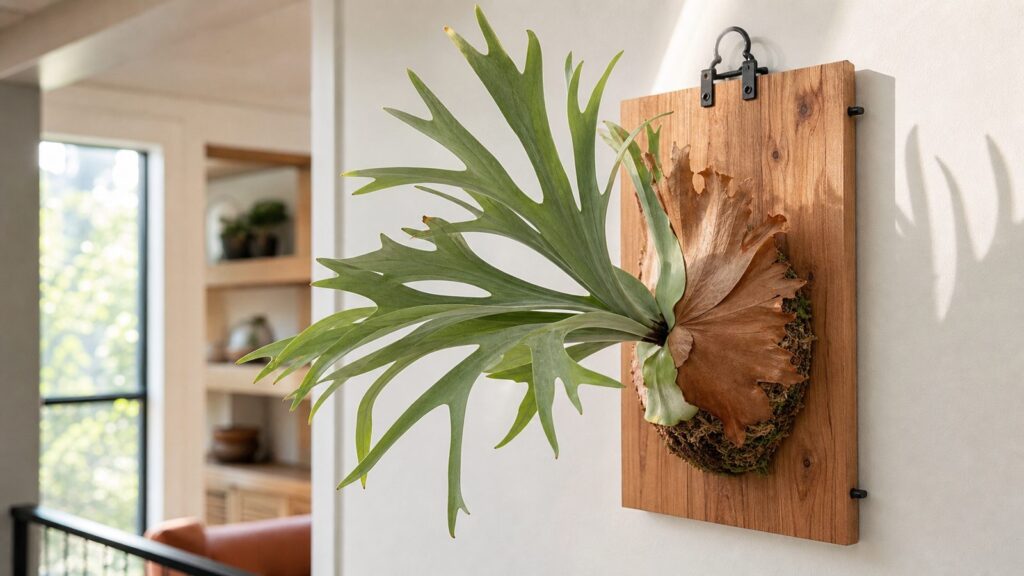
A staghorn fern has two main frond types. The green, antler-like fronds are the fertile fronds. These are the showy leaves most people notice first. The rounded shield fronds, sometimes called basal fronds, grow over the root area. They often turn tan or brown as they mature. That browning is usually normal, not a sign the plant is dead.
The Tool Desk
Outbyte Driver Updater FREEFix the driver behind crashes, sound loss and screen glitchesFind Drivers →Outbyte PC Repair FREERepair Windows errors before they cause bigger problemsFix Now →Do not peel off brown shield fronds just because they look dry. They protect the roots, help hold moisture, and catch organic matter. Removing them can expose the root mass and set the plant back.
#1 Best Overall

- Package Include: You will receive 6 quarts(Appx.4 oz) sphagnum moss, it will swell after absorbing water, it helps the plants to retain water while hiding the dirt, and looks good, these carnivorous plant soil mix can re-potting 1-2 medium plants or 3-4 small plants
- Premium Material: It is good quality pure natural dry moss, not contain twigs, roots, dirt clods, any other debris and any artificial colourings, it have good water retention and drainage, excellent ventilation, contains varieties of nutrients, which can meet needs of carnivorous plants, not easy to spoil, can be used for a long time
- Wide Application: You can use these orchid moss as nutritional succulent soil for plants, fern, venus flytrap plants, carnivorous plants, also as layering decoration for succulents, or use as egg-laying and incubation medium, substrate for reptile or amphibians terrariums
- Multi-use: Dried moss can use for make terrarium moss crafts, floral design or mini gardens, air plant terrariums, fill hanging basket line, decorate wreaths, natural lawn base for mini landscaping and scenery model, good filler of your faux houseplants
- Warm Tips: Please watering when the peat moss is not completely dry; Once it is dry, it will difficult to re-absorb water; And if you find organic moss is entangled with the roots when replacing it, please do not pull it in case break the roots; You could soak and shake in water to wash off the old sphagnum moss
For a common Platycerium bifurcatum, aim for these baseline conditions:
- Light: Bright indirect light indoors; bright shade, dappled shade, or partial shade outdoors.
- Water: Soak the mount or root ball thoroughly, let it drain, then water again when it feels noticeably lighter.
- Temperature: Best above 55 degrees Fahrenheit. Common P. bifurcatum is more cold-tolerant than many species but should not be treated as a hardy fern in most US climates.
- Humidity: Moderate to high humidity. Dry winter heat increases brown tips and watering needs.
- Medium: Long-fiber sphagnum moss, orchid moss, coco coir, or a coarse epiphyte mix with excellent airflow.
- Fertilizer: Light feeding only during active growth, usually spring through early fall.
Light: Bright, Filtered, and Not Harsh
Indoors, place a staghorn fern near an east-facing window, several feet back from a bright south or west window, or in a room with strong filtered light. A sheer curtain can make a big difference. The goal is bright light without hot glass-amplified afternoon sun.
Outdoors, use shade, bright shade, or dappled light under a porch, pergola, oak canopy, or lath structure. A plant that spent winter indoors should not go straight into afternoon sun in May. Move it outside gradually over 10 to 14 days. Start in deep bright shade, then step it into slightly stronger morning light if it responds well.
Do these 3 things before closing this tab:
1Repair Windows errors before they cause bigger problems2Scan for outdated or missing drivers - takes under a minute3Clear out junk files and repair common Windows errorsSun scorch usually shows up as pale, tan, crispy patches on exposed fronds. Once tissue is burned, it will not green back up. Move the plant to gentler light and let new growth replace the damage over time.
Watering: Use the Lift Test, Not a Calendar
The most reliable watering method for a mounted staghorn fern is the lift test. After a full soak, pick up the plant and learn its wet weight. Let it drain completely. Over the next several days, lift it again. When the mount feels noticeably lighter and the moss is no longer damp through the center, it is time to water.
As a starting range, many mounted plants need water about once a week during warm active growth. In cooler indoor winter conditions, every 2 to 3 weeks may be closer. Those numbers are only starting points. A small fern on a thin board in a dry room may dry in 4 days. A large fern on a thick moss pad in a humid bathroom may stay wet much longer.
How to Water a Mounted Staghorn Fern
- Take the plant off the wall or hook if possible.
- Set it in a sink, tub, bucket, or outdoor shaded area.
- Soak the root mass and moss for 10 to 20 minutes, or until fully hydrated.
- Let it drain until water stops dripping freely.
- Rehang it only after the back and lower edge are not actively dripping.
For outdoor plants, water in the morning. That gives the crown and shield area time to dry before cooler evening temperatures. A wet crown sitting through a cool night is a common setup for fungal and rot problems.
Recommended Free Tools
If your tap water is hard and the frond tips keep browning even though your watering schedule is reasonable, try rainwater, distilled water, or dechlorinated water for a month. Mineral buildup can stress the root zone over time, especially on mounted plants that are not flushed as thoroughly as ordinary pots.
Rank #2
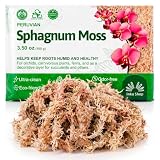
- ULTRA CLEAN LONG FIBER QUALITY Handpicked Peruvian long fiber sphagnum moss with a soft springy texture that feels clean, natural and easy to handle. Each batch is carefully sorted to reduce sticks, loose waste and debris, giving you a cleaner workspace and a more attractive finish in pots, baskets and terrariums. The airy strands wrap gently around roots while supporting oxygen flow for orchids, aroids and indoor plants.
- BALANCED MOISTURE RETENTION This premium sphagnum moss holds moisture evenly through its fibers and releases it gradually, helping create a stable damp environment for sensitive roots. Its open long fiber structure supports airflow and drainage so plants can access hydration without heavy compaction. Ideal for orchid repotting, cuttings, air layering, carnivorous plants and moisture loving houseplants.
- ORCHID REPOTTING AND ROOT SUPPORT Ideal for Phalaenopsis, Oncidium, Dendrobium, Cattleya and other epiphytes, this orchid moss helps maintain moisture and airflow around the root zone. The soft fibers are easy to position during repotting, helping secure fragile roots with more control. Use alone or blend with bark, perlite, pumice, charcoal or soil mixes depending on your watering routine.
- MULTIUSE PLANT AND TERRARIUM MEDIUM More than orchid moss, this natural sphagnum moss works for carnivorous plants, succulents, moss poles, hanging baskets, seed starting, propagation and decorative planters. It also works as terrarium substrate or humid hide material for geckos, snakes, frogs, turtles, amphibians and invertebrates, helping maintain humid zones with a natural forest look.
- FAST HYDRATION AND EASY USE The compressed dry moss saves storage space and expands visibly after hydration, giving you generous usable volume for plant care, reptile habitats and DIY gardening projects. Simply soak the amount needed for 15–20 minutes, squeeze out excess water and place loosely to keep the fibers fluffy and breathable. A practical choice for plant collectors, orchid growers and reptile keepers.
Mounting a Staghorn Fern the Right Way
A staghorn fern mount is both a plant support and a small wall installation. Build it with the same practical thinking you would use for a shelf, cabinet, or exterior fixture: choose the right material, provide drainage, protect adjacent finishes, and attach it to something solid.
Good mounting surfaces include untreated cedar, redwood, cork bark, hardwood plaques, driftwood, tree fern slabs, and slatted or wire baskets. Avoid treated lumber and avoid copper in direct contact with the plant. Use stainless steel, coated, or corrosion-resistant hardware where moisture is expected.
For a starter plant in a 4- to 6-inch nursery pot, a mounting board around 10 by 12 inches is a useful minimum. For a fuller plant, move up to 12 by 16 inches or larger. Leave room for shield fronds to expand. A too-small plaque may look tidy on day one, but it forces early remounting and increases the chance of damaging the shield fronds later.
Quick wins for a faster PC:
Repair Windows errors before they cause bigger problemsFix Now →Fix the driver behind crashes, sound loss and screen glitchesFind Drivers →Basic DIY Mounting Materials
- Healthy staghorn fern, preferably common Platycerium bifurcatum for beginners.
- Untreated wood, cork, driftwood, or a suitable basket.
- Long-fiber sphagnum moss or orchid moss.
- Monofilament fishing line, nylon string, plant-safe twine, mesh, or plastic-coated wire.
- Stainless or coated screws, D-rings, hooks, picture wire, or rated wall hardware.
- Drill, driver, scissors, pruners, bucket, and staple gun or small nails depending on the mount.
Soak the moss before use, squeeze out excess water, and form a pad behind and around the root mass. Secure the plant firmly enough that it cannot shift, but do not tie across the tender green antler fronds. Work around the shield area and root ball instead.
Wall Protection and Hardware Details
This is where plant advice often gets too casual. A mounted staghorn fern is watered repeatedly, gets heavier when wet, and may hang against drywall, plaster, wood paneling, or masonry. Plan for water and weight from the start.
Use spacers behind indoor mounts so air can move between the board and wall. A 1/2-inch to 3/4-inch standoff is usually enough for a small to medium mount. Nylon spacers, rubber bumpers, or small sealed wood blocks can work. The goal is simple: the wall needs to dry between watering cycles.
For large specimens, attach to a stud whenever possible. A drywall anchor rated for 30 pounds is not the same as a stud-mounted screw holding a wet, living plant that gets lifted on and off the wall. For a large mount, design around wet weight, not dry weight. If the plant and board weigh 12 pounds dry, assume it could weigh 18 to 25 pounds after soaking depending on moss volume and board size.
Use a hanger that lets you remove the plant for soaking. A cleat, heavy hook, or D-ring setup is better than a permanent wire arrangement that makes watering awkward. If the plant is difficult to take down, homeowners tend to under-water it or water it in place, which can damage the wall.
Rank #3

- Package Include: You will receive 40 quarts(Appx.2.2 lb) sphagnum moss, it will swell after absorbing water, it helps the plants to retain water while hiding the dirt, natural and clean materials, these carnivorous plant soil mix can mixed with peat, perlite to improve the breathability and moisture retention of the substrate
- Premium Material: Sphagnum moss is premium quality natural dry moss, not contain any artificial colourings, it have good water retention and drainage, excellent ventilation, contains varieties of nutrients, not easy to spoil, can be used for a long time, and it is not necessary to update all materials when changing pots
- Hydroponic Flower and Plants: Fill the vase with sphagnum moss, soak the roots of the plants in water, and the roots will naturally grow together with the moss; The biggest benefit is that sphagnum can produce oxygen in the water, help plant roots develop, and create a more ideal growth environment for roots than pure nutrient water
- Water Retention and Breathable: Phalaenopsis and orchid likes a warm and moist soil environment; After spreading water moss on the surface, it ensures that the planting material around the reed head of the orchid is moist, so that it can promote rooting and germination; It can be placed on the upper part of the substrate to moisturize, or it can be placed in the basin to enhance the permeability of the basin
- Wide Application: You can use these orchid moss as nutritional succulent soil for plants, fern, venus flytrap plants, carnivorous plants, also as layering decoration for succulents, or use as egg-laying and incubation medium, substrate for reptile or amphibians terrariums
Pot, Basket, or Board: Which Setup Is Best?
Mounted boards look dramatic, but they are not the only workable option. Baskets are often easier for beginners because they hold more moisture, drain well, and are simpler to soak. Pots can work if the mix is very coarse and airy, but dense all-purpose potting soil is a poor fit.
| Setup | Best For | Pros | Watchouts |
|---|---|---|---|
| Wood or cork mount | Wall display, mature specimens, classic staghorn look | Excellent airflow, attractive, matches epiphytic growth habit | Needs careful watering, wall protection, and load-rated hardware |
| Wire or slatted basket | Beginners, patios, humid rooms | Good drainage, easier to soak, more forgiving moisture buffer | Can look bulky indoors and may need lining with moss |
| Coarse pot or orchid basket | Small starter plants, temporary growing | Low cost, easy to move, simple watering | Dense soil causes rot; plant may outgrow the setup visually |
Temperature, Winter Care, and Outdoor Limits
Most staghorn ferns prefer temperatures above about 55 degrees Fahrenheit. Common P. bifurcatum and a few other species are more cold-tolerant than many tropical ferns, but that does not make them reliable outdoor plants across most of the United States. NC State lists P. bifurcatum as outdoor-capable in Zone 10 conditions.
In practical homeowner terms, treat outdoor staghorn ferns as warm-climate plants unless you know the species and your microclimate. In Zone 10-type areas, they may grow outside year-round in protected shade. In cooler regions, bring them indoors before cold snaps. Do not wait until the forecast says freezing. Move them when nights begin dropping into the low 50s, especially if the plant is wet or exposed to wind.
When bringing a plant indoors for winter, inspect for scale and mealybugs first. Rinse the mount, check the underside of fronds, and isolate the plant for 1 to 2 weeks if you have other houseplants. Indoor winter care usually means less fertilizer, less frequent soaking, and more attention to dry heated air.
Fertilizer and Growth Expectations
Staghorn ferns are not heavy feeders. During active growth, feed lightly with a diluted balanced liquid fertilizer or an orchid-style fertilizer. A common homeowner approach is 1/4 to 1/2 strength once a month in spring and summer. Skip fertilizer when the plant is stressed, newly mounted, very dry, or sitting in cool winter conditions.
Overfertilizing can burn roots and damage fronds. If you see brown tips, weak growth, and crusty residue around the moss, flush the root zone thoroughly with clean water and stop feeding for several weeks.
A healthy staghorn fern does not need constant fussing. New fronds may emerge in waves during warmer months. Shield fronds may slowly cover the mounting material. That is a sign the plant is establishing, not a problem to correct.
Staghorn Fern Costs in 2026
Prices vary by species, size, shipping, and whether the plant is already mounted. Common Platycerium bifurcatum is affordable. Rare collector species and large symmetrical specimens can become expensive quickly.
Rank #4

- 100% NATURAL AND CHEMICAL-FREE: This premium grade orchid moss is harvested from natural sources and is not treated with any chemicals or additives, ensuring a safe and organic growing medium
- VERSATILE USES IN GARDENING: Ideal for orchids, ferns, and hostas; perfect for lining hanging baskets, growing seedlings, and as a decorative soil covering; also serves as an excellent reptile substrate for humid hides
- SUPERIOR WATER RETENTION: This sphagnum moss retains ample moisture, providing an excellent growing medium for various plants
- SUSTAINABLY HARVESTED: Harvested using sustainable methods to protect the local ecosystem, this moss offers an eco-friendly option for your gardening and terrarium needs
- SAFE FOR TERRARIUMS AND PETS: This moss is not only great for plants but is also safe for use in terrariums and provides much-needed moisture to a wide variety of reptiles, aiding in the shedding process
| Item | Typical 2026 US Cost | What Changes the Price |
|---|---|---|
| Starter or potted staghorn fern, 4 to 6 inches | $15 to $40 | Local nursery vs. shipped plant, fullness, season, heat pack needs |
| 6- to 8-inch or hanging plant | $25 to $65 | Basket size, root establishment, shipping weight, local availability |
| Mounted common staghorn fern | $35 to $125 | Board size, finish, driftwood, plant size, shipping, mount quality |
| Rare Platycerium species or cultivars | $60 to $200+ for small plants | Species, symmetry, age, collector demand, import history |
| DIY mounting materials | $10 to $40 | Sphagnum, cedar or cork, hooks, screws, wire, hanger hardware |
| Specialty plant service | $75 to $175 per hour or $50+ monthly | Metro area, travel, number of plants, remounting, pest treatment |
A homeowner who already owns a drill and basic hand tools can usually mount a small fern for the cost of the plant plus $10 to $40 in materials. Long-fiber sphagnum moss is commonly around $9 for a small bag, and a plain cedar board or cork panel can be inexpensive. The cost rises when you use finished hardwood, decorative driftwood, specialty hangers, or professional labor.
Independent reader supportYour contribution helps us test, update, and keep practical guides available for everyone.Common Problems and What They Mean
Most staghorn fern problems come from water, light, cold, or pests. Diagnose before you act. Adding more water to a rotting plant or moving a scorched plant into a dark corner can make the problem worse.
| Symptom | Likely Cause | What to Do |
|---|---|---|
| Brown, papery shield fronds | Normal aging | Leave them in place unless they are mushy or foul-smelling |
| Wilting, dry fronds, very light mount | Underwatering | Soak 10 to 20 minutes, drain well, and shorten the dry interval |
| Mushy crown, sour smell, blackened base | Overwatering or poor airflow | Reduce watering, improve drainage and air movement, remove only clearly rotted material |
| Tan crispy patches on exposed fronds | Sun scorch | Move to bright indirect light or dappled shade |
| Dark limp damage after cold night | Cold injury | Move indoors, keep slightly drier, trim only fully dead tissue later |
| Sticky residue, bumps, cottony patches | Scale or mealybugs | Isolate, hand-remove pests, and treat carefully with plant-safe methods |
| Brown tips with otherwise decent care | Dry air, inconsistent water, or hard water | Improve humidity, use the lift test, and try rainwater or distilled water |
Scale insects are common on indoor staghorn ferns. They can hide along veins and under fronds. Avoid aggressive scrubbing, because the fronds can be damaged. Use a careful hand-cleaning approach and repeat inspections every 7 to 10 days until new pests stop appearing.
Free tools Windows power users keep installed
One-click scans. No signup required.
When to DIY and When to Hire a Pro
DIY is reasonable for most small and medium staghorn fern projects. If you are mounting a $25 starter plant on a 10-by-12-inch cedar board, the work is well within normal homeowner territory. Use clean materials, avoid treated lumber, keep the ties off green fronds, and use hardware rated for the wet weight.
Hiring help makes sense when the plant is large, expensive, installed high on a wall, or part of a finished interior where water damage would be costly. It also makes sense if the mount needs to attach to masonry, tile, plaster, or a custom wood feature. A professional plant care visit may run $75 to $175 per hour, and recurring interior plant service can range from about $50 to several hundred dollars per month depending on the number of plants and the local market.
From a construction standpoint, the risk is not the fern itself. The risk is a wet, heavy object fastened poorly to a finished wall. For large installations, use stud attachment, corrosion-resistant hardware, a removable hanger, and a drip plan. If the wall is drywall, consider a sealed backer board, tile area, masonry surface, or a location where occasional moisture will not create a repair issue.
Safety, Wall Damage, and Practical House Rules
No building permit is needed to hang a houseplant in a typical home, but common-sense safety still applies. Do not hang a heavy mounted fern over a crib, bed, desk chair, electrical panel, outlet strip, or walkway where a failure could injure someone. Do not rely on adhesive hooks for a soaked mount.
For small mounts, use rated picture hardware or wall anchors appropriate to the wall type. For medium and large mounts, fasten into a stud or structural backing. In bathrooms and kitchens, account for humidity and condensation. On painted drywall, use spacers and make sure the plant drains before rehanging.
Best Value

- 🎍【What You Will Get】: You will get 6OZ (8QT) sphagnum moss, which is very sutable for small potted plants, mini landscaping
- 🎍【Natural & Safe Material】: Dried moss are natural which has good water retention, excellent ventilation, safe and non-toxic, so you can use them for plants and reptile with confidence
- 🎍【How to Use】: For the dry moss you received, firstly soak or wet with water, secondly squeeze out moisture as needed, thirdly take appropriate amount for using
- 🎍【Wide Application】: Dried orchid sphagnum moss can be used for the growing medium of plants, succulent planting, potting mix soil for carnivorous plant, pitcher plants, venus fly traps and orchid and suitable for all kinds of Phalaenopsis
- 🎍【Ideal Medium & Substrate】: For terrarium mini landscaping, hanging basket liner, venus fly traps, leopard gecko, lizard, also for DIY terrarium moss crafts
If you rent, get written approval before mounting into walls, trim, masonry, or ceiling framing. A freestanding plant stand or basket hanger may be the safer choice.
Bottom Line
A staghorn fern is easy to grow once you stop treating it like a soil-grown fern. Give it bright filtered light, soak it thoroughly, let it drain, and water again by weight. Leave the brown shield fronds alone unless they are rotting. Mount it on untreated, rot-resistant material with room to grow.
The best setups also respect the house. Use spacers, protect the wall, attach large plants to structure, and plan for the wet weight. Do that, and a common Platycerium bifurcatum can become a durable, architectural plant instead of a high-maintenance wall decoration.
Frequently Asked Questions
How often should you water a staghorn fern?
Use the lift test instead of a fixed schedule. Soak the mount, learn its wet weight, then water again when it feels noticeably lighter. Many plants need weekly watering in warm active growth and every 2 to 3 weeks indoors during cooler winter conditions.
Can a staghorn fern grow indoors?
Yes. Indoors, give it bright indirect light, good airflow, moderate to high humidity, and a mount or basket that drains freely. Keep it away from hot direct afternoon sun and cold drafts.
Should I remove the brown shield fronds?
Usually no. Brown shield fronds are often normal protective basal fronds. They help protect the roots and hold organic matter. Remove material only if it is clearly mushy, rotten, or foul-smelling.
What is the best way to mount a staghorn fern?
Use untreated cedar, redwood, cork, hardwood, driftwood, or a basket with sphagnum or orchid moss around the root mass. Secure the plant without tying across green fronds, leave room for shield fronds to expand, and use hardware rated for the plant’s wet weight.
What’s actually slowing this PC down?
Pick the symptom - the matching free tool is one click away.
Can staghorn ferns survive winter outside in the US?
Only in warm, protected climates for most homeowners. Common Platycerium bifurcatum is more cold-tolerant than many species, but most staghorn ferns prefer temperatures above about 55 degrees Fahrenheit. Bring plants indoors before cold snaps unless you are in a suitable Zone 10-type microclimate.
How much does a staghorn fern cost in 2026?
Common starter plants usually cost about $15 to $40. Larger hanging plants commonly run $25 to $65, mounted common plants about $35 to $125, and rare Platycerium species or cultivars often start around $60 to $200 or more.
Quick Recap
Product prices and availability are accurate as of the date/time indicated and are subject to change. Any price and availability information displayed on Amazon at the time of purchase will apply.