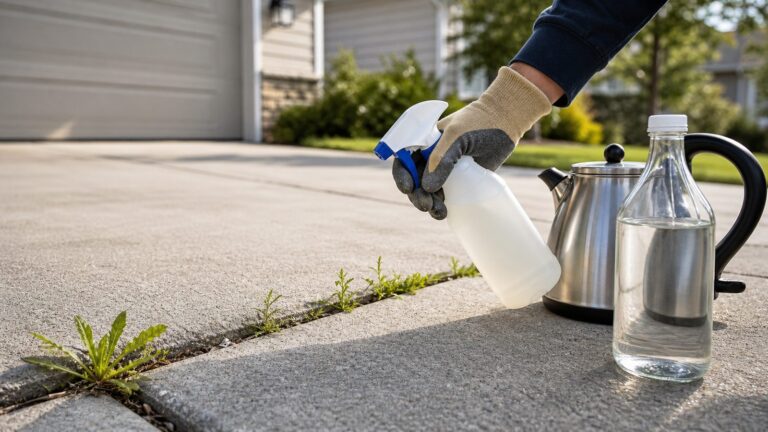
Most homemade weed killers work best as targeted tools, not whole-yard solutions. Around a home, the right DIY method depends on where the weed is growing: pavement cracks, gravel edges, garden beds, thin turf, fence lines, or bare soil that will be planted later.
On our construction and site-cleanup jobs, we treat weeds the same way we treat drainage, grading, and hardscape details: first identify the location and the risk, then choose the lowest-risk method that will actually solve the problem. A gallon of vinegar is useful in a driveway crack. It is a poor choice in a lawn. Salt can keep weeds out of a patio seam, but it can also damage soil for a long time. Boiling water is clean and cheap, but it is not something you want to carry across a finished deck or through a planted bed.
The key fact homeowners need upfront is this: most DIY weed sprays are contact weed killers. They burn or dry the leaves they touch. They usually do not move through the plant and kill deep roots the way some systemic herbicides do. That is why dandelion, bindweed, nutsedge, thistle, poison ivy, established grasses, and tree seedlings often come back after one treatment.
Used correctly, homemade weed control can still save money and keep small areas tidy. In 2026, a basic white-vinegar spot spray often costs about $5 to $15 per gallon if you already own a sprayer. A homeowner pump sprayer commonly runs $17 to $30. Professional weed control often lands around $49 to $200 per treatment for an average lawn, while hand weeding can run about $30 to $80 or $35 to $140 per labor hour depending on the market, weed density, and service minimums.
#1 Best Overall
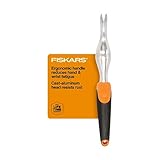
- GARDENING ESSENTIAL: Garden weeder ideal for a variety of gardening tasks like removing invasive weeds, maintaining your herb garden, uprooting dandelions and thistles, and more to encourage overall plant health and appearance
- MAXIMUM POWER AND PRECISION: Cast-aluminum angled head boosts leverage for uprooting in tough soil; Ergonomic handle with SoftGrip allows for more control of scratch tool and reduces fatigue
- LONG-LASTING AND RELIABLE: Aluminum head is rust-resistant and stays sharp through heavy use, providing excellent durability for lasting value; Fiskars hand trowels and garden tools are built to last
- QUALITY GARDEN TOOLS: Designed to help you cultivate a better garden, Fiskars garden and yard tools are equipped with smart technologies and award-winning, ergonomic features that make it easier and more enjoyable to transform your outdoor space
- INCLUDES: 1 Fiskars Ergo Weeder with hang hole; Full lifetime warranty
Quick Ranking: Best DIY Weed Killers by Location
There is no single best homemade weed killer for every surface. The practical ranking below is based on where each method belongs, how much damage it can cause if misused, and whether it prevents regrowth or only burns the top growth.
| Rank | DIY Method | Best Use | Typical 2026 Cost | Main Caution |
|---|---|---|---|---|
| 1 | Hand-pulling with a weeding knife | Dandelions, taproots, young weeds in beds and lawns | $10 to $35 for a hand tool | Roots must come out or regrowth is likely |
| 2 | Cardboard sheet mulch | Garden beds, fence lines, bare soil | $30 to $70 for mulch over about 100 sq ft | Keep mulch off trunks and siding |
| 3 | Boiling water | Driveway cracks, patio seams, gravel edges | Near-zero material cost | Burn hazard and nonselective plant damage |
| 4 | 5% white vinegar spray | Small annual weeds in cracks and non-lawn areas | $5 to $15 per mixed gallon | Top-kill only on many perennials |
| 5 | Vinegar plus a little dish soap | Waxy-leaf annual weeds on hardscape edges | $5 to $15 per gallon | Soap helps wet leaves; it is not the herbicide |
| 6 | Corn gluten meal | Prevention before weed seeds germinate | $25 to $60 per bag | Will not kill existing weeds |
| 7 | Citrus or citric-acid spray | Young annual weeds in isolated spots | Varies; often similar to specialty vinegar products | Nonselective and can irritate skin or eyes |
| 8 | Rubbing alcohol dilution | Tiny spot treatments on pavement weeds | Low per batch | Flammable and drying to desirable plants |
| 9 | Solarization with clear plastic | Preparing bare soil beds in hot sunny weather | $10 to $40 for plastic depending on area | Takes 4 to 6 weeks and needs sun |
| 10 | Targeted salt | Only pavement cracks where nothing should grow | Low material cost | Long soil damage and runoff risk |
Before You Mix Anything, Identify the Weed
A weed is just a plant growing where you do not want it, but different weeds require different tactics. Annual weeds such as young crabgrass or chickweed can often be stopped by early removal, mulch, or a contact spray. Tap-rooted weeds such as dandelion need root removal or repeated top-kill. Nutsedge is not a grass and often laughs at casual pulling. Bindweed stores energy underground and comes back unless you exhaust it over time. Poison ivy and poison oak deserve more caution than a normal sidewalk weed.
Look at three things before choosing a method: leaf shape, root type, and location. If the weed is in a lawn, avoid nonselective sprays because vinegar, alcohol, citrus products, boiling water, and salt can injure turf. If it is in a driveway crack, you can be more aggressive. If it is beside new concrete, pavers, metal edging, a pool deck, or a vegetable bed, choose carefully because acid, salt, soap residue, and runoff can create problems larger than the weed.
For most DIY work, use the lowest-risk method that fits the site. A weeding knife and 10 minutes of work is often better than spreading a gallon of acid next to desirable plants.
1. Hand-Pulling With a Weeding Knife
Hand-pulling is still the most reliable DIY weed killer when you need the root gone. We use the same principle on job sites before final grading, sod prep, and bed cleanup: remove the plant before it sets seed and get as much root as practical.
For dandelions, plantain, young thistle, and tree seedlings, water the soil lightly or work after rain. Slide a weeding knife, fishtail weeder, or narrow trowel 4 to 6 inches down beside the root, loosen the soil, then pull slowly from the crown. If the top snaps off and the root remains, expect regrowth.
Cost is modest. A usable weeding knife or hand weeder often runs $10 to $35. The real cost is labor. A small front bed may take 30 to 60 minutes. A neglected quarter-acre lawn can take many hours, which is when professional hand weeding at roughly $30 to $80 or $35 to $140 per labor hour starts to make sense.
Best for
Use hand-pulling for weeds in lawns, garden beds, vegetable gardens, and tight areas near shrubs, foundations, fences, and hardscape where spray drift would be risky.
Free tools Windows power users keep installed
One-click scans. No signup required.
Avoid it when
Do not casually hand-pull poison ivy, poison oak, or thorny invasive plants without proper protection and disposal. Also avoid pulling nutsedge repeatedly without a plan; broken underground parts can make the patch worse.
2. Cardboard Sheet Mulch
For beds and fence lines, cardboard plus mulch is usually more durable than spray recipes. It blocks light, reduces seed germination, helps hold moisture, and improves the finished look. This is the method we prefer where the goal is a clean planting bed, not just a temporarily browned weed.
Start by cutting existing weeds low and removing seed heads. Water dry soil first so you are not sealing cardboard over dusty, hydrophobic ground. Lay plain, unwaxed cardboard with seams overlapped by 6 inches. Keep cardboard and mulch a few inches away from plant crowns, shrub stems, tree trunks, siding, and wood posts. Then cover it with 2 to 4 inches of organic mulch.
For cost planning, a 2-cubic-foot mulch bag covers about 12 square feet at 2 inches deep. A 100-square-foot bed takes about 9 bags at that depth, and more if you go thicker. In 2026, many homeowners land around $30 to $70 for bagged mulch over a small bed, depending on sale pricing, region, mulch type, and whether delivery is needed.
Quick wins for a faster PC:
Repair Windows errors before they cause bigger problemsFix Now →Scan for outdated or missing drivers - takes under a minuteDriver Scan →Best for
Use sheet mulch for ornamental beds, fence lines, side-yard strips, and bare soil where you want long-term suppression without spraying.
Avoid it when
Do not pile mulch against siding, deck framing, tree trunks, or stems. That traps moisture, invites decay, and can hide insect activity. Also avoid glossy, coated, or heavily printed cardboard.
Rank #2

- Portable Weeding Tools :Close-range precision weeding, gap cleaning, portable and labor-saving,13.3 inches Weeder tool,It is the perfect length for a gardening tools.Adopting stainless steel polishing process,The durable handle is more comfortable to hold
- Durable All-Steel Design: The four-tooth uprooting weeding tool is made of high-quality anti-rust steel, with high hardness and durability. Has high impact resistance and tensile strength, not easy to deform or break
- Weed Remover Tool: Sharp Durable Garden Weed Tool, Handle weeding and digging tasks with ease. Perfect helper for agricultural work such as weeding, digging, shoveling grass for orchards and gardens. No need to pull those pesky weeds by hands!
- Multi-Functional: Our Gardening tools Great for prying thistles, dandelions, crabgrass, chickweed and common garden weeds. Also suitable for growing flowers and vegetables to make your garden beautiful
- Safety Tips: The blade surface of this garden hoe is relatively sharp, please wear gloves when using it to prevent scratches
3. Boiling Water
Boiling water is one of the simplest chemical-free options for weeds in pavement seams. It works by cooking the foliage and crown tissue. It is fast, cheap, nonselective, and short-lived.
Bring water to a boil, carry only what you can safely handle, and pour slowly over the weed crown. A kettle gives better control than an open pot. Expect the leaves to wilt quickly, often within minutes. Young annual weeds may die from one treatment. Deep-rooted perennials may regrow and need repeat treatment every 7 to 14 days until they run out of stored energy.
The material cost is nearly zero if you already own a kettle or pot. Energy cost is minor. The real risk is burns. Do not carry boiling water across stairs, wet pavers, a crowded job area, or anywhere children and pets are moving around.
Best for
Use boiling water in driveway cracks, walkway seams, patio joints, gravel borders, and along curb edges where nearby plants are not at risk.
Avoid it when
Do not use boiling water in lawns or planted beds. It can kill turf, damage shallow roots, and splash onto desirable plants. Be careful around plastic edging, irrigation tubing, and synthetic turf.
4. 5% White Vinegar Spray
Household white vinegar is typically 5% acetic acid. It can brown and burn small weed leaves, especially on warm, sunny, dry days. It is not a dependable root killer for established perennial weeds.
Do these 3 things before closing this tab:
1Repair Windows errors before they cause bigger problems2Scan for outdated or missing drivers - takes under a minute3Clear out junk files and repair common Windows errorsFor a basic spray, use undiluted 5% white vinegar in a dedicated pump sprayer labeled “weed control only.” In 2026, low-cost gallon white vinegar listings are commonly around $4.27 to $5.32, with branded or multipack options often higher. Once you include a small amount of soap, a dedicated sprayer, and normal waste, a DIY white-vinegar spot spray commonly costs about $5 to $15 per mixed gallon if you already own equipment. A common homeowner pump sprayer adds about $17 to $30.
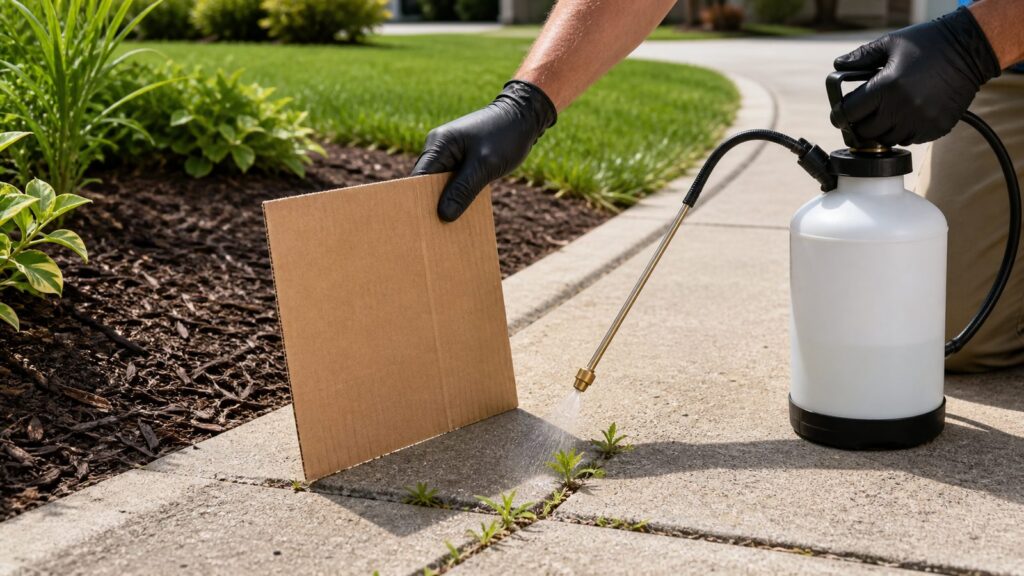
Spray to wet the leaves, not flood the soil. Soil drenching increases runoff risk and can harm nearby roots. Work on a dry day with low wind, dry foliage, and no rain or irrigation expected for at least 24 hours. Use cardboard, a spray cone, or a cut-bottom plastic jug as a shield when working near turf or ornamentals.
Best for
Use 5% vinegar for young annual weeds in pavement cracks, gravel areas, and isolated non-growing zones.
Avoid it when
Do not use vinegar as a broadcast lawn treatment. It is nonselective and can injure grass, flowers, vegetables, and shrubs. Avoid overspray near new concrete, metal, and stone surfaces where repeated acid exposure may etch, dull, or stain finishes.
The Tool Desk
Outbyte Driver Updater FREEScan for outdated or missing drivers - takes under a minuteDriver Scan →Outbyte PC Repair FREEClear out junk files and repair common Windows errorsFree Scan →5. Vinegar Plus a Small Amount of Dish Soap
The common vinegar-and-soap recipe is often misunderstood. The soap is not the weed killer. It is a surfactant, which means it helps the vinegar spread and stick to waxy leaves instead of beading up and rolling off.
A practical mix is 1 gallon of 5% white vinegar with 1 teaspoon to 1 tablespoon of dish soap. Use the lower end when spraying near hardscape or desirable plants. More soap does not make the mix smarter; it can increase residue, plant injury, and cleanup.
Apply it the same way as plain vinegar: targeted leaf wetting on a warm, sunny, dry day with low wind. You may see browning within a few hours. For dandelion, bindweed, thistle, established grass, and other perennials, assume repeat applications will be needed after regrowth appears.
Best for
Use vinegar plus soap on small, young annual weeds with waxy leaves in cracks, gravel, and bare non-growing areas.
Recommended Free Tools
Rank #3

- 3 Pack Garden Weeding Tools: The weeding tool set contains 3 weeding removers with different shapes: L-shaped crack weeder*1, hand weeder *1 and 4 teeth weed puller *1, all of which are easy to use & effort-saving for digging, weeding, loosening soil, ventilation, transplantation, etc.
- Functional Weed Removal Tools: The L-shape weeder and fork-shape weeder are designed to scrape stubborn grass off quickly. The 4 teeth rooting weeder is designed for weeding, digging and shoveling.
- Sharp Steel Blades & Wood Handles: The blades of the crevice weeding digger tool are made of quality stainless steel that are sharp, rust-proof and corrosion-resistant. Also, they are built with pine wood handles for a easy grip. The 4 tines weeder is built with steel bar, which has high impact resistance and tensile strength. Our weed puller tools are not easy to deform or break and are able to serve for long lifespan.
- Wide Applications: Ideal for a variety of tasks including digging, weeding, loosening soil, aerating, transplanting and more. Superb weeder for gardens, especially sidewalk cracks and other tight spaces. Crevice weeding digger tools work great on pretty much any type of surface where weeds grow in cracks in walkways, driveways, patios, bricks, decks and other tight spots. Meanwhile, the 4 teeth weed puller tool can shovel grass, remove weed, tidy up orchards and gardens.
- Practical Weed Puller Tools: The weeding knife is easy to use in a length of about 13 inches. In addition, the hanging holes on the handles make the weeders cPractical Weed Puller Tools: The weeding knife is easy to use in a length of about 13 inches. In addition, the hanging holes on the handles make the weeders convenient to store without taking up much space. The size of the 4 tines weeder is 13 * 1.5 * 3 inches, lightweight and easy to use
Avoid it when
Do not spray this mix near ponds, drains, vegetable foliage, or desirable plants. Rinse equipment only over a target weed area, not near a storm drain or driveway gutter.
6. Corn Gluten Meal
Corn gluten meal is a prevention tool, not a rescue treatment. It is used as a pre-emergent, meaning it may suppress weed seed germination when applied before those seeds sprout. It will not kill existing weeds.
Timing is everything. For spring annual weeds, corn gluten meal needs to be down before germination. In many US lawns, that means watching soil temperature and local seasonal cues rather than waiting until weeds are visible. Water it in according to the product label, then allow the surface to dry as directed. If the weed seedlings are already up, hand-pull or use another method first.
In 2026, corn gluten meal often costs about $25 to $60 per bag depending on brand, bag size, and coverage rate. It may need repeat seasonal use, so calculate cost by coverage area, not just bag price.
Best for
Use corn gluten meal as part of a lawn or bed prevention plan where you are trying to reduce new annual weeds from seed.
Avoid it when
Do not use it right before seeding grass or planting desired seeds. A pre-emergent does not know the difference between weed seed and seed you paid for.
7. Citrus or Citric-Acid Spray
Citrus-based and citric-acid weed sprays work as contact herbicides. They damage leaf surfaces and dry out young growth. Like vinegar, they are nonselective and are usually better at top-killing small annual weeds than eliminating established roots.
Some homeowners make small batches with citrus oil or citric-acid products, but concentration matters. Too weak and it does little. Too strong and it can irritate skin, eyes, and nearby plants. If using a packaged minimum-risk pesticide product, read the label and follow it. Minimum-risk does not mean risk-free, and state rules can still apply.
PC Slower Than It Used to Be?
A free scan shows the junk files, broken settings and background clutter dragging Windows down - then fixes them in one click.Free scan · Windows 10 & 11Crashes, No Sound, or Screen Glitches?
Random freezes, missing sound and display glitches usually trace back to one bad driver. Find and replace yours safely.Free scan · under a minuteUse a shield and treat only the weed leaves. Keep it out of drains and away from ponds, edible foliage, and desirable plants. Expect repeat treatment on perennial weeds.
Best for
Use citrus or citric-acid sprays for isolated young weeds in non-lawn areas where you want a contact burn-down option.
Avoid it when
Avoid it in turf, planted beds, windy conditions, and sensitive hardscape areas unless the product label and surface manufacturer allow it.
8. Rubbing Alcohol Dilution
Rubbing alcohol can dry out plant tissue, which is why it appears in some homemade weed-control recipes. It is best treated as a tiny spot-treatment option, not a yard-care program.
What’s actually slowing this PC down?
Pick the symptom - the matching free tool is one click away.
A conservative homeowner mix is about 2 tablespoons of 70% isopropyl alcohol per quart of water, applied directly to leaves. Do not increase the concentration casually. Alcohol is flammable, drying to skin, and harmful to desirable plants. Keep it away from grills, pilot lights, outdoor heaters, and electrical work.
Because it evaporates quickly and does not address roots well, rubbing alcohol is not our first choice for most sites. A weeding knife, boiling water, or vinegar is usually more practical.
Rank #4

- Easy to Use: The handheld weeder tool removes weeds from your garden, including stubborn weeds like dandelions and thistles. The stainless steel two-pronged fork cuts through weeding roots with ease, allowing surrounding plants to grow healthily and thrive
- Robust and Sturdy: The weed puller tool is made of high-hardness polished stainless steel that is extremely resistant to rust and corrosion, ensuring longevity and reliability. And It won't bend or break during use, and can quickly meet any challenges in gardening
- Ergonomic Soft-Grip Handle: Non-slip and comfortable plastic handle is gentle on hands and improves control while reducing hand and wrist fatigue, which is a good helper for gardening and weeding
- Convenient Size for Storage: Our lightweight gardening weeding tool is 11.5 inches in length and light in weight (5.3 oz), and the practical handle hanging hole design and lanyard allow for convenient storage after use
- Wonderful Gifts for Gardening Lover: The manual weed puller can help you weeding easily in farms, gardens, yards, fields, bonsai, and more. A sharp gardening hand tool for weeding, and digging, it is a practical gift for gardeners or gardening enthusiasts
Best for
Use alcohol dilution only for very small weeds in pavement cracks or isolated hardscape spots.
Avoid it when
Do not use it over large areas, near flames, in vegetable beds, or on lawns.
Recommended Free Tools
9. Solarization With Clear Plastic
Solarization uses sun and trapped heat to weaken weeds and some weed seeds in bare soil. It is slow, but it can be useful before building a new planting bed or refreshing a neglected side yard.
Cut weeds low, remove debris, smooth the soil, and water it so heat conducts better. Stretch clear plastic tight over the area and bury or weight the edges. In hot, sunny weather, leave it in place for about 4 to 6 weeks. Clear plastic usually heats soil better than black plastic for solarization because sunlight passes through and traps heat below.
Material cost varies by sheet size and thickness, but many small residential areas can be covered for about $10 to $40 in plastic. The bigger cost is time. This method does not fit a one-week deadline before a party or listing photos.
Best for
Use solarization for bare soil beds, future planting areas, and sections where you can leave plastic in place for several weeks during sunny weather.
Free tools Windows power users keep installed
One-click scans. No signup required.
Avoid it when
Do not use solarization over desirable plants, active turf, or slopes where plastic can shed water toward a foundation or neighboring property.
Independent reader supportYour contribution helps us test, update, and keep practical guides available for everyone.10. Targeted Salt in Pavement Cracks Only
Salt is the most abused homemade weed killer. It can kill plants, but sodium chloride can also damage soil structure, harm beneficial soil life, injure nearby trees and ornamentals, and move with runoff. Once salt is in soil, you do not simply undo it the next weekend.
If you use salt at all, limit it to pavement cracks, gravel gaps, or isolated hardscape joints where you do not want anything to grow now or later. Do not use salt in garden beds, lawns, tree wells, vegetable areas, or anywhere runoff can move into planted soil.
A conservative approach is to pull or cut the weed first, then apply a small amount of salt solution only into the crack. Do not broadcast dry salt. Do not pour salty water across a driveway where it can run to the street, storm drain, or lawn.
Best for
Use salt only in cracks in driveways, patios, and walkways where future planting is not intended.
Avoid it when
Avoid salt near soil you care about, slopes, drainage paths, wells, ponds, storm drains, concrete you are concerned about staining, and metal components that may corrode.
What About Strong Horticultural Vinegar?
Horticultural vinegar products are commonly 20% to 30% acetic acid, and some vinegar-type products are sold at even higher concentrations. They can work better on young foliage than 5% household vinegar, but they are also much more hazardous. University guidance consistently treats acetic acid as a nonselective contact herbicide, and higher concentrations can injure skin, eyes, and lungs. Illinois Extension cites studies showing 10% to 20% acetic acid can provide about 80% to 100% control under favorable conditions, while also warning that those strengths can cause irreversible eye and skin damage.
In 2026, horticultural vinegar commonly costs about $20 to $36 per gallon for 20% to 45% vinegar-type products. One Home Depot listing showed Green Gobbler 20% vinegar weed killer at $28.96 per gallon, while Walmart marketplace examples for concentrated vinegar products ranged around $19.99 to $35.67 per gallon depending on concentration, shipping, sprayer inclusion, organic or OMRI claims, and brand.
Crashes, No Sound, or Screen Glitches?
Random freezes, missing sound and display glitches usually trace back to one bad driver. Find and replace yours safely.Free scan · under a minutePC Slower Than It Used to Be?
A free scan shows the junk files, broken settings and background clutter dragging Windows down - then fixes them in one click.Free scan · Windows 10 & 11If you use high-strength vinegar, wear chemical-resistant gloves, splash goggles, long sleeves, long pants, and closed-toe shoes. Budget $10 to $40 for basic protective gear, more if you need better eye and skin protection. Use an acid-compatible sprayer if required by the label, and keep that sprayer dedicated to weed control.
Best Value

- High carbon steel Japanese weeder
- Sharp edge kept longer
- Quick easy work for all weeding and gardening
- Quick Work : This top-quality Japanese Sickle is made by hand one by one by a manufacturer specializing in gardening born in Japan
Safety, Runoff, and Rules Homeowners Should Not Ignore
Natural does not mean safe, lawn-safe, pet-safe, code-free, or runoff-safe. The EPA recognizes certain minimum-risk pesticides, but products still have ingredients, directions, and limitations. A substance used to prevent, destroy, repel, or mitigate pests is a pesticide by function, even when the active ingredient sounds familiar.
Do not spray toward storm drains, drainage swales, ponds, streams, pool decks, or neighboring property. Federal pesticide permitting questions often come up around discharges to waters of the United States, and local or state rules can be stricter. For a typical homeowner treating a few driveway cracks, the practical rule is simple: keep material on the target weed, out of runoff, and away from water.
For any spray, work in low wind, preferably under 5 to 10 mph. Keep children and pets away until the treated area is dry and the product label, if any, allows reentry. Store mixes in labeled containers only. Never reuse a food bottle for a weed-control mix. Never mix homemade herbicides with bleach, ammonia, pool chemicals, or other cleaners.
When to DIY and When to Hire a Pro
DIY weed control makes sense when the area is small, the weeds are young, and the consequences of a mistake are low. A few patio cracks, a 20-foot gravel edge, or a small bed with annual weeds are good DIY candidates. Expect to spend $5 to $15 for a gallon of basic vinegar spray, $17 to $30 for a sprayer if you need one, and 30 minutes to 2 hours for a typical small cleanup.
Hire a professional when the infestation is large, the weed is invasive, the site drains toward water, the work is on a steep slope, or the weeds are growing through expensive hardscape where staining, etching, joint damage, or runoff matters. Poison ivy, poison oak, extensive bindweed, heavy nutsedge, and commercial or shared properties deserve extra caution.
Professional weed control in 2026 commonly runs about $49 to $200 per treatment for an average lawn. Hand weeding often runs about $30 to $80 or $35 to $140 per labor hour depending on the region, weed density, property condition, and minimum service charges. That can sound high until you compare it with replacing damaged turf, reworking a stained patio, or fighting the same deep-rooted patch every two weeks all season.
A Practical Weed-Control Plan That Holds Up
The best results come from integrated weed management, not one miracle recipe. Identify the weed. Remove or exhaust roots. Stop seed heads before they mature. Thicken thin turf. Mulch bare bed soil. Use targeted sprays only where drift and runoff are controlled.
For pavement cracks, start with hand removal, boiling water, or a careful vinegar spray. For garden beds, pull the weeds, remove seed heads, lay cardboard, and maintain 2 to 4 inches of mulch. For lawns, skip nonselective homemade sprays and focus on turf density, mowing height, watering practices, and root removal for isolated broadleaf weeds. For perennials, cut or pull first, then repeat top-kill on regrowth every 1 to 2 weeks as needed to weaken stored root energy.
Keep one dedicated sprayer marked “weed control only.” Rinse it over a target weed area, not by a drain. Use a shield when spraying. Do not drench soil. Do not spray before rain. Those small habits are what separate useful DIY maintenance from damage control.
Frequently Asked Questions
What is the strongest homemade weed killer?
For contact burn-down, high-strength horticultural vinegar is stronger than household vinegar, but it is also much more hazardous. For long-term control in beds, cardboard sheet mulch is often more effective than a stronger spray because it blocks light and suppresses new growth.
Will vinegar kill weeds permanently?
Usually not. Vinegar is a nonselective contact herbicide, so it burns the plant tissue it touches. Young annual weeds may die, but dandelion, bindweed, thistle, nutsedge, and established grasses often regrow from roots.
The Tool Desk
Outbyte PC Repair FREEClear out junk files and repair common Windows errorsFree Scan →Outbyte Driver Updater FREEFix the driver behind crashes, sound loss and screen glitchesFind Drivers →Is vinegar and salt safe for driveways?
It can be used only in targeted pavement cracks where nothing should grow, but salt can move with runoff and damage nearby soil, plants, and metal. Avoid broadcasting it or using it near lawns, beds, trees, drains, or slopes.
What DIY weed killer is safe for lawns?
Hand-pulling is the safest DIY option for lawns. Most homemade sprays, including vinegar, citrus, alcohol, boiling water, and salt, are nonselective and can injure or kill turfgrass.
How much does DIY weed control cost in 2026?
A basic white-vinegar spot spray commonly costs about $5 to $15 per mixed gallon if you already have a sprayer. A homeowner pump sprayer usually adds $17 to $30. Mulching a 100-square-foot bed often costs about $30 to $70 with bagged mulch.
When should I call a professional for weeds?
Call a pro for large infestations, poison ivy or poison oak, invasive weeds, slopes draining toward water, commercial or shared property, or weeds growing through expensive hardscape where staining, etching, or runoff would be costly.
Quick wins for a faster PC:
Repair Windows errors before they cause bigger problemsFix Now →Fix the driver behind crashes, sound loss and screen glitchesFind Drivers →Clear out junk files and repair common Windows errorsFree Scan →Quick Recap
Product prices and availability are accurate as of the date/time indicated and are subject to change. Any price and availability information displayed on Amazon at the time of purchase will apply.