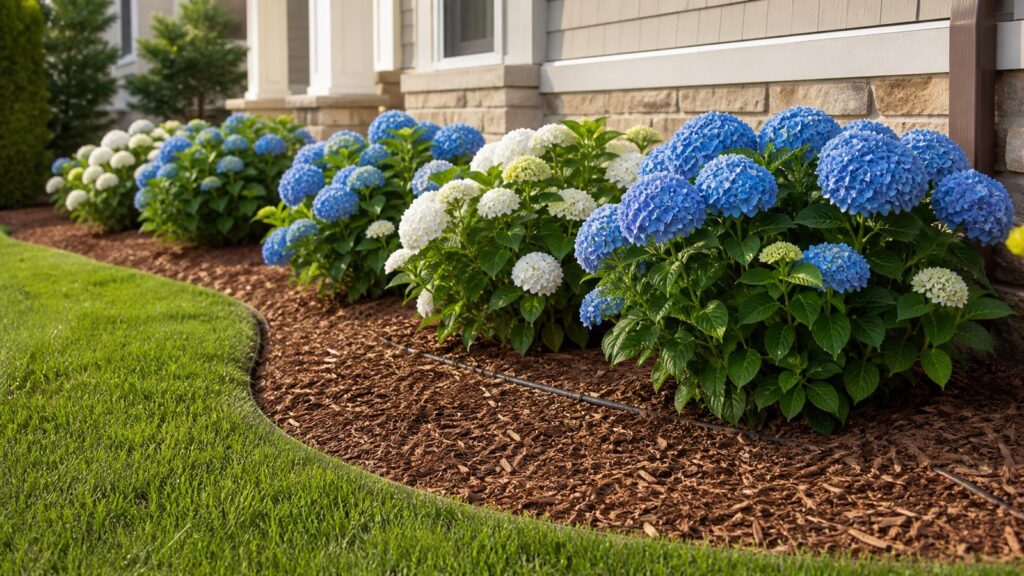
The best mulch for hydrangeas, for most U.S. homeowners, is shredded pine bark applied 2 to 3 inches deep over the root zone. Keep it pulled back 2 to 4 inches from the stems, spread it at least to the dripline of the shrub, and water the soil before you mulch if the bed is dry.
That answer is simple, but the right execution matters. Hydrangeas have shallow roots. They want cool, evenly moist, well-drained soil, not a wet pile of mulch stacked against the crown. On our job sites, the hydrangeas that perform best are usually not the ones with the most expensive mulch. They are the ones with the right mulch, the right depth, clean stem clearance, and irrigation that matches the exposure.
For a clean, practical recommendation: use shredded pine bark in most beds; use pine bark mini nuggets where appearance and longevity matter; use shredded hardwood when budget is the main driver; use leaf mold or shredded leaves for soil building and winter protection; use pine straw in hot Southern beds; and avoid rock as the main mulch around hydrangeas in hot sun unless fire clearance or drainage design requires it.
Best Overall Mulch for Hydrangeas
Shredded pine bark is the best all-around mulch for hydrangeas because it checks the boxes that matter: it holds moisture, moderates soil temperature, breaks down into useful organic matter, stays reasonably neat, and is widely available. It also has enough texture to stay in place better than larger nuggets on a gentle slope.
Recommended Free Tools
#1 Best Overall

- ALL-NATURAL INGREDIENTS: No added fertilizers or pesticides
- USES: Potted plant decor, landscaping, terrariums, or soil supplement, soil barrier, bonsai care
- BENEFITS: Drainage, enhances appearance, water retention, blocks pesky creatures
- INGREDIENTS: 100% pine bark mulch, average size 1/2-inch pieces
- SIZE: 8 quarts (enough for a big 12-inch pot)
A 2- to 3-inch layer is the target. For a mature hydrangea, that usually means mulching a circle or bed that reaches at least to the outer branch tips, not just a small ring near the stems. Hydrangea roots spread outward, so wider coverage is more useful than piling mulch high at the base.
If we are installing or refreshing a hydrangea bed, our standard layout is simple: rake old mulch level, check that the total depth will not exceed about 3 inches, water the soil if it is dry, apply new mulch evenly, then hand-clear the crown area so no mulch touches woody stems. That last step is not cosmetic. Mulch packed against stems traps moisture and can contribute to rot, pest pressure, and crown problems.
Mulch Types Compared
There is no single mulch that is best for every site. A foundation bed in a wildfire-prone area, a shaded New England border, and a full-sun Southern planting all call for slightly different choices. Use the table below as a practical field guide.
| Mulch type | Best use around hydrangeas | Typical 2026 material cost | Watch-outs |
|---|---|---|---|
| Shredded pine bark | Best overall choice for most beds; good moisture retention and soil improvement | About $35-$65 per cubic yard | Refresh as it breaks down; do not pile over 3 inches deep |
| Pine bark mini nuggets | Neat appearance, longer life, good for visible front beds | Often similar to or above pine bark ranges | Can float or migrate on slopes and during heavy rain |
| Shredded hardwood | Budget-friendly general mulch | About $25-$55 per cubic yard | Quality varies; avoid sour-smelling or poorly aged mulch |
| Leaf mold or shredded leaves | Soil building, winter protection, colder climates | Often low cost if produced locally; bulk examples around $40-$45 per cubic yard in some markets | Whole leaves can mat; shred or compost first |
| Pine straw | Hot climates, Southern landscapes, breathable cover | Varies by region and bale size | Does not reliably change soil pH by itself |
| Clean arborist wood chips | Large naturalized beds, budget-conscious soil improvement | Often low cost or free locally, delivery varies | Use clean, aged material free of diseased plants, weeds, and debris |
| Rock or gravel | Fire-clearance bands, drainage zones, noncombustible areas | Varies widely by stone type and delivery | Stores heat, adds no organic matter, poor choice in hot sun |
Pine Bark vs Hardwood Mulch
Pine bark is usually the better hydrangea mulch when plant performance is the priority. It has a good balance of water retention and air movement, decomposes at a moderate pace, and is a natural fit for moisture-loving shrubs. Shredded pine bark also looks finished without becoming too dense when applied correctly.
What’s actually slowing this PC down?
Pick the symptom - the matching free tool is one click away.
Hardwood mulch can work well, especially when it is aged and shredded. It is commonly cheaper than pine bark, with 2026 bulk pricing often around $25 to $55 per cubic yard compared with roughly $35 to $65 per cubic yard for pine bark. For a large bed, that difference can matter.
The issue with hardwood is consistency. Some products are finely ground and can pack down. Others are dyed primarily for appearance. Dyed mulch is not automatically bad, but it is not a performance upgrade for hydrangeas. Colored mulch often runs about $40 to $70 per cubic yard and may fade faster in full sun. If the choice is between a clean, aged shredded hardwood and a poor-quality pine product, choose the cleaner material.
How Deep to Mulch Hydrangeas
Apply mulch 2 to 3 inches deep around hydrangeas. That depth is enough to reduce evaporation, suppress many weed seedlings, and buffer soil temperature without smothering shallow roots.
More is not better. Once mulch gets above about 3 to 4 inches, it can hold too much moisture in heavy soil, reduce oxygen movement, shed water during light rain, or create a soft layer where roots grow too close to the surface. If old mulch is already built up, rake it out and measure before adding more.
Crashes, No Sound, or Screen Glitches?
Random freezes, missing sound and display glitches usually trace back to one bad driver. Find and replace yours safely.Free scan · under a minutePC Slower Than It Used to Be?
A free scan shows the junk files, broken settings and background clutter dragging Windows down - then fixes them in one click.Free scan · Windows 10 & 11Stem Clearance
Keep mulch 2 to 4 inches away from hydrangea stems and crowns. The finished bed should look like a shallow, even blanket with a small open collar at each plant, not a volcano. This is the same standard we use around shrubs in residential foundation beds because it reduces moisture problems at the crown.
Mulch Width
Go wider rather than deeper. Extend mulch at least to the dripline, meaning the outer edge of the branches. For young plants, a 3-foot-wide mulched area is a useful starting point. For mature hydrangeas, the mulched area may be 4 to 6 feet wide depending on the variety and spacing.
Rank #2

- ALL-NATURAL INGREDIENTS: No added fertilizers or pesticides
- USES: Potted plant decor, landscaping, terrariums, or soil supplement, soil barrier, bonsai care
- BENEFITS: Drainage, enhances appearance, water retention, blocks pesky creatures
- INGREDIENTS: 100% pine bark mulch, average size 1/2-inch pieces
- Size: 30 quarts (1 cubic foot)
How Much Mulch You Need
One cubic yard of mulch covers about 162 square feet at 2 inches deep or 108 square feet at 3 inches deep. For hydrangeas, use 3 inches where the bed dries quickly or needs a fresh start, and use 2 inches for maintenance where an older mulch layer is already present.
| Hydrangea bed size | Mulch at 2 inches deep | Mulch at 3 inches deep | Approx. 2-cu-ft bags at 3 inches |
|---|---|---|---|
| 25 sq. ft. | 0.15 cu. yd. | 0.23 cu. yd. | 4 bags |
| 50 sq. ft. | 0.31 cu. yd. | 0.46 cu. yd. | 6-7 bags |
| 100 sq. ft. | 0.62 cu. yd. | 0.93 cu. yd. | 13 bags |
| 150 sq. ft. | 0.93 cu. yd. | 1.39 cu. yd. | 19 bags |
| 250 sq. ft. | 1.54 cu. yd. | 2.31 cu. yd. | 32 bags |
For a small 50-square-foot hydrangea border at 3 inches deep, plan on roughly 0.46 cubic yard of mulch. In bagged terms, that is usually 6 to 7 standard 2-cubic-foot bags. Bagged mulch is convenient for small beds, but bulk is usually more practical once you get near a cubic yard.
Do these 3 things before closing this tab:
1Repair Windows errors before they cause bigger problems2Scan for outdated or missing drivers - takes under a minute3Clear out junk files and repair common Windows errorsWhat Hydrangea Mulch Costs in 2026
For 2026, mulch material-only pricing commonly runs about $25 to $100 per cubic yard nationally, with broader consumer ranges around $30 to $135 per cubic yard depending on material, region, color, and supplier. Basic shredded hardwood tends to be the low-cost option. Pine bark usually costs more but is often worth it for hydrangea beds.
Professional delivery and installation commonly runs about $50 to $150 per cubic yard, with a narrower national average around $72 to $87 per cubic yard installed. Small jobs may have minimum charges because loading, delivery, edging, bed cleanup, and hand spreading take time even when the material quantity is modest.
Bagged mulch at big-box stores is often priced around $3 to $4 per 2-cubic-foot bag when on sale. That works out to roughly $45 to $55 per cubic yard before tax during promotions, and more when not on sale. For one or two hydrangeas, bags are fine. For a long border, bulk delivery usually wins.
Real installed cost depends on access. A flat front bed near the driveway is faster than a rear yard that requires wheelbarrow trips through a gate. Edging, weed removal, old mulch buildup, slope, and plant density all affect labor. If old mulch is already 4 inches deep, the right job may include raking and redistributing before any new material goes down.
Will Mulch Change Hydrangea Color?
Mulch helps hydrangeas stay healthier, but it will not reliably turn blooms blue or pink by itself. Bigleaf and mountain hydrangeas can change color based mainly on soil pH and aluminum availability. Other hydrangea types, including many panicle and smooth hydrangeas, do not change color the same way.
For blue blooms, gardeners often target soil pH around 5.2 to 5.5. For pink blooms, targets are often around 6.5 to 7.0. Do not guess. Test the soil before adding sulfur, aluminum sulfate, or lime. Overcorrecting soil chemistry can stress the plant and create nutrient problems.
Pine bark, pine needles, and pine straw are often described as acidifying materials. In practice, using them as mulch is not a precise way to manage bloom color. Treat mulch as root-zone protection and soil improvement. Treat bloom color as a soil chemistry project.
Mulching Hydrangeas in Hot, Cold, and Sloped Sites
Hot Climates and Full Sun
In hot climates, mulch is necessary but not enough by itself. Hydrangeas still need consistent water during heat waves. Pair a 2- to 3-inch organic mulch layer with drip irrigation or a soaker hose, especially on west-facing exposures or near reflected heat from paving.
Rank #3
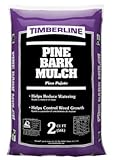
- Helps Maintain Your Garden
- Aromatic Blend
- Retains Moisture
Avoid rock mulch around hydrangeas in hot afternoon sun. Stone stores heat and can make wilting worse. If a design requires rock near a wall or walkway, use it strategically and keep organic mulch over the broader root zone where fire rules and site conditions allow.
Cold Climates and Winter Heave
In freeze-thaw climates, leaf mold or shredded leaves can help protect shallow roots and reduce frost heaving. Apply winter protection after the plant is dormant, not while it is actively growing in warm weather. Keep the material away from stems and crowns, and pull excess back in spring so the bed does not stay too wet.
Slopes and Windy Beds
Use shredded bark on slopes because it knits together better than nuggets. Pine bark mini nuggets look clean, but they can float or migrate during heavy rain. On steeper beds, combine shredded mulch with edging, plant spacing, and surface grading so stormwater moves where it should.
Fire Safety Near the House
Mulch is part of the landscape, but near a building it is also a fire-safety detail. Combustible mulch should not be packed directly against vinyl siding, wood siding, deck framing, porch posts, or areas where smoking materials may land.
For foundation beds, a practical approach is to use a noncombustible band near the structure and organic mulch farther out where the hydrangea roots need moisture protection. Depending on local rules, insurance guidance, and wildfire exposure, that noncombustible clearance may be 18 inches or may extend as far as 5 feet. Gravel, stone, pavers, or bare mineral soil can be used in that immediate clearance zone.
There is usually no permit required to mulch a residential hydrangea bed, but local fire codes, HOA standards, defensible-space rules, and municipal landscaping requirements can apply. This matters most in wildfire-prone regions, dense townhome developments, and commercial properties. When we plan beds near buildings, we think about plant health and ignition risk at the same time.
When to DIY vs When to Hire a Pro
Mulching a small hydrangea bed is a good DIY project if you can measure the bed, move bags safely, rake evenly, and keep mulch off the stems. A 50-square-foot bed at 3 inches deep takes about 6 to 7 bags. Most homeowners can handle that in an hour or two with a rake, gloves, and a wheelbarrow or tarp.
Hire a pro when the job is larger than 1 to 2 cubic yards, when the bed needs edging or regrading, when old mulch has built up too deep, when the site is sloped, or when the planting is close to combustible construction. A professional crew will also move bulk material faster and more cleanly, which matters when mulch has to travel through gates, around finished hardscape, or across established turf.
Free tools Windows power users keep installed
One-click scans. No signup required.
If you are already hiring for pruning, irrigation, drainage, or a larger landscape refresh, mulch should be part of that scope. Hydrangeas respond best when soil moisture, mulch depth, plant spacing, and pruning timing are handled together.
Independent reader supportYour contribution helps us test, update, and keep practical guides available for everyone.Common Hydrangea Mulching Mistakes
The most common mistake is piling mulch against the stems. The second is adding fresh mulch every spring without checking the old depth. A bed that started at 3 inches can become 5 or 6 inches deep after repeated top-offs, especially near plant crowns and edging.
Rank #4

- BENEFITS: Drainage, enhances appearance, water retention, blocks pesky creatures
Another mistake is mulching dry soil and assuming the problem is solved. Mulch reduces evaporation, but it does not rehydrate a dry root ball. Water first, then mulch. In hot weather, check soil moisture below the mulch with your fingers or a hand trowel.
Avoid fresh manure and high-nitrogen materials around hydrangeas. Too much nitrogen can push leafy growth at the expense of blooms. Also avoid thick layers of whole leaves, which can mat together and block water. Shred leaves or compost them into leaf mold before using them as mulch.
The Tool Desk
Outbyte Driver Updater FREEFix the driver behind crashes, sound loss and screen glitchesFind Drivers →Outbyte PC Repair FREERepair Windows errors before they cause bigger problemsFix Now →Our Practical Recommendation
For most hydrangea beds, use shredded pine bark 2 to 3 inches deep, pulled 2 to 4 inches away from stems, and spread at least to the dripline. If the bed is decorative and flat, pine bark mini nuggets are a clean upgrade. If the budget is tight, aged shredded hardwood is acceptable. If the goal is soil building or winter protection, use leaf mold or shredded leaves. In hot Southern beds, pine straw can work well when paired with reliable watering.
Do not expect mulch to control bloom color, do not use rock as the primary mulch in hot exposures, and do not ignore fire clearance near the house. The right mulch job is not just a product choice. It is depth, placement, water, soil, and site safety working together.
Frequently Asked Questions
What is the best mulch for hydrangeas overall?
Shredded pine bark is the best overall choice for most hydrangeas because it conserves moisture, moderates soil temperature, improves soil as it decomposes, and stays neater than many loose materials.
How deep should mulch be around hydrangeas?
Apply mulch 2 to 3 inches deep. More than about 3 to 4 inches can reduce oxygen movement, hold too much moisture, or cause water to shed off the surface.
Quick wins for a faster PC:
Repair Windows errors before they cause bigger problemsFix Now →Scan for outdated or missing drivers - takes under a minuteDriver Scan →Should mulch touch hydrangea stems?
No. Keep mulch pulled back 2 to 4 inches from hydrangea stems and crowns to reduce rot, pest pressure, and crown problems.
Will pine bark or pine needles make hydrangeas blue?
Not reliably. Blue color in bigleaf and mountain hydrangeas depends mainly on soil pH and aluminum availability. Test the soil before using sulfur, aluminum sulfate, or lime.
Can I use rock mulch around hydrangeas?
Rock is usually a poor primary mulch for hydrangeas in hot sun because it stores heat and adds no organic matter. Use it mainly for fire-clearance bands or drainage areas where organic mulch is not appropriate.
How much does it cost to mulch a hydrangea bed in 2026?
Material-only mulch commonly runs about $25 to $100 per cubic yard, with broader ranges up to about $135 depending on material and region. Professional delivery and installation commonly runs about $50 to $150 per cubic yard.
Quick Recap
Product prices and availability are accurate as of the date/time indicated and are subject to change. Any price and availability information displayed on Amazon at the time of purchase will apply.