Recommended Free Tools
A good DIY all-purpose cleaner should make your home easier to maintain, not slowly damage the finishes you paid for. The honest answer is that no single homemade spray belongs on every surface. Vinegar is useful on mineral deposits and soap scum, but it can etch natural stone and dull some finishes. Soap and water are safer for daily cleaning on most building surfaces, but they are not the best tool for hard-water spots.
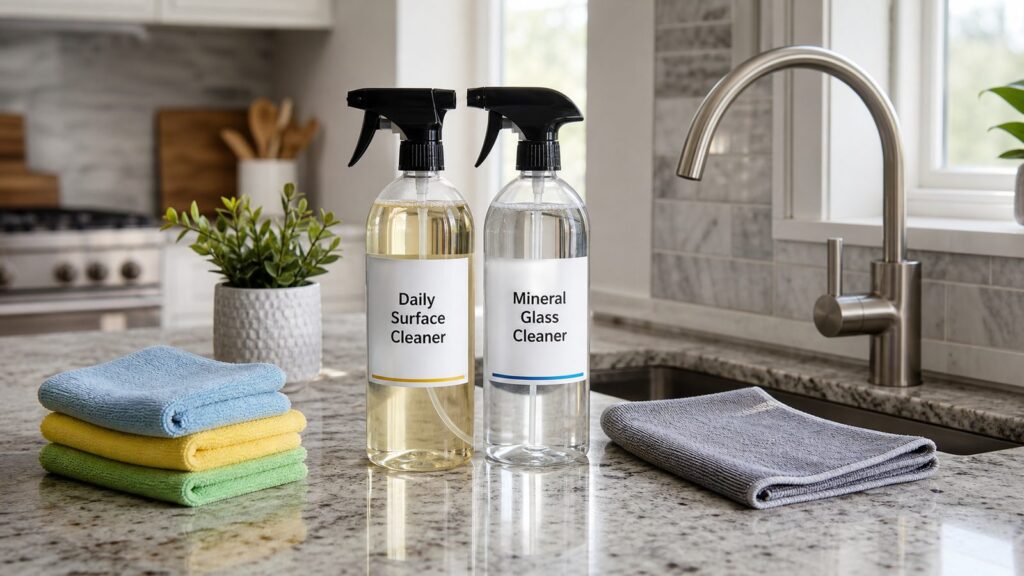
On our job sites and in finished homes, we treat cleaning as a surface-care system. For homeowners, that means two labeled bottles: one mild daily cleaner for most surfaces, and one vinegar-based mineral cleaner for glass, tile, chrome, tubs, and sinks where the surface allows it.
The short version: make a Daily Surface Cleaner with 2 cups warm distilled water and 1 teaspoon mild clear dish soap. Make a separate Mineral and Glass Cleaner with 1 cup 5% white vinegar and 1 cup water, with 1 or 2 drops of dish soap if needed. Label both bottles, test first, ventilate while cleaning, and never mix cleaners with bleach, ammonia, peroxide, rubbing alcohol, toilet-bowl cleaner, or anything else.
The Two-Bottle System That Actually Works
The phrase “all-purpose cleaner” can be misleading. Different surfaces in a house have different chemistry. Granite, marble, quartz, sealed hardwood, stainless steel, acrylic tubs, chrome fixtures, painted trim, laminate counters, tile, grout, vinyl plank, and glass do not all want the same pH, moisture level, or dwell time.
Do these 3 things before closing this tab:
1Scan for outdated or missing drivers - takes under a minute2Repair Windows errors before they cause bigger problems3Fix the driver behind crashes, sound loss and screen glitchesA safer system separates daily soil from mineral buildup. Daily soil is dust, fingerprints, cooking film, light grease, toothpaste, and hand oils. Mineral buildup is hard-water spotting, soap scum, and cloudy glass. Soap handles the first group well. Diluted vinegar handles the second group well on compatible surfaces.
#1 Best Overall
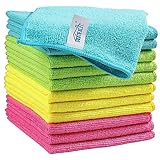
- Effective Streak-Free Cleaning: Clean kitchen countertops, windows, mirrors, bathroom surfaces, stainless steel, car interiors, glass, and other delicate surfaces with just water or your favorite cleaner—these microfiber cloths deliver streak-free, neat results with minimal effort, making daily cleanup fast and simple
- Lint-Free & Scratch-Safe: Soft to the touch and completely lint-free, these cloths won't scratch or damage delicate finishes like glass, ceramic, coated metals, car paint, or polished surfaces—clean with confidence on everything from household appliances to auto trim and electronics screens
- Ultra-Absorbent for Spills, Polishing & Drying: Designed to quickly soak up liquids, grease, and grime, making them ideal for drying dishes, wiping spills, polishing stainless steel, buffing car surfaces, and tackling everyday messes around the house, garage, or workshop—efficient cleaning without extra effort
- Reusable, Washable & Long-lasting: Machine washable and reusable hundreds of times with reinforced edges that hold up wash after wash—a durable replacement for disposable paper towels that cuts down on waste and repeat purchases for families, pet owners, detailers, and busy households
- Versatile Across Home, Auto & Beyond: Equally suited for general household cleaning, interior car detailing, exterior buffing, polishing wheels, wiping down tools, workshop surfaces, electronics, eyeglasses, screens, and more—simply rinse after use or toss in the washing machine; a practical all-around choice for homes, garages, shops, and small businesses
Recipe 1: Daily Surface Cleaner
Use this for sealed and finished surfaces where you want a mild, low-residue cleaner.
- 2 cups warm distilled water
- 1 teaspoon mild clear dish soap
- 16- to 24-ounce clean spray bottle
- Microfiber cloth
Add the water first, then the dish soap. Swirl gently instead of shaking hard so the bottle does not fill with foam. Label the bottle “Daily Surface Cleaner: water + dish soap” and add the date. For most homes, mix only what you will use in 1 to 2 weeks because homemade water-based cleaners do not have the same preservative systems as commercial products.
This cleaner is the default choice for quartz counters, sealed granite, sealed wood, cabinets, painted trim, laminate, stainless steel, appliance fronts, sealed tile, vinyl plank, and most everyday wipe-downs. Use a damp cloth, not a wet rag, and dry the surface afterward.
Free tools Windows power users keep installed
One-click scans. No signup required.
Recipe 2: Mineral and Glass Cleaner
Use this only on surfaces that tolerate vinegar.
- 1 cup 5% white distilled vinegar
- 1 cup water
- Optional: 1 to 2 drops mild dish soap
- 16- to 24-ounce labeled spray bottle
Spray lightly on glass, ceramic tile, porcelain tubs, sinks, chrome, and hard-water areas. Let it sit for 1 to 3 minutes on mineral deposits, then wipe, rinse when needed, and dry. Do not leave vinegar sitting on metal edges, stone, grout joints, rubber gaskets, or appliance finishes.
Household white vinegar is commonly 5% acidity. Cleaning vinegar can be stronger, and 30% vinegar concentrate is a different category of product that needs careful dilution and label-following. More acid is not automatically better. Stronger acid can damage finishes faster and create more irritating fumes.
Cost: What a Homemade Cleaner Really Saves in 2026
The economics are simple: the liquid inside a homemade bottle is cheap, while the bottle and cloths are the upfront cost. In 2026, a 16-ounce batch of soap-and-water cleaner usually costs about $0.10 to $0.60, depending on the soap and whether you use distilled water. A 16-ounce 50/50 vinegar cleaner usually lands around $0.50 to $1.25, depending on vinegar price and add-ins.
As a real-world baseline, a 128-ounce jug of 5% white vinegar listed at $3.94 works out to about 3.1 cents per fluid ounce. Eight ounces of vinegar in a 16-ounce 50/50 cleaner costs about $0.25 before water, bottle, and cloth costs. Professional-style 32-ounce spray bottles commonly run about $4.98 to $6.98 each, while bulk 12-packs can bring the bottle cost close to $3.22 each.
Windows Errors? Fix Them Before They Spread
Repair common Windows errors and clear accumulated junk for a smoother, more stable PC - no reinstall needed.Free scan · no reinstallCrashes, No Sound, or Screen Glitches?
Random freezes, missing sound and display glitches usually trace back to one bad driver. Find and replace yours safely.Free scan · under a minuteThose numbers matter because household cleaning products were up 2.9% over 12 months in June 2026 CPI data, while housekeeping supplies were up 2.4%. DIY cleaning is not about pretending vinegar fixes everything. It is about using low-cost refill ingredients intelligently and protecting expensive finishes.
Rank #2

- 10x GRIP-ROOT WEAVE - TRAP MORE, WORK LESS: Ultra-absorbent microfiber towels for car Grip Root weave works like PLANT ROOT FOLLICLES, sucking up & LOCKING AWAY 8x to 10x its weight in liquid, particulates, moisture, grime and dirt in far LESS TIME than traditional ‘Heavy Duty’ Cleaning Rags. Each towel features a 2.5mm thick design, providing enhanced durability and better grip during use.
- WON’T LINT, SCRATCH, PILL, SWIRL, SHED, or BLEED like thin, cheaply made microfiber towels for cars. RAPID DRY release layers make these the ideal microfiber towels for cars, creating that spectacular, SWIRL-FREE MIRROR SHINE with our cleaning rags. With a solid 2.5mm thickness, these towels are built to prevent damage while ensuring optimal performance.
- LASTS 1200+ WASHES - That’s 3.27 YEARS worth of use in this 12-pack of COMMERCIAL GRADE 300 GSM Reuseable Cleaning Cloth. The 2.5mm thickness and OVERLOCK BRAIDED STITCHING makes the ideal SUSTAINABLE SOLUTION for cleaning every SURFACE, crack, and CREVICE in your home, garage, or office.
- SOAK IT UP FASTER - 4X’s MORE ABSORBENT than COTTON cloths, these are the microfiber cleaning cloth for cars to get if you want an ALL PURPOSE cleaning towel, crafted with 2.5mm thickness to scoop up your messes, oils, and liquids FASTER than a SPONGE
- UNRIVALED POWER - TEST THIS GRIP-ROOT technology risk-free for 30 full days. With a 2.5mm thick design, it LOCKS AWAY dirt, dust, grime, spills, and messes better than any other high-performance cleaning rags you’ve tried.
| Cleaner | Best Use | Typical 16-oz Ingredient Cost | Do Not Use On |
|---|---|---|---|
| Daily Surface Cleaner: water + mild dish soap | Counters, cabinets, painted trim, sealed wood, laminate, stainless, quartz, sealed stone | $0.10-$0.60 | Unsealed wood, saturated seams, electronics, unfinished surfaces |
| Mineral and Glass Cleaner: 50/50 vinegar + water | Glass, ceramic tile, porcelain, chrome, tubs, sinks, hard-water spots | $0.50-$1.25 | Marble, limestone, travertine, most natural stone, concrete, hardwood, some appliance coatings |
| Commercial disinfectant | Raw-meat areas, illness cleanup, toilet areas, high-risk contamination | Several dollars per bottle | Surfaces excluded by the label |
Where to Use Each Cleaner
The right cleaner depends on the surface, the finish, and the problem. When in doubt, start with the mild soap cleaner, use the least moisture possible, and dry the surface. That approach prevents most homeowner-caused finish damage.
Kitchen Counters
For quartz, sealed granite, solid surface, laminate, and butcher block with a sound finish, use the Daily Surface Cleaner. Spray the cloth instead of flooding the counter. Wipe the surface, follow with a clean damp cloth if there is visible soap residue, then dry with microfiber.
Do not use vinegar, lemon juice, or other acids on marble, limestone, travertine, or any stone where the sealer condition is unknown. Acid can etch the surface, and etching is not the same as a dirt stain. Once the polish is chemically damaged, cleaning will not bring it back. Stone may need honing, polishing, or resealing.
Quartz and Engineered Stone
Quartz is durable, but it still has resins and manufacturer-specific care rules. Use mild soap and water for daily cleaning. Avoid abrasive pads, strong acids, strong alkalis, oven cleaner, paint remover, and long dwell times with any chemical. If a stain does not release with mild cleaning, check the slab manufacturer’s care sheet before escalating.
Glass, Mirrors, Shower Doors, and Tile
Vinegar earns its place here. On shower glass and ceramic tile, diluted vinegar helps dissolve hard-water deposits and soap scum. Spray lightly, give it 1 to 3 minutes, wipe with microfiber, rinse if the area feels tacky, and dry. A squeegee after showers reduces the need for stronger cleaning later.
For mirrors, spray the cloth, not the mirror. Excess liquid can run behind the silvered edge and cause black-edge deterioration over time. Use a dedicated glass cloth so kitchen grease or bathroom residue does not smear across the surface.
Stainless Steel Appliances
Start with the Daily Surface Cleaner. Wipe with the grain, then dry immediately. On stainless, streaking is often a drying problem rather than a cleaner problem. Vinegar may be acceptable on some stainless surfaces, but appliance manuals vary, especially on coated, fingerprint-resistant, or black stainless finishes. If the manual says no vinegar, follow the manual.
Cabinets, Painted Trim, and Walls
Cabinets and trim fail at edges, seams, and hardware holes first. Use a barely damp microfiber cloth with the mild soap cleaner, then wipe with clean water and dry. Do not soak cabinet doors, drawer fronts, baseboard tops, or painted MDF. Water that gets into a seam can swell the substrate even if the face looks durable.
For walls, clean from the bottom up on isolated marks if you are worried about drip marks, then blend the area. Flat paint is less washable than satin or semi-gloss. If pigment transfers to the cloth, stop and switch to touch-up paint rather than scrubbing through the finish.
Rank #3

- Strong Absorbent & Streak-Free: Crafted with premium microfiber, these cleaning rags quickly absorb water and wipe away spills, dust, grease, and dirt without leaving streaks. Ideal for drying dishes, cleaning countertops, or polishing surfaces in the kitchen, car, or around the home.
- Soft & Lint-Free on Delicate Surfaces: Made from a non-abrasive blend of 85% polyester and 15% nylon, our microfiber cloths are gentle yet effective. They won’t scratch paint, glass, or delicate surfaces, and leave no lint behind—perfect for cleaning mirrors, electronics, stainless steel, and other smooth surfaces.
- Durable Construction for Long-Term Use: Designed with reinforced stitching, these cleaning cloths are not only reusable but also resist wear and tear even after frequent washing. A reliable alternative to disposable paper towels for everyday cleaning.
- Multi-Color Convenience for Any Task: Available in 4 assorted colors—Pink, Green, Blue, and Purple—for easy color-coding. Use different cleaning towels for the kitchen, bathroom, car, or electronics. Stay organized and keep your cleaning tasks clearly separated.
- Machine Washable & Quick-Drying: Each microfiber cloth measures 11.8" x 11.8", making them compact and easy to store. They can be washed by hand or machine. Quick-drying and always ready for your next cleaning job.
Floors: Hardwood, LVP, Tile, and Laminate
Spray cleaners are not a replacement for floor-care instructions. For sealed hardwood, luxury vinyl plank, laminate, and engineered flooring, avoid puddles. Use a microfiber mop that is damp, not wet. The Daily Surface Cleaner can be used very lightly for spot cleaning, but many floors do best with the manufacturer’s cleaner because warranties can be strict.
For tile floors, the mild soap cleaner works for general soil, but too much soap leaves a dull film. For grout, avoid frequent acid cleaning. Vinegar can slowly weaken cementitious grout if used heavily, especially on unsealed grout. Use pH-neutral cleaning for routine care and reserve acid cleaners for occasional mineral buildup where the surface allows it.
What Homemade Cleaner Does Not Do
A homemade cleaner removes soil. It is not automatically a sanitizer or disinfectant. That distinction matters in kitchens, bathrooms, illness cleanup, and any home with infants, immune-compromised occupants, or high-risk contamination.
Vinegar is not an EPA-registered disinfectant. It can help clean and deodorize, but it should not be presented as a substitute for a labeled disinfectant on raw-meat prep areas, toilet areas, vomit cleanup, illness cleanup, mold remediation, or sewage contamination. For those situations, use an EPA-registered product and follow the label for dwell time, dilution, surface compatibility, and rinsing.
Dwell time is the wet contact time a disinfectant needs to work. Many disinfectants require the surface to stay wet for several minutes. A quick spray-and-wipe may make the area look clean without meeting the product’s disinfection instructions.
Safety Rules: Labels, Ventilation, and Chemical Mixing
Most cleaning injuries in homes come from a few preventable mistakes: mixing chemicals, working in a closed room, using stronger concentration than needed, storing unlabeled bottles, or applying the wrong product to a sensitive surface.
The Tool Desk
Outbyte Driver Updater FREEScan for outdated or missing drivers - takes under a minuteDriver Scan →Outbyte PC Repair FREERepair Windows errors before they cause bigger problemsFix Now →Never Mix Cleaning Chemicals
Do not mix bleach with vinegar, ammonia, rubbing alcohol, hydrogen peroxide, toilet-bowl cleaner, drain cleaner, or other household cleaners. These combinations can produce toxic gases or corrosive compounds. Do not “boost” homemade cleaner by adding random ingredients. If you need disinfecting, use one labeled product by itself and follow the directions.
Label Every Bottle
Every secondary spray bottle should list the contents and date mixed. A simple label is enough: “Daily Surface Cleaner: water + dish soap, mixed Aug. 1, 2026.” For vinegar cleaner, include “50/50 vinegar and water.” This is a homeowner version of the same discipline crews use around job-site chemicals: no mystery liquids.
In workplaces, OSHA’s Hazard Communication rule has specific labeling requirements, with a narrow exemption for portable containers controlled by the person who filled them and used within the same shift. Homeowners are not operating under that rule for ordinary home cleaning, but the habit is still sound. Labels prevent accidental mixing, wrong-surface use, and forgotten bottles under sinks.
Ventilate While Cleaning
EPA indoor-air guidance notes that volatile organic compounds from household products, including cleaners and disinfectants, can be higher indoors than outdoors. Use low-fragrance, non-aerosol cleaners when possible. Run the bath fan or kitchen exhaust fan, or open windows when weather allows. This matters more in tight newer homes, small bathrooms, laundry rooms, and any space where someone has asthma, migraines, chemical sensitivity, or respiratory issues.
Quick wins for a faster PC:
Clear out junk files and repair common Windows errorsFree Scan →Scan for outdated or missing drivers - takes under a minuteDriver Scan →Rank #4

- 【Microfiber Towels Bulk】One pack of 50 microfiber towels for cars and home, measuring 12x12 inches, Made of 87% polyester and 13% polyamide, 210gsm microfiber cloth, is vacuum-packed to reduce greenhouse gas emissions. Please allow a few minutes for the towels to expand fully after unpacking to achieve optimal fluffiness and absorbency.
- 【Super Absorbent】 TEAWOO microfiber cleaning cloths quickly soak up moisture and dry rapidly, making them ideal for both automotive and household cleaning tasks. They efficiently remove dirt, grime, and liquids with ease.
- 【Soft and Lint-Free】TEAWOO microfiber towels bulk supply of ultra-soft, non-abrasive microfiber towels ensure a scratch-free cleaning experience on surfaces, paint, glass, and coatings. Perfect for cleaning tough grease and dirt from your car, kitchen, and windows, leaving no traces behind.
- 【Reusable and Washable】These reusable and washable microfiber towels cleaning for cars can be used hundreds of times without shrinking, shedding, or losing their cleaning effectiveness. They are a cost-effective alternative to disposable towels, ideal for car and household cleaning.
- 【Easy Maintenance and Use 】Our bulk microfiber towels come in 5 colors and are crafted with high-quality fabric and sewn edges, providing a soft and scratch-free feel. They are easy to maintain and perfect for keeping both your car and home spotless.
A code-compliant home should have properly ducted kitchen and bathroom exhaust. If a bathroom mirror stays wet for 20 minutes after a shower, mildew returns quickly, or the fan is noisy but does not move air, the problem may be ventilation, not cleaning technique.
How to Clean Like a Crew
Good cleaning sequence saves time and prevents cross-contamination. Work high to low and least dirty to dirtiest. In a typical home, that means counters before floors, kitchen before bathrooms, mirrors before sinks, and toilets last.
Use color-coded microfiber cloths. One color for kitchen, one for bathrooms, one for glass, and one for floors or utility areas is enough. The point is simple: a bathroom cloth should not become a kitchen counter cloth. Wash microfiber separately from lint-heavy cotton towels and skip fabric softener, which can reduce absorbency.
Spray the cloth for delicate surfaces and spray the surface for durable, washable areas. Keep the surface wet only as long as needed. On finished wood, cabinets, painted trim, laminate seams, and appliance panels, excess liquid is the enemy. On mineral deposits, dwell time helps, but only on compatible surfaces.
For homes under construction or renovation, do not rely on DIY spray cleaner for dust control. Construction dust needs source control, plastic separation, air filtration where appropriate, and HEPA vacuuming before wet wiping. Spraying dusty drywall residue can turn fine dust into paste and drive it into seams, grout, and textured surfaces.
Independent reader supportYour contribution helps us test, update, and keep practical guides available for everyone.When to DIY and When to Hire a Pro
DIY cleaning is appropriate for routine soil, fingerprints, light grease, soap scum, hard-water spotting, and general maintenance on sound finishes. If the surface is intact and you know what material you are cleaning, the two-bottle system is usually enough.
Bring in a professional when cleaning symptoms point to a building problem. Chronic bathroom mildew may mean a weak fan, blocked duct, missing exterior termination, oversized shower moisture load, or poor air movement. Reappearing stains on ceilings or walls may mean roof, plumbing, or flashing leaks. Soft drywall, swollen baseboards, cupped flooring, musty odors, or dark staining after water exposure should be investigated before anyone keeps scrubbing.
Stone damage is another pro line. If marble, limestone, travertine, or polished concrete looks dull or etched after acid exposure, more cleaner will not fix it. A stone restoration contractor may need to hone, polish, and reseal the surface. The same applies to failed grout, cracked caulk, loose tile, or water getting behind a tub surround. Cleaning can make the area look better for a week, but it will not rebuild a failed assembly.
Residential cleaning itself does not require a building permit. Permit and code issues enter the picture when the cleaning problem reveals construction work: bath fan replacement or duct correction, water-damage repair, mold remediation tied to leaks, structural rot, plumbing repairs, or disturbance of lead paint or asbestos-containing materials in older homes. In those cases, local rules and qualified contractors matter.
Best Value

- Microfiber 16 x 12-inch cleaning cloth (24-pack); ideal for cleaning cars, trucks, boats, and more
- Ultra-soft and non-abrasive car drying towels; will not scratch paints, vinyl, glass, finishes, or other surfaces
- Effectively cleans either dry or with liquid cleaners for streak-free results and a lint-free shine
- Durable and absorbent; soak up 8 times their own weight
- Can be reused hundreds of times
Storage, Shelf Life, and Septic Notes
Store homemade cleaners in clearly labeled bottles away from children, pets, food, and heat. Keep vinegar cleaners separate from bleach products. Do not reuse a bottle that previously held bleach, pesticide, automotive chemicals, solvent, or unknown cleaner.
For the soap-and-water cleaner, make small batches and use them within 1 to 2 weeks. If the bottle smells off, looks cloudy in an unusual way, grows film, or has been sitting for a month, empty it down a utility sink with plenty of water and wash the bottle before refilling. For vinegar-and-water cleaner, the acidity gives more stability, but small batches still keep the system cleaner and easier to track.
Used reasonably, these diluted cleaners are generally compatible with normal residential plumbing and septic systems. The bigger concern is volume and concentration. Do not pour strong vinegar concentrate, disinfectants, solvents, or large amounts of cleaning chemicals into a septic system. Follow product labels and local guidance, especially with 30% vinegar concentrates or commercial disinfectants.
What’s actually slowing this PC down?
Pick the symptom - the matching free tool is one click away.
A Practical Surface Cheat Sheet
If you only remember one rule, make it this: use mild soap and water first, and reserve vinegar for mineral deposits on vinegar-safe surfaces. The most expensive mistake is using acid on a surface that cannot tolerate it.
- Granite, marble, limestone, travertine: Use mild soap cleaner only; avoid vinegar and lemon.
- Quartz: Use mild soap cleaner; check manufacturer guidance for stubborn stains.
- Laminate counters: Use mild soap cleaner; avoid soaking seams.
- Butcher block: Use barely damp cleaning; follow the finish manufacturer’s care instructions.
- Stainless steel: Use mild soap cleaner, wipe with the grain, and dry immediately.
- Glass and mirrors: Use vinegar cleaner where edges and coatings allow; spray the cloth for mirrors.
- Ceramic and porcelain tile: Use either cleaner based on soil type; rinse and dry after vinegar.
- Painted cabinets and trim: Use a barely damp cloth and dry seams quickly.
- Hardwood, LVP, laminate floors: Use minimal moisture and follow flooring warranty guidance.
- Toilets, raw-meat areas, illness cleanup: Use an EPA-registered disinfectant, not vinegar.
A DIY cleaner should make maintenance simpler, cheaper, and safer. The professional approach is not a stronger bottle. It is the right bottle, on the right surface, for the right amount of time.
Frequently Asked Questions
What is the safest DIY all-purpose cleaner for most home surfaces?
Use 2 cups warm distilled water with 1 teaspoon mild clear dish soap in a labeled spray bottle. It is safer than vinegar for most finished surfaces, including quartz, sealed stone, cabinets, painted trim, laminate, stainless steel, and sealed wood.
Can I use vinegar cleaner on granite, marble, quartz, or natural stone?
Do not use vinegar on marble, limestone, travertine, or natural stone where the care instructions are unknown. For granite and quartz, mild soap and water is the safer default. Acid can etch stone and may dull or damage some finishes.
Quick wins for a faster PC:
Scan for outdated or missing drivers - takes under a minuteDriver Scan →Clear out junk files and repair common Windows errorsFree Scan →Fix the driver behind crashes, sound loss and screen glitchesFind Drivers →Does homemade vinegar cleaner disinfect surfaces?
No. Vinegar can clean and deodorize, but it is not an EPA-registered disinfectant. Use a labeled disinfectant for raw-meat prep areas, illness cleanup, toilet areas, mold remediation, and other high-risk contamination.
What should I never mix with vinegar or bleach?
Never mix bleach with vinegar, ammonia, rubbing alcohol, hydrogen peroxide, toilet-bowl cleaner, drain cleaner, or other cleaners. These combinations can create toxic gases or corrosive compounds.
How much does homemade all-purpose cleaner cost per bottle in 2026?
A 16-ounce soap-and-water cleaner usually costs about $0.10 to $0.60 in ingredients. A 16-ounce 50/50 vinegar cleaner usually costs about $0.50 to $1.25, depending on vinegar, water, soap, bottle, and cloth choices.
When is a cleaning problem actually a construction issue?
Call a pro when stains, mildew, odors, or residue keep returning because of moisture, poor ventilation, failed caulk or grout, leaks, damaged stone sealer, swollen trim, cupped flooring, or suspected mold behind finishes.
Quick Recap
Product prices and availability are accurate as of the date/time indicated and are subject to change. Any price and availability information displayed on Amazon at the time of purchase will apply.