Free tools Windows power users keep installed
One-click scans. No signup required.
The best soil for raised beds is a balanced growing medium that drains well, holds moisture, resists compaction, and has enough mineral soil to support long-term structure. For most ground-contact vegetable beds in the U.S., a practical target is about 60-70% screened mineral soil or quality topsoil and 30-40% mature compost or organic matter. That range gives roots both nutrition and pore space.
That does not mean every raised bed should be filled the same way. A 12-inch-deep cedar bed sitting on loosened native soil needs a different fill than a shallow planter on concrete. A tomato bed in a hot climate needs more water-holding capacity than a herb bed in a rainy area. On our job sites, the best results come from treating raised-bed soil like a small engineered system: calculate the volume, build drainage into the bed, choose a tested mix, moisten it in lifts, and maintain it every season.
The short version: avoid straight compost, cheap fill dirt, straight clay topsoil, and expensive bagged potting mix as the entire bed medium. Buy a tested bulk raised-bed blend when the volume is large enough, use bagged soil where access is tight or the bed is small, and test the soil every 2-3 years instead of guessing with lime, fertilizer, or more compost.
Start With Bed Size, Depth, and Soil Volume
Before shopping for soil, calculate the cubic feet. Raised-bed soil is sold by cubic foot in bags and by cubic yard in bulk. One cubic yard equals 27 cubic feet.
#1 Best Overall

- FOR USE: Ideal for raised garden beds and outdoor containers.
- CONTAINS: This organic soil mix for plants & vegetables is a rich blend of natural and organic ingredients enriched with earthworm castings, alfalfa meal, kelp meal & feather meal
- MYCO-TONE: A proprietary blend of endo & ecto mycorrhizae.
- WHEN TO USE: Use to fill new raised beds or to enhance soil in existing beds. Ready to use
- ORGANIC GARDENING: Contains a rich blend of only the finest natural ingredients. No synthetic plant foods or chemicals are used.
Use this formula:
Length x width x soil depth in feet = cubic feet
Then divide cubic feet by 27 to convert to cubic yards.
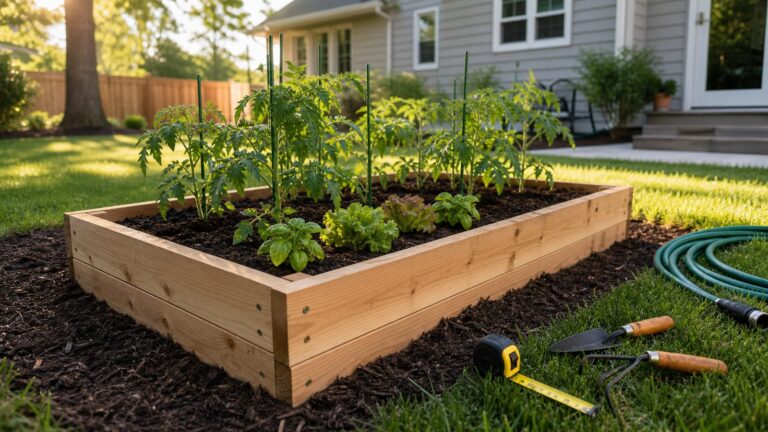
A common 4 ft x 8 ft raised bed filled 12 inches deep needs:
4 x 8 x 1 = 32 cubic feet, or about 1.19 cubic yards.
The same bed filled 18 inches deep needs:
4 x 8 x 1.5 = 48 cubic feet, or about 1.78 cubic yards.
Do not buy exactly to the math if the bed is new. Raised-bed soil settles. Depending on the compost content, wood fines, moisture, and how loosely the bed is filled, plan for roughly 10-25% settling in the first season. We normally fill slightly proud of the final grade, water the soil in as we go, and expect to top off after the first crop cycle.
The Best Raised Bed Soil Mix Ratio
For a ground-contact vegetable raised bed, our default specification is close to this:
- 60-70% screened mineral soil or quality topsoil
- 30-40% mature compost or stable organic matter
This is close to the 70% soil and 30% compost approach recommended by university extension guidance for many raised beds. It works because mineral soil supplies structure, weight, and long-term nutrient-holding capacity, while compost improves moisture retention, biology, and nutrient availability.
That ratio is a starting point, not a religion. If the native ground below the bed is heavy clay and the site stays wet, we lean toward better-screened soil, less fine compost, and more attention to drainage. If the site is sandy and hot, we may use the higher end of the compost range and mulch heavily after planting. If a supplier’s “garden mix” already contains compost, sand, loam, bark fines, or fertilizer, we ask what is actually in it before adding more amendments.
Windows Errors? Fix Them Before They Spread
Repair common Windows errors and clear accumulated junk for a smoother, more stable PC - no reinstall needed.Free scan · no reinstallCrashes, No Sound, or Screen Glitches?
Random freezes, missing sound and display glitches usually trace back to one bad driver. Find and replace yours safely.Free scan · under a minuteWhy Not Fill the Bed With Only Compost?
Straight compost sounds fertile, but it can create problems. Too much compost can push phosphorus, soluble salts, alkalinity, and pH too high, especially when the compost is manure-heavy. It can also shrink dramatically as it decomposes. A bed that looked full in April can be several inches low by late summer.
Compost is a soil amendment, not a complete structural soil for most deep raised beds. Used at 30-40% by volume, mature compost is valuable. Used as 100% of the fill, it often creates an unstable, nutrient-heavy medium that is harder to manage over time.
Why Not Use Straight Topsoil?
Topsoil quality varies wildly. Screened loam from a reputable supplier can be useful. Dense clay scraped from a building site can compact into a hard block. Cheap fill dirt may contain weed seeds, subsoil, rocks, construction debris, or very little organic matter.
Good raised-bed soil should crumble in your hand when slightly moist. It should not form a sticky ribbon like pottery clay, and it should not run through your fingers like beach sand. If a supplier cannot explain the ingredients, screening size, compost source, pH, and salt level, keep shopping.
What’s actually slowing this PC down?
Pick the symptom - the matching free tool is one click away.
Ground Beds vs Beds on Concrete or Pavement
A raised bed in contact with native soil can drain into the ground and allow roots, microbes, and water to move across the soil line. A bed on concrete, asphalt, compacted gravel, a deck, or a rooftop behaves more like a large container. That changes the soil choice.
Rank #2

- OUTDOOR POTTING SOIL: Miracle-Gro Organic Outdoor Potting Mix contains a quick-release natural plant fertilizer and also feeds plants for up to 2 months
- PEAT MOSS: This organic potting soil mix is made with responsibly sourced peat (one hundred percent of peat sourced from certified producers)
- OUTDOOR CONTAINER USE: Use this organic potting mix with all types of outdoor container plants, including flowers, vegetables, herbs, annuals, and perennials
- HOW TO USE: To plant in pots, fill the container partially full with this potting soil for outdoor plants, place the plant in the pot after loosening the root ball, cover with more mix and water thoroughly
- COVERAGE: One 16 qt. bag of Miracle-Gro Organic Outdoor Potting Mix fills one 12-inch pot with garden soil for containers (amounts may vary based on the size of the root ball)
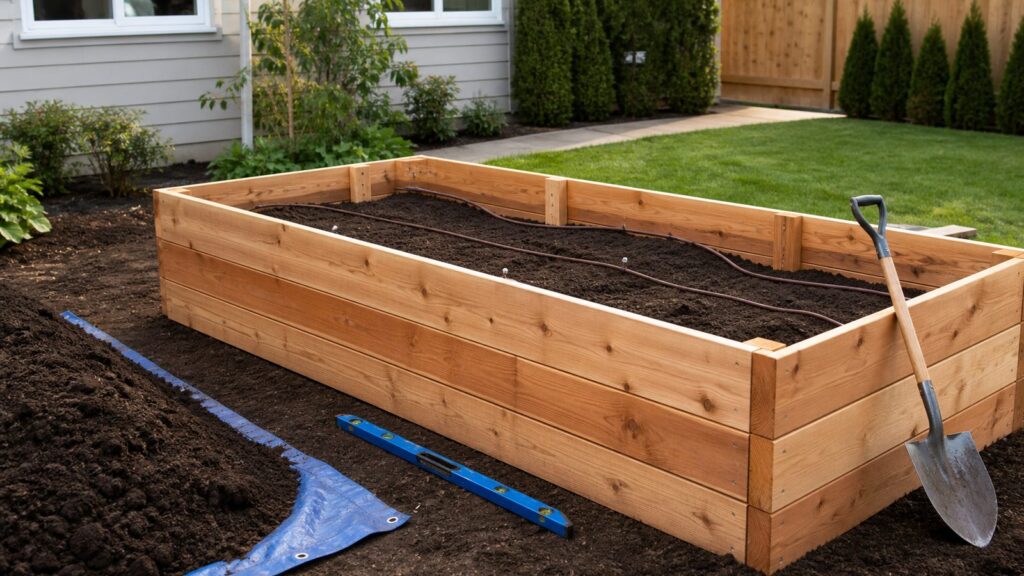
For beds on native ground, loosen or aerate the soil below the bed before filling. We usually remove sod, loosen the upper 6-12 inches where practical, and correct obvious grade or drainage problems before setting the bed. This helps water move down instead of sitting at the interface between imported soil and compacted subgrade.
For beds on hard surfaces, avoid heavy topsoil-based mixes unless the bed is deep and designed to drain. Native soil and dense topsoil can become too heavy and poorly aerated when they have no ground connection. A lighter container-style mix with compost and soilless components is usually better. University extension guidance often points to compost plus soilless growing mix for these conditions, with topsoil limited or omitted unless the bed is deep enough.
Depth matters. On hard surfaces, plan for at least about 8 inches of growing depth for leafy greens, beans, and cucumbers. For tomatoes, peppers, squash, and other deeper-rooted crops, 12-24 inches is a more realistic range. Taller beds also need drainage exits, protected surfaces below, and structural bracing so the sides do not bow.
What to Ask Before Buying Bulk Raised Bed Soil
Bulk soil is usually the best value for full-size beds, but the quality range is wide. A product called “garden mix” in one yard may be screened loam and mature compost. At another yard, it may be sandy fill with bark fines and an unknown compost source.
Before ordering several yards, ask these questions:
- What are the ingredients by approximate percentage?
- Is the mineral soil screened, and to what size?
- What is the compost made from: leaves, yard waste, manure, mushroom compost, biosolids, or mixed feedstock?
- Is there a recent analysis for pH, soluble salts, organic matter, phosphorus, potassium, and compost maturity?
- Has the mix been treated or managed for weed seeds?
- Does it contain added fertilizer, sand, bark fines, manure, or biosolids?
- Is it suitable for edible vegetable beds?
For vegetable beds, we prefer screened material with no large sticks, trash, glass, construction debris, or strong ammonia smell. Fresh manure smell is a warning sign. A sour, anaerobic odor is another warning sign. Mature compost should smell earthy, not sharp.
If possible, inspect a sample before delivery. Squeeze it, wet it, and look at the particle size. A soil that looks fluffy in a dry pile can compact after watering if it is mostly fine organic material. A soil that looks dark and rich may be excessive compost rather than a balanced mix.
Bulk vs Bagged Soil Cost in 2026
For one small herb bed, bagged soil is convenient. For a 4 x 8 vegetable bed, bulk soil usually wins on price. For multiple beds, bulk is almost always the more practical option if a truck or delivery access is available.
In 2026, sampled U.S. pricing shows bulk raised-bed or garden soil commonly around $49-$199 per cubic yard, with many local landscape yards in the $85-$165 per cubic yard range. Delivery is usually separate and may include a minimum order.
Bagged raised-bed soil at big-box retailers commonly falls around $5.31-$11.67 per cubic foot. That equals roughly $143-$315 per cubic yard, often before delivery. Pallet pricing can lower handling time, but it is still commonly in the range of about $7.82-$9.91 per cubic foot for 30-120 cubic foot quantities.
| Raised Bed Size | Soil Volume | Bulk Mix at $85-$165/yd | Bagged Mix at $5.31-$11.67/cu ft |
|---|---|---|---|
| 4 ft x 8 ft x 12 in | 32 cu ft / 1.19 yd | $101-$196 before delivery | $170-$373 |
| 4 ft x 8 ft x 18 in | 48 cu ft / 1.78 yd | $151-$294 before delivery | $255-$560 |
The math changes when delivery fees are high or access is difficult. If a supplier charges a $125 delivery fee for one yard, bagged soil may be competitive for a single bed. If you are filling four 4 x 8 beds, bulk delivery usually becomes the better deal quickly.
Do these 3 things before closing this tab:
1Clear out junk files and repair common Windows errors2Fix the driver behind crashes, sound loss and screen glitches3Repair Windows errors before they cause bigger problemsAlso compare the actual material, not only the price. A cheap mix that compacts, contains weed seed, or tests high in salts is not a bargain. Soil is the one part of the bed you will work with every season.
Rank #3

- Includes 10lb block of Back to the Roots compressed Coconut Coir that expands to 51qt of potting soil. A balanced pH, which means it’s truly all-purpose. Use alone or as an amendment for anything in a pot or in the ground — vegetables, flowers, herbs, and even starting seeds.
- Expands to over 2 cubic feet
- Peat Free OMRI Listed, assuring organic production, handling, and processing
- 100% SATISFACTION GUARANTEE: If you are not satisfied or have any issues with this Organic Coconut Coir, just shoot us a note and our dedicacted customer support team will make sure we get you growing or send you a refund/replacement.
- GROWONEGIVEONE — Share a photo of your growing garden and we’ll donate a Grow Kit and STEM elementary school curriculum to a classroom of your choice.
How Deep Should Raised Bed Soil Be?
For most vegetables, 12 inches of good soil is a workable minimum when the bed is open to loosened native ground below. Many crops will root deeper than that if the subsoil allows it. If the native soil below is compacted, contaminated, or paved, the raised bed must carry more of the root zone by itself.
Practical depth targets:
- 6-8 inches: shallow greens, herbs, radishes, and short-season crops, best where roots can continue into loosened native soil.
- 10-12 inches: common vegetable bed depth for lettuce, beans, herbs, onions, many greens, and compact crops.
- 15-18 inches: better for tomatoes, peppers, carrots, kale, eggplant, and gardeners who want easier access.
- 20-24 inches: useful for hard-surface beds, deeper-rooted crops, poor subsoil, or accessibility, but the structure must be braced.
More depth means more soil weight. One cubic yard of moist soil can weigh roughly a ton or more depending on moisture and mineral content. A tall wood bed needs proper corner fastening, mid-span bracing, and level support. A rooftop or elevated deck bed needs structural review before loading it with soil and water.
Drainage Is Part of the Soil System
Raised beds drain faster than in-ground gardens, but that does not mean they cannot hold too much water. Poor drainage usually comes from one of four problems: compacted subgrade, a dense soil mix, no drainage path on hard surfaces, or a bed wall that traps water against the frame.
On our installations, we look at drainage before we order soil. The bed location should not sit in a low spot where roof runoff, driveway runoff, or irrigation overspray collects. The bottom should be open to soil where possible. If the bed sits on pavement, it needs drainage gaps or outlets so water can escape rather than saturating the root zone.
Do not mechanically compact the growing soil. Add it in lifts, moisten each lift, and let it settle naturally. We avoid stomping inside beds because compaction defeats the purpose of building a raised growing zone. If a bed is wider than a gardener can reach, it will eventually get stepped in, so size matters too. Keep beds around 4 feet wide when accessible from both sides, or 2-3 feet wide when placed against a wall or fence.
What to Put Under a Raised Bed
For most ground-contact beds, the best bottom is loosened native soil. Remove grass and weeds first, then loosen the soil below. If weed pressure is heavy, a temporary layer of plain cardboard can help smother vegetation, but understand the tradeoff: cardboard, tarps, and heavy fabric can delay water infiltration until they break down or are removed.
Avoid plastic sheeting under vegetable beds unless the bed is designed as a contained planter with drainage outlets. Plastic can trap water and create an anaerobic layer. Landscape fabric can also clog with fine soil over time, especially under deep beds.
Recommended Free Tools
If the existing soil may be contaminated, do not mix into it casually. Older urban lots, areas near old painted structures, industrial sites, and properties with unknown fill may need soil testing for lead or other contaminants. In those cases, use a deeper contained bed, clean imported soil, and a separation layer recommended by local extension or environmental guidance.
Soil Testing: The Step That Prevents Guesswork
A soil test every 2-3 years is one of the best investments in a raised bed. The useful numbers are pH, phosphorus, potassium, organic matter, and soluble salts. Those numbers matter more than brand claims on a bag.
Many vegetable crops perform best around slightly acidic to neutral soil, often roughly pH 6.0-7.0, but do not guess with lime or sulfur. Follow the recommendation from your local extension lab or a reputable soil-testing service. Regional soils differ. So do irrigation water, compost sources, and crop needs.
Soil testing is especially useful after several years of adding compost. Gardeners often top off beds with compost every spring, which works until it does not. If phosphorus or salts climb too high, more compost can make the problem worse. When test results show excess phosphorus, high salts, or high pH, pause compost additions and use a lower-phosphorus amendment plan.
The Tool Desk
Outbyte PC Repair FREEClear out junk files and repair common Windows errorsFree Scan →Outbyte Driver Updater FREEFix the driver behind crashes, sound loss and screen glitchesFind Drivers →Annual Maintenance: How to Keep Raised Bed Soil Productive
Raised-bed soil is not a one-time purchase. It settles, crops remove nutrients, mulch decomposes, and irrigation changes salt movement. A simple annual routine keeps the bed productive without overcorrecting.
Rank #4

- OUTDOOR POTTING SOIL: Miracle-Gro Organic Outdoor Potting Mix contains a quick-release natural plant fertilizer and also feeds plants for up to 2 months
- PEAT MOSS: This organic potting soil mix is made with responsibly sourced peat (one hundred percent of peat sourced from certified producers)
- OUTDOOR CONTAINER USE: Use this organic potting mix with all types of outdoor container plants, including flowers, vegetables, herbs, annuals, and perennials
- HOW TO USE: To plant in pots, fill the container partially full with this potting soil for outdoor plants, place the plant in the pot after loosening the root ball, cover with more mix and water thoroughly
- COVERAGE: Each 16 qt. bag of Miracle-Gro Organic Outdoor Potting Mix fills one 12-inch pot with garden soil for containers (amounts may vary based on the size of the root ball)
Spring
Top off with 1-2 inches of mature compost or a compost/topsoil blend unless your soil test shows high phosphorus or salts. Loosen the surface with a garden fork without turning the whole profile upside down. Repair settled corners and low spots before planting.
Growing Season
Install drip irrigation before planting or while plants are small. Drip lines are cleaner than overhead watering, waste less water, and keep foliage drier, which can reduce disease pressure. After seedlings are established, add 1-2 inches of organic mulch such as chopped leaves, straw, composted leaf mulch, or fine wood mulch.
Fall
Remove diseased plant material, leave clean roots where appropriate, and protect bare soil with mulch or a cover crop suited to your climate. Do not leave the bed exposed all winter if wind and rain will crust or erode the surface.
Quick wins for a faster PC:
Scan for outdated or missing drivers - takes under a minuteDriver Scan →Clear out junk files and repair common Windows errorsFree Scan →Fix the driver behind crashes, sound loss and screen glitchesFind Drivers →Every few years, refresh based on testing rather than habit. Some beds need nitrogen. Some need pH adjustment. Some need no compost at all for a season. The test keeps you from paying for amendments that create new problems.
Independent reader supportYour contribution helps us test, update, and keep practical guides available for everyone.Materials and Safety Notes for the Bed Itself
Soil performance depends partly on the structure holding it. A bowed, rotting, or poorly drained bed will not stay level, and uneven soil depth creates uneven moisture.
Common raised-bed materials include cedar, redwood, untreated rot-resistant lumber, modern pressure-treated lumber, galvanized metal, stone, concrete block, and composite systems. Many food gardeners are comfortable with modern residential pressure-treated lumber, which is different from older CCA-treated lumber. Others prefer cedar, metal, masonry, or a liner for peace of mind. Avoid railroad ties and creosote-treated wood around edible beds.
For wood beds over 12 inches tall, use strong corner posts, corrosion-resistant structural screws, and mid-span bracing on long runs. A 4 x 8 x 18 inch bed holds 48 cubic feet of soil before settling. Wet soil pushes outward, and weak fasteners show up quickly.
Check local rules if the bed functions like a retaining wall, is unusually tall, supports a surcharge, sits near a property line, or changes drainage toward a neighbor. Many simple garden beds do not need permits, but walls above local height thresholds may. Some jurisdictions also regulate retaining walls near slopes, driveways, easements, or structures. When in doubt, check before building, especially for masonry, terraced beds, or hillside gardens.
When to DIY vs When to Hire a Pro
A homeowner can usually DIY one or two small raised beds if the site is level, access is easy, the bed is under about 18 inches tall, and the soil can be moved without damaging paving, turf, or drainage. The work is straightforward: measure, order soil, assemble the frame, loosen the base, fill in lifts, water in, and plant.
Consider hiring a professional when the project includes grading, drainage correction, irrigation, hardscape tie-ins, multiple beds, tall walls, poor access, or a slope. Also bring in help when the soil delivery has to be staged, moved by machine, carried through tight side yards, or protected from staining concrete and finished surfaces.
For a complete raised-bed installation, the soil is only one part of the scope. A durable build includes level layout, stable bed walls, drainage paths, access aisles, irrigation, soil placement, mulch, cleanup, and a maintenance plan. That is where a construction-minded approach pays off. A beautiful soil recipe does not matter if the bed bows, stays saturated, blocks a walkway, or dries out because irrigation was an afterthought.
Quick wins for a faster PC:
Clear out junk files and repair common Windows errorsFree Scan →Scan for outdated or missing drivers - takes under a minuteDriver Scan →Repair Windows errors before they cause bigger problemsFix Now →Common Raised Bed Soil Mistakes
The biggest mistake is chasing a universal recipe. The popular one-third peat or coir, one-third compost, one-third vermiculite approach can work in some situations, but it becomes expensive fast in large beds and may not provide enough mineral structure for long-term performance. Vermiculite, perlite, coco coir, and peat are useful tools, not automatic requirements for every bed.
Best Value
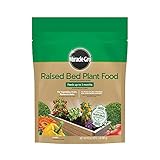
- Feed your raised bed for up to 3 months
- Help feed all fruits, flowers, vegetables and herbs
- Use with Miracle-Gro Raised Bed Soil for an even greater harvest (vs unfed plants)
- Contains natural ingredients, added calcium and vital micronutrients to produce a bountiful harvest
- Each bag of Miracle-Gro Raised Bed Plant Food contains enough nourishment to feed two 4-by-4 ft raised beds for up to 3 months
Another common mistake is overfilling with rich organic material. Dark soil is not always better soil. If the mix is mostly compost, manure, bark fines, or decomposing wood products, it may shrink, tie up nitrogen, hold salts, or test high in phosphorus.
The third mistake is ignoring water. Raised beds dry faster than in-ground beds because they are elevated, exposed, and well-drained. A good mix holds moisture, but it still needs irrigation. Drip tubing, mulch, and consistent watering do more for plant performance than adding another random amendment after plants are stressed.
Finally, do not skip access planning. A bed wider than 4 feet is hard to maintain without stepping into it. Paths narrower than about 24 inches become frustrating with a wheelbarrow, kneeling pad, or harvest basket. For comfortable maintenance, plan paths around 30-36 inches where space allows.
Do these 3 things before closing this tab:
1Scan for outdated or missing drivers - takes under a minute2Repair Windows errors before they cause bigger problems3Fix the driver behind crashes, sound loss and screen glitchesA Practical Soil Spec for Most Homeowners
If you want a simple, reliable specification for a standard vegetable bed on soil, use this:
- Build the bed no wider than 4 feet if reachable from both sides.
- Use 12-18 inches of growing depth for most vegetables.
- Loosen the native soil underneath before filling.
- Order a screened raised-bed mix close to 60-70% mineral soil and 30-40% mature compost.
- Ask for pH, soluble salts, organic matter, nutrient levels, and compost maturity information.
- Fill in 4-6 inch lifts, moistening as you go, without compacting the growing zone.
- Install drip irrigation before planting.
- Mulch with 1-2 inches of organic mulch after seedlings are established.
- Test soil every 2-3 years and adjust based on the report.
For a 4 x 8 x 12 inch bed, plan on about 32 cubic feet before settling. For a 4 x 8 x 18 inch bed, plan on about 48 cubic feet. If you are filling several beds, price bulk soil first. If you are filling one small bed with poor access, bagged soil may be worth the convenience.
The best raised-bed soil is not the most expensive product on the pallet. It is the mix that matches the bed, drains correctly, tests within range, and can be maintained year after year without creating compaction, salt buildup, or nutrient excess.
Frequently Asked Questions
What is the best soil mix ratio for raised garden beds?
For most ground-contact vegetable beds, use about 60-70% screened mineral soil or quality topsoil and 30-40% mature compost or organic matter. Adjust based on drainage, climate, crop needs, and soil test results.
Recommended Free Tools
How much soil do I need for a 4×8 raised bed?
A 4 ft x 8 ft bed filled 12 inches deep needs 32 cubic feet, or about 1.19 cubic yards. At 18 inches deep, it needs 48 cubic feet, or about 1.78 cubic yards, before settling.
Is bulk soil cheaper than bagged raised-bed soil?
Usually, yes. In 2026, bulk raised-bed mixes commonly run about $85-$165 per cubic yard at many landscape yards before delivery. Bagged raised-bed soil often works out to roughly $143-$315 per cubic yard.
Can I fill a raised bed with only compost?
It is not recommended for most deep vegetable beds. Straight compost can shrink, hold excess phosphorus or salts, raise pH, and lack the mineral structure needed for long-term soil performance.
Should I put cardboard or landscape fabric under a raised bed?
Loosened native soil is usually the best bottom for a ground-contact raised bed. Cardboard can help suppress weeds temporarily, but it may slow water infiltration until it breaks down. Avoid plastic unless the bed is designed as a contained planter with drainage.
How often should raised-bed soil be tested?
Test every 2-3 years. Check pH, phosphorus, potassium, organic matter, and soluble salts before adding lime, sulfur, fertilizer, or more compost.
Quick Recap
Product prices and availability are accurate as of the date/time indicated and are subject to change. Any price and availability information displayed on Amazon at the time of purchase will apply.