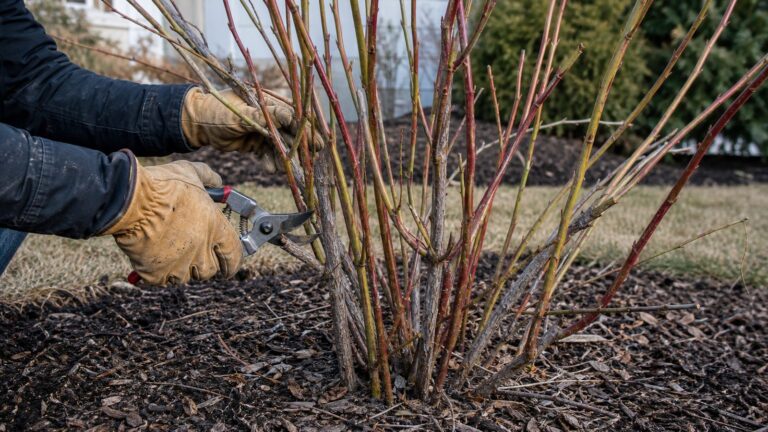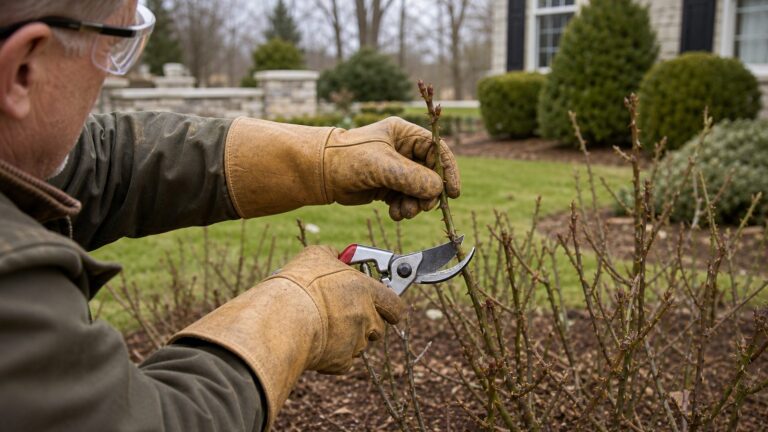
Pruning roses the right way is not about cutting every bush into the same rounded shape. The right approach depends on the type of rose, your climate, and what the plant is doing that season. For most repeat-blooming roses in the United States, the main pruning window is late winter to early spring, after the worst freeze risk has passed and before strong new growth takes over.
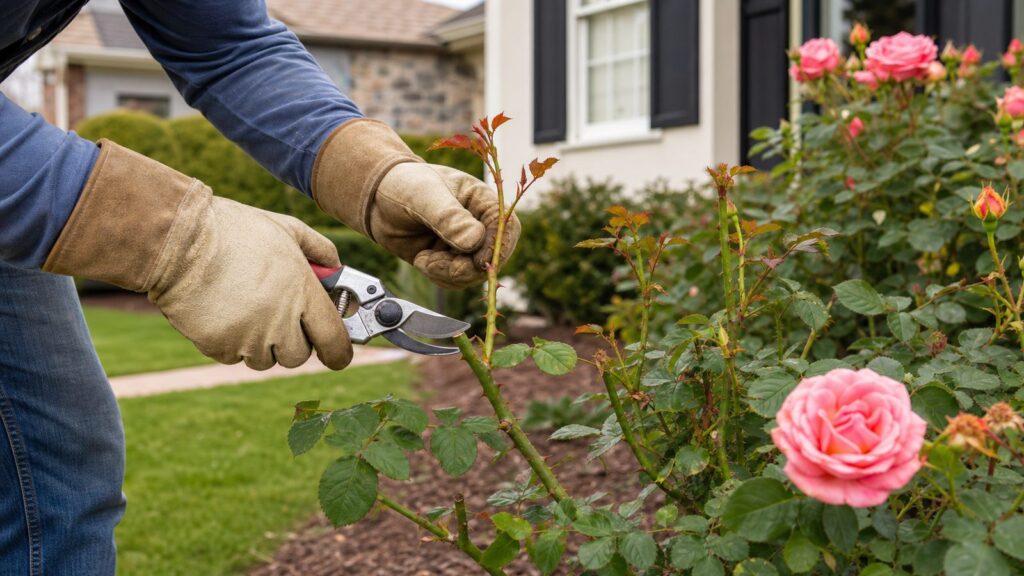
The basic sequence is simple: remove dead, diseased, and damaged wood first; cut out crossing or rubbing canes; open the center for airflow; then shape the plant with clean cuts about 1/4 inch above outward-facing buds. That method keeps the plant healthier, makes future maintenance easier, and helps roses put energy into strong canes and flowers instead of weak interior growth.
On our job sites, rose beds usually become a problem when they are treated like background shrubs. They get hit by irrigation overspray, buried under construction dust, compacted along walk paths, or sheared at the wrong time. A rose is tougher than it looks, but careless pruning can remove a full season of blooms or invite disease into a stressed plant. The details below will help you prune with confidence and know when a professional visit is worth the money.
Best Time to Prune Roses
For most hybrid tea, grandiflora, floribunda, and repeat-blooming shrub roses, plan major pruning in late winter or early spring. In colder regions, wait until the danger of severe freezes has passed. In warmer regions, pruning often lands earlier, commonly February into March. A useful field cue in many areas is forsythia bloom: when forsythia starts flowering, rose buds are often beginning to swell and the risk of deep winter injury is lower.
#1 Best Overall

- CLEAN CUTS FOR LIVE GROWTH: Bypass blade design is ideal for pruning delicate flower stems and green growth, helping reduce crushing and plant damage while cutting stems and small branches up to 5/8” in diameter
- BLADES STAY SHARP: Precision-ground steel blades are engineered to stay sharp through heavy use, & all-steel construction provides lasting durability, delivering consistent cutting performance for regular garden maintenance & detailed pruning tasks
- SMART BLADE FEATURES: Blade coating helps reduce friction for smoother cuts, minimizes sap buildup & gumming, and enhances resistance to rust for longer-lasting performance in outdoor conditions; sap groove keeps the blades from sticking during use
- COMFORTABLE, CONTROLLED GRIP: Ergonomic, non‑slip handle enhances control and reduces hand fatigue during repetitive cuts; easy‑open safety lock secures the blade for safe transport and compact storage
- INCLUDES: (1) Fiskars Bypass Pruning Shears designed for everyday gardening and plant care and backed by a Lifetime Warranty. Product care tips: Wipe pruners clean after each use to prevent sap build-up and lightly oil blade for longer product life
That cue is not a national calendar. Texas, Maryland, Iowa, Illinois, Oregon, Oklahoma, and other regions all have different freeze patterns and growth cycles. A homeowner in central Texas may be pruning while a homeowner in Iowa still needs to wait. Local Extension timing is worth following because roses respond to actual site conditions, not a date printed on a bag of fertilizer.
Once-blooming old garden roses and many spring-blooming climbers are different. If you prune them hard before flowering, you may remove the buds that would have produced that year’s main show. These roses are usually pruned after flowering. The safest rule is this: repeat bloomers can usually be pruned during dormancy and deadheaded during the growing season; once-bloomers should be shaped after they flower unless you are only removing dead, diseased, or dangerous wood.
Know What Kind of Rose You Have Before Cutting
Before you pick up pruners, identify the rose as closely as you can. You do not need a botanical label, but you do need to know the growth habit. Hybrid teas, floribundas, and grandifloras are often pruned harder than landscape shrub roses. Climbers need their main canes preserved. Old garden roses often resent the same aggressive pruning used on modern repeat bloomers.
If the rose has one large flower per stem and a more upright habit, it may be a hybrid tea. If it produces clusters of flowers, it may be a floribunda or shrub rose. If long canes are tied to a trellis, fence, arbor, or wall, treat it as a climber until proven otherwise. If it blooms heavily once in spring and then stays mostly green, assume it is a once-bloomer and postpone structural pruning until after bloom.
Do these 3 things before closing this tab:
1Clear out junk files and repair common Windows errors2Scan for outdated or missing drivers - takes under a minute3Repair Windows errors before they cause bigger problemsHow Hard Should You Cut?
Hybrid tea, grandiflora, and floribunda roses are commonly reduced to roughly 8 to 18 inches or 12 to 18 inches in spring, depending on climate, plant vigor, and local guidance. That does not mean every cane gets cut to the same height. Keep the strongest healthy canes, remove weak growth, and cut each selected cane to an outward-facing bud.
Shrub roses usually need lighter shaping. Instead of cutting them to knee height every year, remove old, dead, crowded, or crossing canes and reduce overall size selectively. Mature shrub roses often look best when one-third or less of the top growth is removed during routine pruning, unless the plant is overgrown and you are doing renovation work.
Climbing roses are managed around their framework. Preserve strong main canes and prune side shoots, often called laterals, back to a few buds depending on the rose type and flowering pattern. Tying main canes horizontally or at a gentle angle encourages more flowering shoots than letting all growth run straight up.
Tools and Safety Gear
A clean cut starts with sharp bypass tools. Avoid anvil pruners for most rose work because they can crush stems. For a typical homeowner rose bed, a basic setup costs about $40 to $150 in 2026: bypass hand pruners, long gauntlet gloves, Disinfectant or alcohol, and a debris container or yard-waste bag. Add roughly $30 to $80 for bypass loppers if the canes are thick or hard to reach.
Quick wins for a faster PC:
Repair Windows errors before they cause bigger problemsFix Now →Scan for outdated or missing drivers - takes under a minuteDriver Scan →A higher-quality setup runs about $120 to $300 or more. That usually includes professional-grade bypass pruners, long leather or synthetic gauntlet gloves, loppers, a small pruning saw, eye protection, a sharpening tool, and yard-waste bags or bins. If you have climbers above shoulder height, add a stable ladder only when the ground is level and dry. Do not prune thorny climbing roses from the top step of a ladder.
| Item | Typical 2026 Cost | Use |
|---|---|---|
| Bypass hand pruners | $20-$80 | Clean cuts on most rose canes |
| Gauntlet gloves | $15-$60 | Forearm protection from thorns |
| Bypass loppers | $30-$80 | Thicker canes and deeper reach |
| Pruning saw | $20-$60 | Old woody canes too large for loppers |
| Disinfectant or alcohol | $5-$15 | Tool sanitation between diseased cuts or plants |
| Eye protection | $5-$25 | Protection from springy canes and thorn tips |
Wear long sleeves, long pants, and eye protection. Rose canes spring back fast, especially on climbers and overgrown shrub roses. On job sites, we also watch footing. Wet mulch, loose gravel, edging, irrigation lines, and uneven pavers are common trip hazards around planting beds.
The Right Pruning Method, Step by Step
Start with inspection. Look at the base, the graft union if the rose is grafted, the direction of major canes, and any signs of disease. Do not begin by reducing height. Height is the last adjustment, not the first.
Rank #2
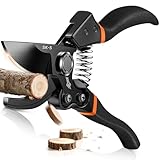
- LONG-LASTING SHARPNESS: Japanese SK5 bypass blade with titanium coating is tested through 5,000 cuts to maintain a sharp edge and deliver clean, consistent cuts on live stems and branches
- BUILT FOR 5X DURABILITY: Heavy-duty 3-layer titanium-coated SK5 blade resists wear and corrosion, while anodized aluminum handles and high-hardness screws reinforce the pruner. Repeated cutting tests show up to 5X the durability of standard pruners
- POWERFUL 4X LEVER CUTTING: The optimized lever-action design multiplies cutting force up to 4X, making thicker branches easier to prune with less hand effort. Cuts branches up to 3/4" with smooth, controlled power for everyday garden pruning
- ARTHRITIS & SENIORS FRIENDLY: Ergonomic non-slip rubber handles cushion pressure and provide a secure, comfortable grip, helping reduce hand and wrist fatigue. A comfortable hand pruner for seniors, arthritis and longer pruning sessions
- ONE-HAND SAFETY LOCK: The easy-access safety lock opens and closes with one hand for faster trimming, then securely holds the blades closed for safer carrying and storage
1. Remove Dead, Diseased, and Damaged Wood
Cut out the 3 D’s first: dead, diseased, and damaged canes. Dead canes are often brown, black, brittle, or hollow. Healthy rose tissue is typically green or white inside, depending on cane age. If you cut into a cane and the center is brown, keep moving down until you reach healthy tissue or remove the cane at the base.
Diseased canes should be removed from the bed, not left as mulch. If you cut diseased material, disinfect your pruners before moving to healthy canes or another plant. Tool sanitation is not cosmetic. It helps reduce the chance of moving pathogens through a whole rose bed.
2. Cut Out Crossing, Rubbing, and Inward Growth
Next, remove canes that cross through the middle, rub against stronger canes, or grow into the center of the plant. Rubbing wounds create entry points for disease and pests. Inward growth also traps humidity and blocks airflow. A good rose should have an open center so air can move through after rain or irrigation.
This is one reason shearing roses into rounded shrubs causes trouble. The outside may look tidy, but the inside becomes crowded, shaded, and disease-prone. Selective cane pruning takes more judgment, but it produces a healthier plant.
3. Make the Correct Cut
Make each final cut at a 45-degree angle about 1/4 inch above an outward-facing bud. The high side of the cut should be above the bud. That placement encourages new growth to move outward instead of back into the plant. Do not leave a long stub above the bud. Long stubs die back and can become an entry point for pests or disease. Do not cut flush against the bud either, because that can damage the growing point.
Free tools Windows power users keep installed
One-click scans. No signup required.
Use one clean motion where possible. If the cane splinters or crushes, sharpen the tool or switch to loppers or a pruning saw. Ragged cuts heal poorly.
4. Thin, Then Shape
After the bad wood and crowded growth are removed, decide what structure you want to keep. For many modern roses, that means keeping 3 to 6 strong canes arranged with space between them. For shrub roses, it may mean keeping a fuller framework while removing the oldest or weakest stems. For climbers, keep the main canes and shorten laterals instead of cutting the whole plant back like a shrub.
When reducing height, cut to outward-facing buds at different heights so the plant does not look flat-topped. A natural staggered structure handles wind better and looks less forced.
Deadheading, Suckers, Renovation, and Storm Cleanup
Homeowners often use the word pruning for several different jobs. Separating them helps you avoid the wrong cut at the wrong time.
Rank #3

- Drop-forged construction delivers exceptional durability and sturdiness for long-term heavy garden use.
- Premium SK-5 steel blade with titanium coating and ultra-fine polishing ensures sharpness, rust resistance, and smooth cutting.
- Ergonomic non-slip aluminum handles wrapped with PVC offer lightweight strength, comfort, and reduced hand fatigue.
- Built-in sap groove effectively channels away sap to prevent sticking and keep blades clean during pruning.
- Capable of cutting branches up to 3/4 inch in diameter, ideal for live plants, stems, and light woody pruning tasks.
Deadheading
Deadheading means removing spent flowers during the growing season. For repeat-blooming roses, it encourages rebloom and keeps the plant from putting energy into hips unless you want hips for ornamental value. Cut the spent bloom stem back to an outward-facing bud or a strong leaflet. Do not strip the plant down every time a flower fades; the goal is light shaping and rebloom support.
Sucker Removal
On grafted roses, suckers can grow from below the graft union. These shoots may belong to the rootstock, not the rose variety you bought. They often grow fast and look different from the rest of the plant. Remove suckers as close to their origin as possible. If you leave them, they can overtake the desired rose.
Renovation Pruning
Renovation pruning is for neglected roses with too much old wood, poor flowering, or heavy congestion. This is more aggressive than annual maintenance. It may take 2 to 3 seasons to correct an old shrub rose without shocking it. Remove the oldest unproductive canes first and encourage younger canes from the base. For severely overgrown modern roses, harder spring pruning may be justified, but expect a temporary reduction in size while the plant rebuilds.
Post-Storm Cleanup
After wind, hail, falling limbs, or construction damage, remove broken canes cleanly back to healthy tissue. Do not leave split stems hanging. If a trellis or fence shifted, stabilize the support before tying rose canes back into place. A loose support will keep tearing the plant every time the wind moves it.
What’s actually slowing this PC down?
Pick the symptom - the matching free tool is one click away.
Cleanup, Disease Prevention, and Irrigation Checks
Good pruning includes cleanup under the rose. Remove diseased leaves, infected canes, and old debris from the bed. Do not compost obviously diseased rose material unless your compost process reliably reaches pathogen-killing temperatures. For most homeowners, bagging diseased material for disposal is the cleaner choice.
Old mulch can hold fallen diseased leaves. If the rose bed had black spot, powdery mildew, or other recurring issues, consider removing contaminated leaf litter and refreshing mulch after pruning. Keep mulch a few inches away from the crown or graft union so the base of the plant stays dry and visible.
After pruning, check irrigation. Overhead spray that wets foliage in the evening creates disease pressure. Soil-level watering or drip irrigation is usually better for roses. If spray heads are hitting the rose canopy, adjust the pattern. On landscape repair jobs, we often find that disease problems are partly a water-placement problem, not just a pruning problem.
How Much Rose Pruning Costs in 2026
DIY rose pruning can be inexpensive if you already own tools. If you are starting from scratch, expect about $40 to $150 for basic tools or $120 to $300 or more for a more durable setup. The time commitment for a small bed of 3 to 6 roses may be 1 to 3 hours for a careful homeowner, including cleanup. Overgrown roses, climbers, and diseased beds take longer.
PC Slower Than It Used to Be?
A free scan shows the junk files, broken settings and background clutter dragging Windows down - then fixes them in one click.Free scan · Windows 10 & 11Outdated Drivers Are Slowing You Down
One free scan finds every outdated or missing driver and matches the right update for your exact hardware.Free scan · exact hardware matchProfessional gardening costs vary by market and scope. A national 2026 benchmark for a professional gardener visit is about $110 to $200 per visit, with an average around $150. Task-based gardening commonly runs about $120 to $190 per completed task, while light pruning or hedge trimming often lands around $130 to $260. Broader bush and shrub trimming jobs commonly range from about $196 to $587, depending on quantity, size, access, and debris hauling.
Rank #4
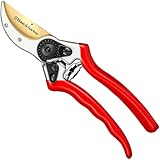
- Sharp, Clean Cuts Every Time – Engineered from Japanese grade, high-carbon steel, ClassicPRO bypass pruning shears for gardening stay sharp and make precise cuts that encourage healthy growth and won’t damage your plants
- No More Hand Fatigue and Wrist Strain – ClassicPRO gardening shears are designed with an ergonomic handle, non-slip grips, and shock-absorbing pads, making them lightweight and comfortable for smaller hands, seniors, and arthritis sufferers
- Rust and Corrosion Resistant – Tired of garden shears that rust after just a few uses? Our heavy duty pruning shears are constructed from anodized aluminum with titanium-coated blades to reduce friction and protect against rust and corrosion
- One Gardening Pruner, Many Uses - Preferred by professional landscapers and master gardeners, ClassicPRO clippers for gardening are adjustable general-purpose secateurs and branch cutters to trim trees, plants, and indoor flowers up to 1” thick
- Designed to Last Season After Season – Tired of cheap, low-quality hand pruners for gardening? Our heavy duty handheld garden clippers are designed for durability and longevity so you always have reliable shears
For rose-specific work, a small bed may fit into a minimum-service visit of about $120 to $200. Larger beds, thorn-heavy overgrowth, climbers on structures, or heavy disease cleanup can push the job into the $250 to $600-plus range. Local gardening labor often falls around $50 to $100 per hour, but minimum trip charges, insurance, travel time, seasonality, and disposal fees usually matter more than the hourly rate for a small job.
| Rose Pruning Scenario | Typical 2026 Cost | What Drives the Price |
|---|---|---|
| DIY with basic tools | $40-$150 | Pruners, gloves, disinfectant, bags |
| DIY with upgraded tools | $120-$300+ | Pro pruners, loppers, saw, eye protection, sharpener |
| Small professional rose bed visit | $120-$200 | Minimum service charge, light pruning, basic cleanup |
| Moderate pruning or hedge-style visit | $130-$260 | More shrubs, heavier shaping, debris handling |
| Large or overgrown rose job | $250-$600+ | Thorns, climbers, disease sanitation, hauling, access |
If rose pruning is part of a larger landscape repair after patio, fence, walkway, drainage, siding, or exterior renovation work, bundling can reduce mobilization cost. Crews are already on site, debris handling is already planned, and the bed can be protected or reset as part of the larger work sequence.
Independent reader supportYour contribution helps us test, update, and keep practical guides available for everyone.When to DIY and When to Hire a Pro
DIY is reasonable when the roses are waist-high or lower, the plant type is obvious, disease is minor, and you can work safely from the ground. A homeowner with sharp bypass pruners, gloves, and patience can handle annual maintenance on a small bed.
Recommended Free Tools
Hire a professional when roses are badly overgrown, tied into a tall arbor, mixed with electrical or irrigation components, heavily diseased, or located beside steep slopes, retaining walls, pools, or public sidewalks. Also consider hiring if the bed has not been pruned for several years. Renovation pruning requires judgment because cutting too much old wood at once can leave the plant weak or misshapen.
For commercial properties, rental homes, and curb-facing beds, professional pruning may be worth it for consistency alone. A trained gardener can prune, clean debris, inspect irrigation, and recommend mulch or soil corrections in one visit. That matters when the rose bed is part of the property’s first impression.
Permit, Right-of-Way, and Site Protection Notes
Most homeowners do not need a permit to prune roses inside a private planting bed. The exceptions are usually location-based. If the roses are in or near a public right-of-way, sidewalk, street tree area, historic district, HOA-controlled landscape, commercial frontage, or protected landscape zone, check local rules before cutting heavily or removing plants. Some cities regulate landscape work near public streets, and some protected plant ordinances include shrubs or designated landscape areas.
During exterior construction, protect rose beds before work starts. On our job sites, that means temporary fencing around planting areas, plywood or mat protection where foot traffic must pass nearby, clearly marking irrigation lines, and keeping concrete washout, mortar rinse water, paint cleanup, and saw-cut slurry away from soil. Soil compaction is also a real issue. A wheelbarrow path through a rose bed can damage roots long before the canes show stress.
If a project requires access near roses, prune only what is needed for safe clearance unless the timing is right for full maintenance pruning. Tie canes back instead of cutting them when practical. After work is complete, inspect for broken canes, buried crowns, damaged drip lines, and changes in drainage.
Common Rose Pruning Mistakes
The biggest mistake is pruning every rose the same way. A climber, shrub rose, hybrid tea, and once-blooming old garden rose do not have the same structure or bloom cycle. The second major mistake is pruning too early in cold climates. A warm spell can push tender growth, and a late freeze can burn it back.
Best Value

- · ULTRA-SHARP SK5 STAINLESS STEEL - Engineered with premium SK5 stainless steel, these heavy duty pruning shears deliver razor-sharp precision and maximum hardness. The rust-resistant blades are designed to stay sharp longer, effortlessly resisting corrosion and sap buildup for smooth, friction-free garden shears performance year after year.
- · CLEAN CUTS FOR 1 INCH THICK BRANCHES - Say goodbye to crushed stems and ragged bark. Our professional bypass pruning shears slice through thick branches up to 1 inch like butter(as the videoes show). By ensuring perfectly clean cuts without leaving debris, it helps your roses, fruit trees, and indoor plants heal faster and stay healthy.
- · ERGONOMIC COMFORT FOR ARTHRITIS & WEAK HANDS - No more hand fatigue or wrist strain! Featuring a non-slip SoftGrip handle with premium cushioning, these garden clippers absorb pressure with every cut. It is the ultimate arthritis friendly hand pruner for seniors or anyone with limited hand strength to enjoy yard work pain-free.
- · 100% LEFT-HANDED FRIENDLY & SAFETY LOCK - Unlike standard garden scissors that flop and crush stems when used left-handed, our uniquely balanced hand pruners work flawlessly for both right and left-handed users. Equipped with a secure, easy-to-operate safety lock to protect your fingers and ensure safe storage.
- · HIGH-VISIBILITY RED & LIFETIME WARRANTY - Never lose your tools in the grass again! The vibrant high-visibility red handle makes these plant shears pop instantly in any backyard setting. We stand behind our industrial-grade quality—enjoy 100% risk-free shopping backed by our ironclad Lifetime Warranty. Perfect gardening gifts for women and men!
Other common problems include shearing roses into balls, leaving dead or crossing canes because the outside looks tidy, using dull tools, leaving long stubs above buds, cutting too close to buds, and leaving diseased leaf litter under the plant. Homeowners also miss suckers below the graft union. Those shoots can grow vigorously and gradually replace the rose they wanted to keep.
Fall pruning deserves caution. Light cleanup is fine if you are removing dead, diseased, damaged, or hazardous growth. Heavy fall pruning can stimulate growth that is vulnerable to winter injury in cold regions. Save major structural pruning for the correct dormant-season window unless local guidance says otherwise.
The Tool Desk
Outbyte Driver Updater FREEScan for outdated or missing drivers - takes under a minuteDriver Scan →Outbyte PC Repair FREEClear out junk files and repair common Windows errorsFree Scan →A Practical Rose Pruning Checklist
Use this order in the field:
- Confirm the rose type: repeat-bloomer, once-bloomer, climber, shrub, hybrid tea, floribunda, or grandiflora.
- Choose the right timing for your region and bloom cycle.
- Wear gauntlet gloves, long sleeves, long pants, and eye protection.
- Use sharp bypass pruners, loppers, or a pruning saw matched to cane size.
- Remove dead, diseased, and damaged canes first.
- Cut out crossing, rubbing, weak, and inward-growing canes.
- Make 45-degree cuts about 1/4 inch above outward-facing buds.
- Preserve strong main canes on climbers and prune laterals selectively.
- Remove suckers from below the graft union.
- Clean diseased debris out of the bed and disinfect tools when disease is present.
- Check irrigation spray patterns and correct overhead wetting where possible.
Done correctly, rose pruning is not severe or mysterious. It is a sequence of practical decisions: timing, plant type, clean cuts, airflow, and cleanup. Take those in order and your roses will be easier to maintain, less disease-prone, and better prepared for a strong bloom season.
Frequently Asked Questions
When is the best time to prune roses?
For most repeat-blooming roses, prune in late winter to early spring after the worst freeze risk has passed. In warmer regions this may be February or March; in colder regions it may be later. Once-blooming roses and many climbers are usually pruned after they flower.
How far back should I cut rose bushes?
Hybrid tea, floribunda, and grandiflora roses are often cut back to about 8 to 18 inches or 12 to 18 inches in spring, depending on region and plant vigor. Shrub roses usually need lighter thinning and shaping, while climbers need strong main canes preserved.
Do I need to disinfect pruners between rose bushes?
Yes, especially when disease is present. Disinfect pruners after cutting diseased material and before moving to another rose. Sharp, clean tools reduce cane crushing and lower the chance of spreading pathogens.
Can I prune roses in summer or fall?
Summer pruning is usually limited to deadheading repeat bloomers, removing diseased growth, and light shaping. Fall pruning should be conservative in cold climates because heavy cuts can stimulate tender growth that may be damaged by winter freezes.
How much does professional rose pruning cost in 2026?
A small rose bed may fit into a professional minimum-service visit of about $120 to $200. Larger beds, overgrown thorny roses, climbers, or heavy disease cleanup can cost $250 to $600 or more depending on labor, access, and debris disposal.
Do I need a permit to prune roses near a sidewalk?
Usually not for roses on private property, but check local rules if the plants are in a public right-of-way, HOA-controlled area, historic district, commercial frontage, or protected landscape zone. Some cities regulate landscape work near streets and sidewalks.
Quick Recap
Product prices and availability are accurate as of the date/time indicated and are subject to change. Any price and availability information displayed on Amazon at the time of purchase will apply.
Recommended Free Tools