Do these 3 things before closing this tab:
1Clear out junk files and repair common Windows errors2Fix the driver behind crashes, sound loss and screen glitches3Repair Windows errors before they cause bigger problemsIf your house feels cold even when the thermostat says it should be comfortable, the problem is usually not the furnace setting. It is air movement, weak insulation, cold surfaces, blocked heat delivery, or moisture imbalance. On our job sites, we see the same pattern every winter: homeowners spend more on heat while the warm air they already paid for escapes through door gaps, attic bypasses, duct boots, recessed lights, rim joists, and unsealed hatches.
For the 2025-2026 heating season, affordability remained a real concern. National energy forecasts expected higher household spending for electricity and cold-weather-driven increases for other fuels, while winter heating cost estimates put the average household bill near $976, up from about $907. That makes the order of operations matter. A $25 door sweep can help, but sealing the attic plane or fixing a leaky hatch may do more for comfort than chasing every window with tape.
Here is the builder’s sequence: diagnose drafts, stop uncontrolled air leaks, protect attic ventilation, improve insulation, then fine-tune windows, curtains, vents, fireplaces, and humidity. Insulation is not a substitute for air sealing. Caulk is not a cure for a bad threshold. And no winter hack should create a moisture, mold, carbon monoxide, or fire-safety problem.
1. Start With the Biggest Drafts, Not the Most Obvious Ones
Most homeowners blame windows first because cold glass is easy to feel. Windows can be part of the problem, but the largest leaks are often hidden. In winter, stack effect pulls warm indoor air upward and pushes it out through the attic. As that air leaves, replacement air gets pulled in through lower gaps around doors, rim joists, crawl-space penetrations, garage transitions, and basement openings.
The Tool Desk
Outbyte Driver Updater FREEFix the driver behind crashes, sound loss and screen glitchesFind Drivers →Outbyte PC Repair FREEClear out junk files and repair common Windows errorsFree Scan →#1 Best Overall

- Press-In Kerf Fit: This weather stripping door seal fits 1/8" kerf slots and 1/4"–1/2" closed door gaps. For pre-cut kerf frames only; not self-adhesive. Measure before ordering
- Block Drafts & Energy Loss: The flexible door frame seal strip helps reduce cold drafts, light leaks, outside noise and heating or cooling loss for year-round comfort
- Replace Worn Exterior Door Seals: Ideal for replacing old, cracked, compressed or pet-damaged door weather stripping on front, back and garage entry doors
- Easy Press-In Installation: Remove the old seal, clean the kerf groove, measure and cut, then press the flange firmly into place. The 40FT roll can be cut to fit multiple doors
- Durable PE-Covered Foam: Resilient PU foam with a tough PE cover compresses and rebounds to help maintain a snug, long-lasting seal
Air leakage can account for roughly 10% to 40% of heating and cooling costs, depending on the house. ENERGY STAR estimates that sealing air leaks and adding insulation can save up to 10% on annual energy bills. The comfort benefit often shows up faster than the bill savings: fewer cold floors, less room-to-room temperature swing, and less need to raise the thermostat two or three degrees just to make one room livable.
Fast homeowner draft check
Pick a cold, windy day. Walk the house with a smoke pencil, incense stick, or even a lightweight tissue. Check exterior door edges, baseboards on exterior walls, attic hatches, fireplace openings, under sinks, around plumbing penetrations, electrical outlets on exterior walls, duct registers, and the band joist area in the basement. Mark suspected leaks with painter’s tape.
For older homes, high heating bills, ice dams, or rooms that never feel right, a blower-door-guided energy audit is better than guessing. A standalone blower door test commonly costs about $200 to $450 in 2026, with a national average around $325. If infrared imaging or duct leakage testing is included, many audits land closer to $475 to $650 or more. That money is often well spent because it tells you where the house is actually leaking, not where it looks like it might be leaking.
2. Weatherstrip Exterior Doors and Adjust the Threshold
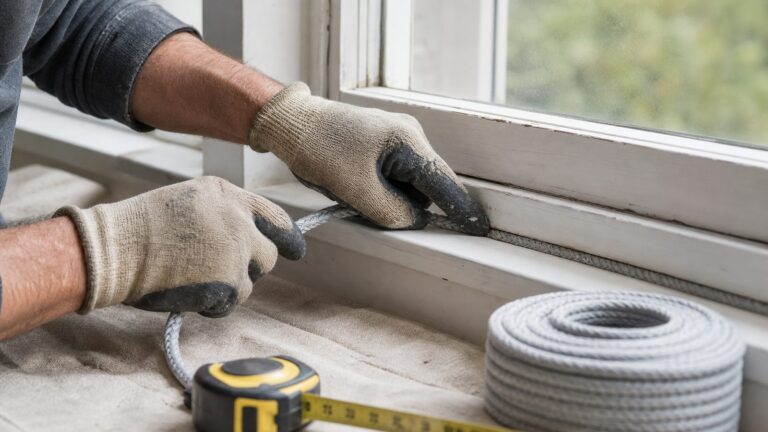
Exterior doors are one of the best low-cost winter fixes because the gap is usually measurable. A 1/8-inch gap along a 36-inch door edge is not a tiny leak. Add the bottom, latch side, hinge side, and top, and you can have the equivalent of a several-square-inch opening in the building envelope.
What’s actually slowing this PC down?
Pick the symptom - the matching free tool is one click away.
Start with the basics. The door should close squarely, the latch should pull it tight against the stop, and the threshold should meet the sweep with light compression. If you can see daylight under the slab, feel air movement at the corners, or slide paper through the weatherstripping with no resistance, the seal is not doing its job.
What to use
Adhesive foam is cheap and fast, usually under $10 to $20 for a door, but it compresses and wears out. V-strip costs a little more and works well at the jambs. Tubular rubber or silicone gaskets are more durable. Bronze or metal weatherstripping can last for years but costs more and requires careful installation.
In 2026, DIY weatherstripping materials are commonly under $10 to $40 per opening. Professionally installed weatherstripping across a home often runs about $200 to $600. Per-door installed costs typically range from $30 to $300 depending on the material and door condition. Common installed ranges are about $35 to $80 for adhesive foam, $40 to $90 for V-strip, $45 to $100 for a door sweep, $50 to $120 for tubular rubber, and $100 to $300 for bronze or metal systems.
Do not skip threshold adjustment. A new sweep will not fix a warped, out-of-level, or too-low threshold. On many adjustable thresholds, a few turns of the screws can raise the contact surface enough to compress the gasket. The goal is firm contact without making the door hard to close.
3. Caulk Stationary Gaps, But Use the Right Sealant
Caulk works on stationary joints, not moving parts. Use it around window trim gaps, siding penetrations, pipe penetrations, exterior trim seams, baseboard gaps where appropriate, and small cracks where different materials meet. Do not caulk weep holes, window tracks, door movement joints, or drainage paths.
For interiors, acrylic latex caulk is easy to tool and paint. For exterior joints, use a paintable exterior-rated sealant suitable for the materials involved. Polyurethane or high-quality elastomeric sealants are better for wider or more exposed joints, but they require more prep and cleanup. Around flues and chimneys, standard spray foam is the wrong product. ENERGY STAR specifically warns against using spray foam around flues. Use sheet metal flashing and high-temperature caulk where a chimney or flue passes through the attic plane.
Rank #2

- Draft Guard, Blocks Cold Air, Keeps Warm Air In: Seals the gap under interior doors to stop chilly drafts from entering and warm air from escaping. Maintains a steady room temperature so your home feels cozy in winter and cool in summer.
- Flexible Design & Easy Installation: 2 rolls per purchase, the seal strip measures 1.8"W x 33Ft total length, suitable for gaps up to 1.2 inches wide. Conforms easily to uneven door gaps and door frames. Simply measure, cut to desired length, peel the backing, and press onto a cleaned surface for an instant seal.
- Energy Saving & Lower Bills: Effectively blocks airflow through door and window gaps, stopping heated or cooled air from escaping year-round. Works as a reliable insulation solution for all seasons, helping reduce energy waste and lower monthly electricity bills.
- Reliable Adhesion & Pro Tip: The clear backing grips firmly and holds up through daily use and temperature shifts. Pro Tip: Clean the surface thoroughly, then warm the backing with a hair dryer for 1 minute before pressing to strengthen the bond.
- Multi-Purpose Door Gap Seal Strip: Suitable for shower glass door bottoms to help reduce water splashes and seepage. Works as weather stripping for door and window gaps, including bedroom doors, sliding doors, wardrobe doors, and windows. Helps block drafts, insects, dust, smoke, and light gaps.
Prep matters more than the tube
Remove loose failed caulk, clean the surface, let it dry, and use backer rod for deeper gaps. Most caulk joints should be roughly 1/4 inch deep or less, with backer rod controlling depth on larger cracks. A fat bead smeared over dirty trim may look sealed for a week, then split during the first freeze-thaw cycle.
DIY caulk is inexpensive, often just a few dollars per tube. Professional pricing varies widely because access, exterior height, old caulk removal, paint work, and linear footage drive labor. If gaps are above the second story, near electrical service equipment, or tied to water intrusion, hire a pro.
4. Use Removable Window Film Where Replacement Is Not Justified
Temporary interior window insulation film is not glamorous, but it can make a drafty room feel better fast. The film creates a still air layer on the room side of the glass and reduces convective drafts. It is especially useful for older single-pane windows, loose sash, and rooms used at night.
DIY shrink film commonly costs about $1 to $5 per square foot. It is a seasonal comfort product, not a permanent window upgrade. It can look clean if installed carefully: clean the trim, apply tape evenly, stretch the film flat, and shrink it gently with a hair dryer. Leave yourself a way to open at least one window for emergency egress and ventilation where required.
Permanent residential window film is a different product, often installed for solar control, glare, UV protection, or low-e performance. Professional residential window film commonly runs about $5 to $24 per square foot depending on film type, window count, access, prep, and market. Interior storm inserts, exterior storm windows, and full window replacement are separate decisions with different durability, cost, code, and appearance implications.
5. Seal Attic Bypasses Before Adding More Insulation
If there is one winter comfort lesson we repeat often, it is this: do not bury air leaks under new insulation. Warm indoor air that escapes into a cold attic carries moisture with it. That moisture can condense on roof sheathing, contribute to mold, reduce insulation performance, and feed ice dams in snowy climates.
The attic plane is usually the highest-impact area because stack effect is strongest there. Common bypasses include plumbing stacks, wiring holes, top plates, chimney chases, flue penetrations, recessed lights, bathroom fan housings, dropped soffits, open wall cavities, and attic access panels. Many of these leaks are invisible from the living space.
Materials and safety
Use one-part foam for small gaps away from heat sources, rigid blocking plus foam for larger openings, fire-rated materials where required, and metal flashing plus high-temperature caulk around chimneys and flues. Keep insulation away from non-IC-rated recessed lights unless proper clearance or replacement fixtures are installed. Bath fans must vent outdoors, not into the attic.
This is where many homeowners should pause. Basic accessible gaps can be a DIY project for a careful person with a headlamp, knee pads, respirator, gloves, and stable attic access. But attic air sealing near flues, knob-and-tube wiring, old recessed cans, pest contamination, mold staining, or tight roof framing deserves a contractor. The work affects fire safety, moisture control, and ventilation.
6. Add Attic Insulation to the Right R-Value
Once the attic air leaks are sealed, insulation can do its job. Many older homes have uneven attic insulation, compressed batts, bare spots at eaves, or insulation levels far below current energy expectations. The correct target depends on climate zone, existing assembly, local code, and whether you are doing a repair, alteration, or larger remodel.
Rank #3

- No light penetration: Our door seals are made of high-density foam core material, which effectively blocks light from penetrating around the door.
- Lower Energy Costs: This weather stripping protects your home from air leakage in both winter and summer, while increasing comfort and saving energy.
- Fits Most Doors: Door seal strip are flexible to fit slots from 0.35" to 0.59" and will fit most doors. Please check the slot you need to seal before ordering.
- Easy to Install: The door seal requires no adhesive and will not leave marks. Simply insert the door strips into the grooves or recesses to complete a tight seal that will not fall off easily.
- Enhance Your Living Space: The weather strip offers good resilience and sound insulation, effectively sealing gaps to block dust, water, and reduce noise, creating a comfortable and serene living environment.
For many U.S. attics, modern recommendations commonly land in the R-38 to R-60 range, but the right number should be checked against your climate zone and local code requirements. The 2024 IECC includes residential energy-efficiency provisions that affect building envelope work, and local jurisdictions may amend or phase in those requirements differently. If a project is part of a permitted remodel, addition, roofline change, or major envelope upgrade, code compliance matters.
Attic insulation commonly costs about $1 to $7 per square foot in 2026. Many attic projects land around $1,700 to $2,500, with about $2,100 as a common average. Larger, difficult, or cleanup-heavy jobs can run $1,500 to $6,000 or more. Blown-in fiberglass or cellulose often runs roughly $0.90 to $2.10 per square foot installed, with whole projects commonly around $1,500 to $3,700. Removing old insulation can add roughly $1 to $3 per square foot in some markets.
Before adding insulation, check attic ventilation. New insulation should not block soffit vents at the eaves. Baffles or rafter vents are often needed to preserve airflow from soffit to ridge or roof vents. Blocking that path can trade a cold-room problem for a roof-sheathing moisture problem.
7. Insulate and Weatherstrip the Attic Hatch or Pull-Down Stairs
An attic hatch is a small opening that can behave like a large leak. It sits at the top of the house, exactly where warm air wants to escape. Pull-down stairs are worse because they have a larger perimeter, thin panels, and many joints.
Free tools Windows power users keep installed
One-click scans. No signup required.
For a simple hatch, add rigid foam insulation to the attic side and weatherstrip the perimeter where the panel rests on the trim. Use enough foam to approach the surrounding attic insulation value as closely as practical, and fasten it so it does not fall off when the panel is moved. For pull-down stairs, use an insulated stair cover or build a sealed lightweight box above the stair assembly. The lid should close against weatherstripping, and the corners should be sealed.
This is a good weekend project if access is safe. Materials often cost $50 to $200 depending on whether you use rigid foam, gasket material, adhesive, latches, or a manufactured attic stair cover. If the hatch is in a finished hallway and appearance matters, a carpenter can tighten the trim, improve the stop, and make the panel fit cleanly.
8. Seal Duct Boots and Keep Registers Clear
Warm air cannot help you if it leaks into the floor cavity, attic, crawlspace, or garage before reaching the room. One overlooked leak point is the duct boot, the metal box where the duct meets the floor, wall, or ceiling register. We often see gaps between the boot and drywall or subfloor. Those gaps can pull dusty, cold air from cavities and reduce delivered heat.
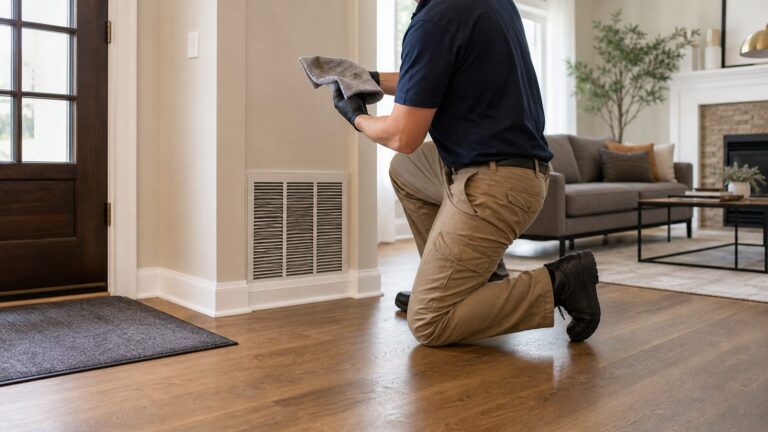
Remove the register cover and look for gaps around the metal boot. Seal the boot to the surrounding drywall or subfloor with mastic, approved sealant, or foil HVAC tape rated for ducts. Do not rely on ordinary cloth duct tape; it fails. If ducts run through an unconditioned attic, crawlspace, basement, or garage, duct leakage and missing insulation can be a major comfort issue.
Also check the simple stuff. Keep supply registers open and unobstructed. Do not bury returns behind furniture. Leave at least several inches of clearance around registers, and more if the furniture blocks airflow across the room. Closing too many registers can increase static pressure and make some systems perform worse, not better.
9. Use Curtains and Passive Solar With a Schedule
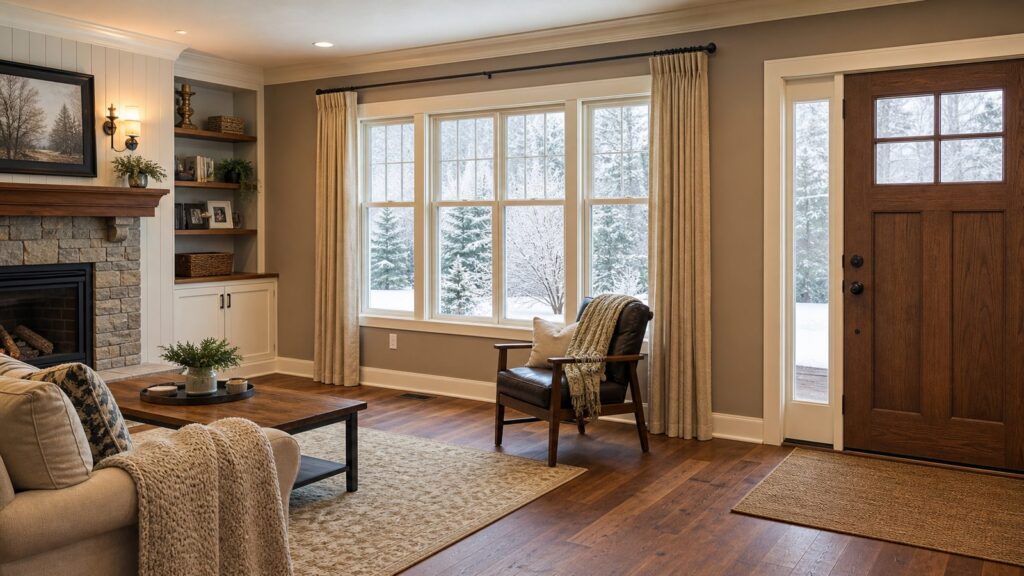
Curtains are useful when they are used at the right time. Open them on sunny south-facing and west-facing windows during the day so the house can collect free heat. Close them at night to reduce radiant discomfort from cold glass. On shaded windows, especially north-facing rooms, keeping insulating curtains closed longer may help comfort.
Rank #4

- Thickened Silicone Material-Heat And Cold Resistant:Door Draft Stopper is made of pure silicone material, easy to bend and deform.Smooth surface, high resilience.Draft Stopper for Bottom of Door puts up with all the abuse, it has no "compression memory", wont't damage the floor, and is pliable enough that you can easily still open the door along the crooked floor and against daily wear
- Save Money and Energy -Warm In Winter and Cool in Summer:Door sweep for bottom of door can prevent the leakage of air conditioning and heating, make your room more efficient in cooling or heating, Effectively Prevents Airflow, Reduce Energy Consumption.Self-adhesive door draft blocker is very suitable to cover the gaps of exterior/interior doors, rv doors, shower room, baseboard, threshold, windows, garage, basement and furniture,high-density silicone Material attaches to door, can glides smoothly over carpet
- Hollow Arc Cavity Sound Insulation Design:Door sweep triple design is adopted,This draft stopper goes beyond just blocking cold air. It also helps muffle noise from outside the room, making it ideal for bedrooms, offices, or anywhere you need a quieter environment. Additionally, door bottom seal strip acts as a barrier against other unwanted visitors crawling under the door.Multi-Purpose & Pet-Friendly
- Wide Waterproof Backing Adhesive-Strong Adhesion:Upgrade under door gap filler widened backing adhesive 1.5 inches and 1mm groove, When encountering resistance and ground friction, the adhesive will not be lifted up, This sticks well, doesn't make a dragging noise when door is opened/closed,Just in case you can use tape or thumbtacks as a protective layer
- Installs In Under 1 Minute-Adjustable:Under Door draft stopper Size: 1.96"W x 39" L,seal the gap of 0 to 1.5inch,Measure Twice, Cut Once:,it's important to measure carefully, A little extra measuring can prevent wasted material.(Note:1.In cold weather, we recommend to heat the adhesive for 2 minutes by Hair Dryer before installation. 2.The weather stripping door seal not work well if the wall surface is rough or with texture. 3. Please press several times and leave it for 24 hours
The key is not to block the heat source. Curtains should not cover supply registers, baseboard heaters, radiators, or return grilles. If a curtain traps heat behind fabric and against glass, the room may feel colder even though the window looks dressed for winter.
For best results, use lined curtains that extend several inches beyond the window opening and reach close to the sill or floor. The tighter the air gap between curtain and wall, the better the comfort effect. This is a low-risk renter-friendly fix, but it is not a substitute for repairing failed weatherstripping or missing insulation.
Quick wins for a faster PC:
Scan for outdated or missing drivers - takes under a minuteDriver Scan →Clear out junk files and repair common Windows errorsFree Scan →10. Manage Humidity Without Creating Condensation Problems
Dry winter air can make a house feel colder than it is. Many homes feel more comfortable around 30% to 40% relative humidity in winter. At that range, skin and sinuses often feel better, static is reduced, and the air can feel slightly warmer at the same thermostat setting.
More humidity is not always better. If you see condensation on cold windows, damp sills, musty attic smells, or staining on roof sheathing, the house may already have more moisture than the envelope can safely handle. In cold weather, indoor humidity that seems comfortable in the living room can condense inside cold wall or attic assemblies if air leaks carry it there.
Use a basic digital hygrometer, usually $10 to $25, and check several rooms. Run bath fans during showers and for 15 to 30 minutes afterward. Make sure the dryer vents outdoors. Avoid unvented combustion heaters indoors unless they are specifically approved for that use and you understand the moisture and carbon monoxide risks. Every home with fuel-burning appliances should have working carbon monoxide alarms on each level and near sleeping areas.
Independent reader supportYour contribution helps us test, update, and keep practical guides available for everyone.Winter Comfort Cost Comparison
| Upgrade | Typical 2026 Cost | Best For | DIY or Pro? |
|---|---|---|---|
| DIY weatherstripping | About $10-$40 per opening | Leaky doors and operable windows | DIY if the door is square and hardware works |
| Professional door/window weatherstripping | About $200-$600 for many homes | Multiple drafty openings or worn thresholds | Pro if doors are warped, sagging, or misaligned |
| Temporary window insulation film | About $1-$5 per sq. ft. | Older windows and seasonal comfort | Usually DIY |
| Blower door test | About $200-$450 standalone; $475-$650+ with added diagnostics | Older, drafty, high-bill, or ice-dam-prone homes | Pro |
| Attic insulation | About $1-$7 per sq. ft.; many jobs around $1,700-$2,500 | Low, uneven, or missing attic insulation | DIY only for simple, clean, accessible attics |
| Blown-in insulation | About $0.90-$2.10 per sq. ft.; many projects $1,500-$3,700 | Open attics needing even coverage | Pro recommended when air sealing, baffles, or cleanup are needed |
When to DIY and When to Hire a Pro
Good DIY winter fixes are visible, reversible, and low-risk. Weatherstripping a square door, adding a door sweep, applying removable window film, installing lined curtains, sealing small trim gaps, clearing registers, and monitoring humidity are reasonable homeowner projects. Most take one afternoon and cost less than a service call.
Crashes, No Sound, or Screen Glitches?
Random freezes, missing sound and display glitches usually trace back to one bad driver. Find and replace yours safely.Free scan · under a minutePC Slower Than It Used to Be?
A free scan shows the junk files, broken settings and background clutter dragging Windows down - then fixes them in one click.Free scan · Windows 10 & 11Hire a pro when the work affects fire safety, combustion safety, moisture movement, ventilation, code compliance, or hard-to-access building assemblies. That includes attic air sealing near chimneys and flues, insulation upgrades in contaminated or damp attics, duct sealing in crawlspaces or attics, recessed light corrections, ventilation baffle installation, ice-dam investigation, and any work around fuel-burning equipment.
Permits are not usually required for small weatherstripping or interior film, but larger insulation, remodeling, mechanical, ventilation, or envelope projects may trigger local code requirements. If a contractor is changing the building envelope substantially, ask how they will maintain ventilation, protect soffit airflow, handle combustion appliances, and meet the applicable energy code.
Rebates and Tax Credits in 2026
In 2026, homeowners should be careful with outdated incentive advice. The federal 25C Energy Efficient Home Improvement Credit for insulation and air sealing applied to qualifying work placed in service through December 31, 2025. As of January 1, 2026, that federal credit is no longer available unless Congress changes the law.
That does not mean all help disappeared. State utility rebates and DOE-funded home energy rebate programs may still support insulation, air sealing, and broader home efficiency upgrades depending on location, income, utility territory, and program status. Some qualifying electrification rebate programs may support insulation and air sealing up to $1,600, and measured whole-home energy savings programs may offer larger rebates, potentially up to $8,000 where available. Check your state energy office and utility before signing a contract, because many programs require pre-approval.
Recommended Free Tools
Best Value

- PREMIUM MATERIALS - The Door Draft Stopper are made of silicone material, which can bend and deform. Draft stopper for bottom of door is very flexible and will not damage your floor. Door strip is also very sturdy and has a longer service life. Size: 2” W x 39” L
- WONDERFUL DESIGN - Door sweep for bottom of door triple design is adopted to effectively reduce noise, prevent dust from entering through the door, the door stoppers for bottom of door keeps the room quiet and neat. Self-adhesive door draft blocker is very suitable to cover the gaps of exterior/interior doors, rv doors, shower room, baseboard, threshold, windows, garage, basement and furniture
- SAVE MONEY AND ENERGY - In winter and summer, draft stopper is good home improvement item which can prevent the leakage of air conditioning and heating, make your room more efficient in cooling or heating, save electricity and money.
- EASY TO USE - With Strong super glue, weather stripping door seal works on many doors or windows like glass doors, screen door, sliding doors, wood door, storm door, etc. The door seal is easy to use, just according to the size of the door, cut it to the right size. Then peel off the adhesive and stick it to the door!
- EXCELLENT AFTER-SALES - If you have any questions about the Under Door Draft Stopper, please turn to us and let us know how to make it better. We will provide the best after-sales service for you.
The Best Order for a Warmer House
If you want the most comfort for the money, follow this order. First, identify drafts with a walkthrough or blower door test. Second, seal easy exterior door and window leaks. Third, address attic bypasses, hatch leaks, and duct boot gaps. Fourth, protect attic ventilation with baffles where needed. Fifth, add insulation to the right R-value. Then use window film, curtains, passive solar, register management, fireplace dampers, and humidity control to fine-tune comfort.
Also remember the fireplace. An open damper can act like a hole in the roof when the fireplace is not in use. Close the damper after ashes are fully cold. In some homes, a chimney balloon or top-sealing damper can reduce heat loss, but fireplace and chimney changes should be checked for safe operation before burning. Never block a flue that serves an appliance.
A warmer house is not about one trick. It is about stopping the uncontrolled movement of heat, air, and moisture. The thermostat should be the final adjustment, not the only tool you have.
Frequently Asked Questions
What is the cheapest way to make a house warmer in winter?
Start with exterior door weatherstripping, door sweeps, caulking small stationary gaps, and removable window insulation film. Many DIY materials cost about $10 to $40 per opening, and the comfort improvement can be immediate if the leaks are obvious.
Should I replace windows to make my house warmer?
Not always. Air sealing, attic insulation, storm inserts, and temporary window film often cost far less than full window replacement. Replace windows when they are damaged, failing, unsafe, or part of a larger exterior upgrade, not just because the room feels drafty.
Why should air sealing come before insulation?
Insulation slows heat transfer, but it does not stop air leaks well. If warm indoor air leaks into a cold attic, it can carry moisture, reduce insulation performance, and contribute to condensation, mold, or ice dams.
What humidity level makes a house feel warmer in winter?
Many homes feel more comfortable around 30% to 40% relative humidity in winter. If windows show condensation or sills stay wet, lower the humidity and look for air leaks or ventilation problems.
Is a blower door test worth it?
For older, drafty, high-bill, or ice-dam-prone homes, yes. A 2026 standalone blower door test commonly costs about $200 to $450 and helps prioritize the leaks that matter most instead of guessing.
Are insulation tax credits still available in 2026?
The federal 25C credit for insulation and air sealing applied to qualifying work placed in service through December 31, 2025. As of January 1, 2026, it is no longer available unless the law changes, but state and utility rebates may still apply.
Quick Recap
Product prices and availability are accurate as of the date/time indicated and are subject to change. Any price and availability information displayed on Amazon at the time of purchase will apply.